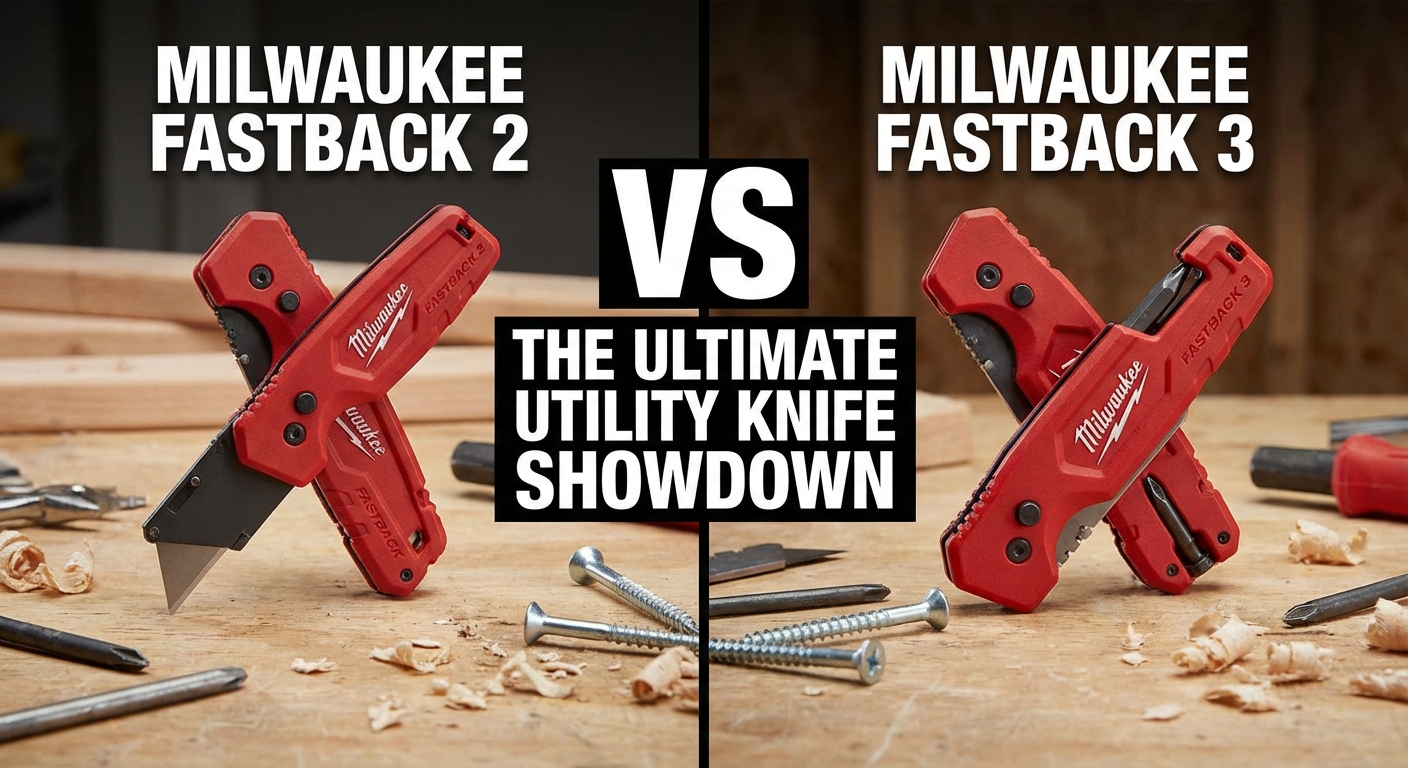
Milwaukee Fastback 2 vs 3: The Ultimate Utility Knife Showdown
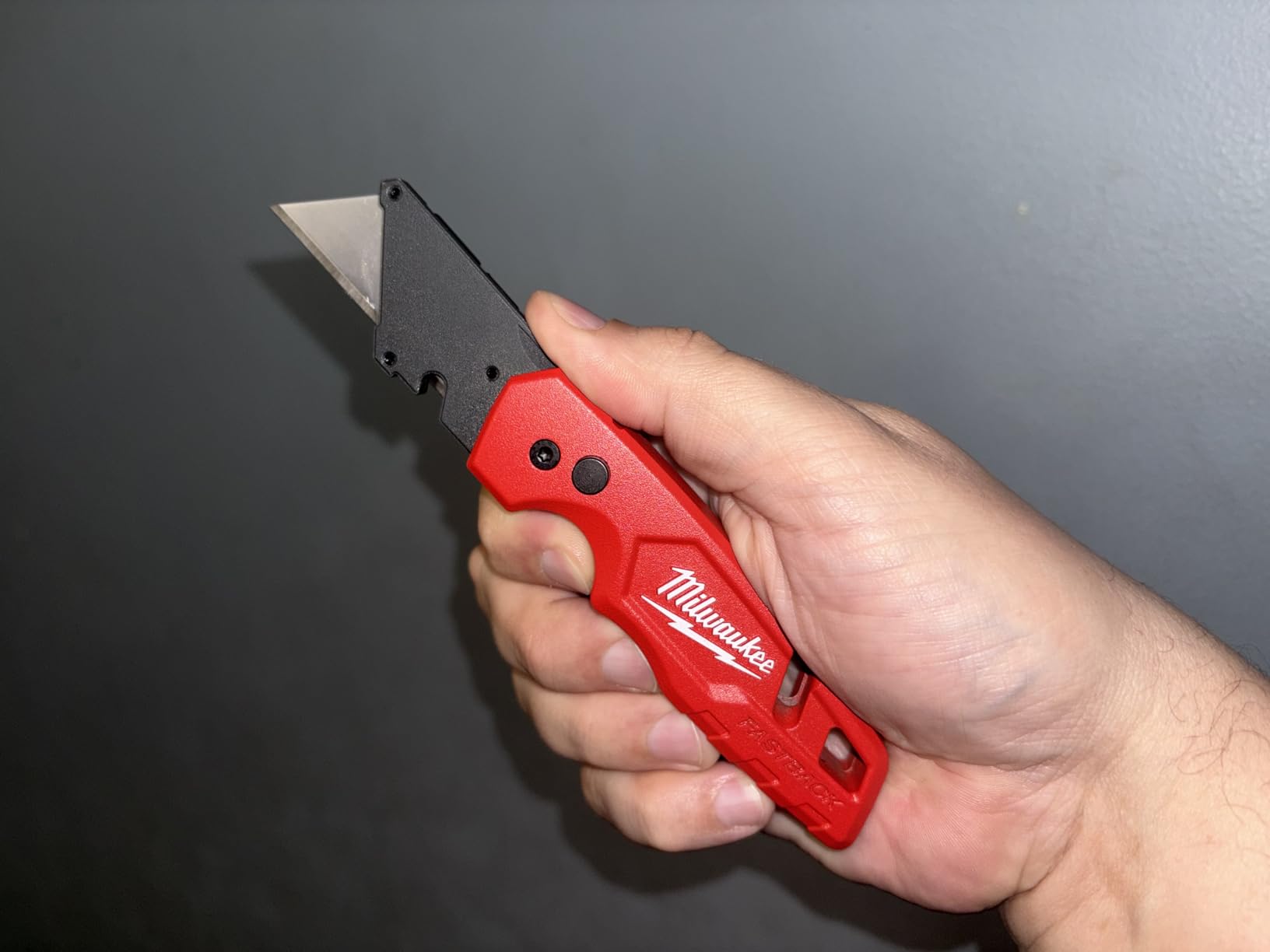
If you work in the trades, tackle heavy-duty DIY projects, or simply appreciate a well-engineered tool, you know that not all utility knives are created equal. The days of the stiff, two-handed retractable box cutter are over. Today, the “Red” dominance of Milwaukee has taken over the job site, specifically with their iconic Fastback line.
The Milwaukee Fastback series revolutionized the utility knife game with its “press-and-flip” one-handed opening mechanism. But within this legendary lineup, a debate rages on: Milwaukee Fastback 2 vs. Fastback 3. Is the slim, magnetic Fastback II the superior EDC (Everyday Carry)? Or does the bulkier, storage-heavy Fastback III reign supreme for heavy users?
If you are browsing M-Tech knife reviews or looking at high-end folders like the Kershaw Blur, you might wonder why a utility knife deserves such deep analysis. The answer is simple: you will likely use this tool more than any other knife you own.
In this comprehensive guide, we will dissect the mechanics, ergonomics, blade storage, and durability of these two titans of the trade. Whether you are an electrician, a roofer, or a warehouse warrior, by the end of this post, you will know exactly which shade of red belongs in your pocket.
1. The Evolution of the Flip: Why Fastback?
Before we pit them against each other, we must understand the shared DNA. The Milwaukee Fastback series solved the biggest pain point of traditional utility knives: speed. The ability to pull the knife, flick it open, make a cut, and flip it closed—all with one hand—is invaluable when you are holding a ladder or a sheet of drywall.
This fidget-friendly action has made the Fastback a crossover hit, appealing to knife enthusiasts who usually buy brands like Smith & Wesson or Blue Ridge Knives. But as the series evolved from the Gen 1 to the Gen 2 and Gen 3 (often distinguished by blade storage capacity), the design philosophy split.
External Review
Want to see the action in real-time? Watch this detailed video breakdown comparing the opening mechanisms and storage features.
2. Head-to-Head: The Specs Breakdown
Let’s clarify the models. Usually, when people say “Fastback 2,” they refer to the model with magnetic storage for 1 extra blade (Model 48-22-1902). When they say “Fastback 3,” they refer to the bulkier model with a blade magazine holding 4-5 blades (Model 48-22-1903 or similar 6-in-1 variants).
| Feature | Fastback 2 (II) | Fastback 3 (III) |
|---|---|---|
| Blade Storage | 1 Extra Blade (Magnetic Arm) | 4-5 Blades (Internal Magazine) |
| Profile | Slim, Pocket Friendly | Thick, Heavy Duty |
| Construction | Metal Body / Wire Form Clip | Metal Body / Often 6-in-1 Tools |
| Opening Mechanism | Press-and-Flip (Bearing) | Press-and-Flip (Bearing) |
| Extra Tools | Wire Stripper, Gut Hook | Often includes Screwdriver bits |
| Best Use Case | Electricians, EDC, Light Trade | Roofing, Drywall, Heavy Install |
3. Deep Dive: The Milwaukee Fastback 2
The Fastback 2 is the refinement of the original. It kept the slim profile that users loved but added two critical features: a gut hook and magnetic blade storage.
The “Magnetic” Advantage
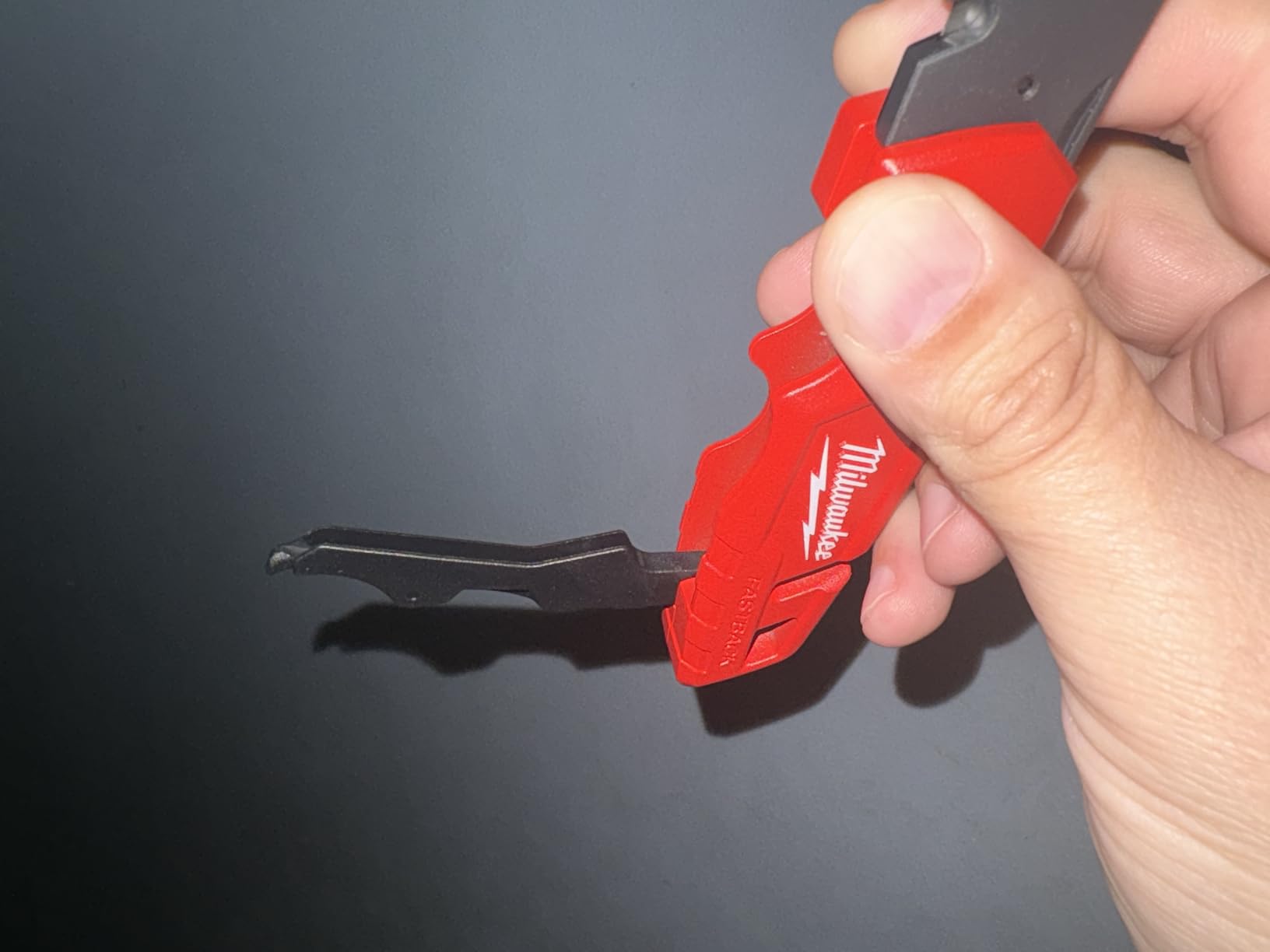
The storage on the Fastback 2 is ingenious. A small arm flips out from the spine, holding one extra blade via a magnet. It keeps the knife incredibly thin. If you are used to carrying slim pocket knives (like those seen in M-Tech reviews), this will feel natural in your pocket.
The Wire Stripper & Gut Hook
This model is often favored by electricians. Why? Because even when the knife is closed, the gut hook allows you to cut twine or strip wire without exposing the main razor edge. This safety feature prevents accidental cuts when reaching into a pouch.
Pros of the Fastback 2
- Slim Profile: Disappears in the pocket.
- Speed: The lighter weight makes the “flick” action snappier.
- Ergonomics: Fits better in smaller to medium hands.
4. Deep Dive: The Milwaukee Fastback 3 (and 6-in-1)
The Fastback 3 (often associated with the 6-in-1 Utility Knife) is the tank of the family. Milwaukee looked at the Fastback 2 and asked, “What if we put a toolbox inside it?”
The Storage Magazine
The defining feature is the internal magazine. Depending on the specific sub-model, it can hold up to 5 blades. For a roofer who changes blades every 20 minutes, this is a godsend. No more walking back to the truck for a fresh pack.
The Multi-Tool Aspect
Many Gen 3 models include a fold-out bit driver (Phillips and Flathead). While it won’t replace your impact driver, it saves you a trip down the ladder to tighten a loose screw. It pushes the utility knife into the realm of multi-tools.
Cons of the Bulk
The trade-off is size. The Fastback 3 is thick. It bulges in the pocket. If you wear fitted jeans, this might be uncomfortable. It feels more like a tool than a knife.
5. Top Product Recommendations
 Milwaukee Fastback II (48-22-1902)
The perfect balance of utility and portability. Features magnetic storage for 1 extra blade, wire stripper, and gut hook. Ideal for daily carry.
Check Price on Amazon Milwaukee Fastback 6-in-1 (48-22-1505)
The ultimate jobsite companion. Features massive blade storage, a screwdriver bit holder, and a bottle opener. A toolbox in your pocket.
Check Price on Amazon6. Performance Comparison: Durability and Ergonomics
The Button Lock Mechanism
Both knives utilize a button lock (similar to a plunge lock) that releases the blade to swing freely. This is superior to liner locks found on cheaper knives because your fingers never cross the blade path when closing it. Both are incredibly durable, but debris can get stuck in the mechanism if you are cutting drywall all day. Blow it out with compressed air to keep the “flick” smooth.
Blade Retention
Both use a quick-change button. However, some users report the Gen 3 holder being slightly tighter. This is good for heavy cutting but can make blade swaps slightly slower than the Gen 2. Compared to a standard Smith & Wesson tactical folder, the blade retention on a utility knife is less about “lockup” and more about preventing blade wobble—Milwaukee excels at this.
The Clip
Both use a wire pocket clip. This is a love-it-or-hate-it feature. It is less likely to snag on paint or car doors than a solid metal clip, but it can bend if caught on a ladder rung. Replacement clips are generally not sold separately, which is a downside for both.
7. Which One Should You Buy?
Choose the Fastback 2 If:
- You carry it every day (EDC): The slim profile is much more comfortable.
- You are an Electrician: The dedicated wire stripping notch works better on the slimmer frame.
- You prioritize speed: The lighter weight makes it faster to deploy.
- You want a backup: It pairs well with a primary folder like a Kershaw Blur without weighing you down.
Choose the Fastback 3 If:
- You are a Heavy User: Roofers, carpet layers, and drywallers need the 5-blade capacity.
- You hate carrying a screwdriver: The 6-in-1 functionality saves steps.
- You have large hands: The thicker handle fills the palm better for heavy, downward pressure cuts.
- You lose blades: Having a magazine means you are never stuck with a dull edge.
8. Alternatives and Competitors
While Milwaukee dominates, they aren’t alone.
Dewalt: Makes a similar retractable knife, but the “flick” isn’t as smooth.
Sheffield: Offers budget options, often compared in Blue Ridge Knives reviews, but they lack the durability of the Fastback.
Tactical Brands: If you need self-defense capability, a utility knife isn’t it. Look at dedicated tactical brands found in our M-Tech reviews.
Frequently Asked Questions (FAQ)
Yes. Both the Fastback 2 and 3 accept standard 2-point utility blades from any brand (Stanley, Lenox, Irwin). You do not need to buy Milwaukee branded blades, though their “General Purpose” blades are quite good.
No. The standard Fastback 2 (48-22-1902) does not. It focuses on being a dedicated knife. If you want the screwdriver, you must upgrade to the Fastback 6-in-1 (Gen 3 style).
In some jurisdictions, yes. Because it opens with centrifugal force while a button is depressed, strict laws (like those formerly in NYC) might classify it as a gravity knife. However, for tradespeople, it is generally recognized as a tool. Always check local laws.
Construction dust often clogs the bearing. Do not use WD-40 (it attracts more dust). Instead, blow it out with compressed air and use a dry lubricant like graphite or a PTFE spray.
There is a smaller version (Fastback Compact) that does not store any extra blades. It is even smaller than the Fastback 2. It is great for keychain carry or ultra-light EDC.
Conclusion: The Verdict
The battle of Milwaukee Fastback 2 vs 3 isn’t about which tool is “better” in a vacuum; it’s about volume.
Winner for 80% of People: The Fastback 2. Its slim profile, magnetic retention, and sufficient 1-blade backup make it the perfect balance of utility and comfort. It disappears in the pocket until you need it.
Winner for Pros: The Fastback 3. If you are cutting shingles all day, comfort in the pocket doesn’t matter—blade supply does. The ability to store 5 blades and drive a screw makes it a mobile workstation.
Whichever you choose, you are getting the best mechanism in the industry. The “Fastback Flick” is satisfying, efficient, and reliable. Just don’t lend it to your coworker—you might not get it back.