ESEE JG3 Review: Is This the Ultimate Nessmuk Camp Knife?


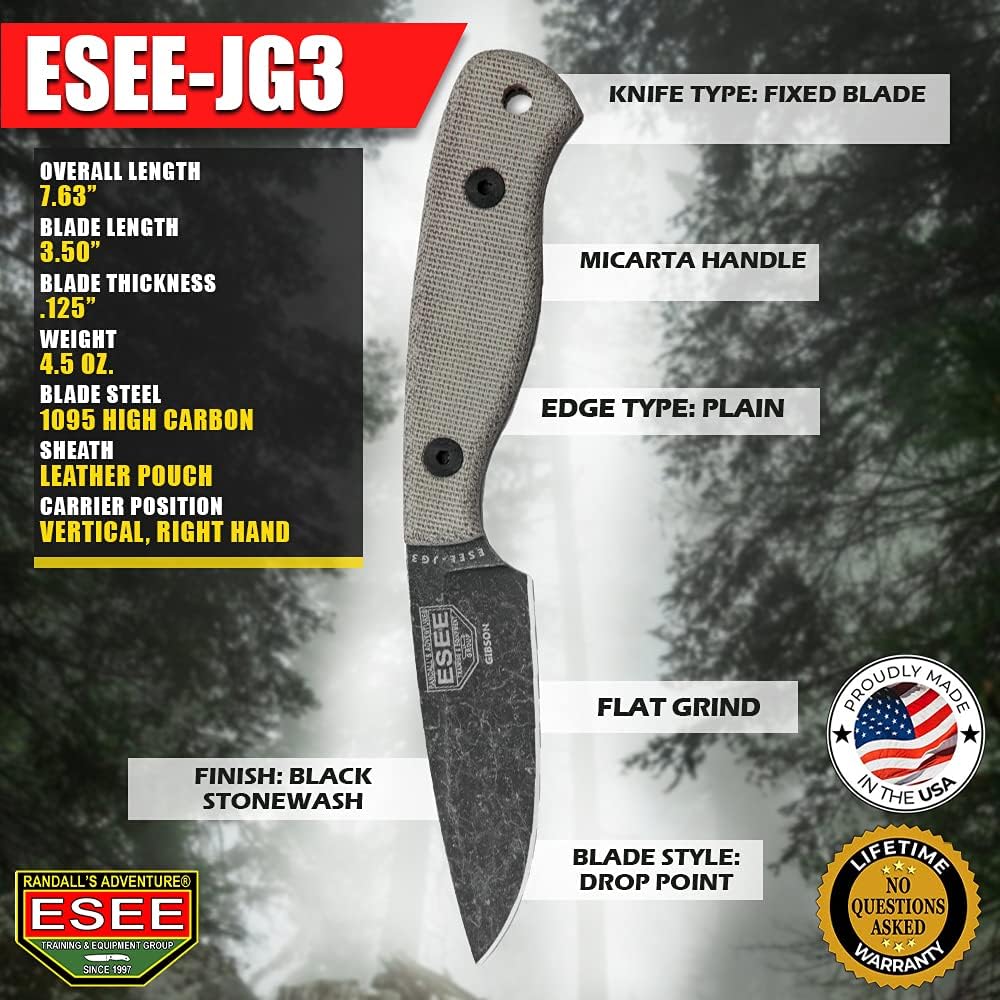
When you think of ESEE Knives, you usually think of apocalypse-proof pry bars like the ESEE 5 or tactical survival tools. You imagine coated blades, skull crushers, and Kydex sheaths. But the ESEE JG3 is a different beast entirely. Part of the “Camp Lore” series, this knife was designed by James Gibson, a bushcraft instructor who values finesse over brute force.
In this detailed ESEE JG3 review, we are heading into the woods. We are trading the tactical vibes of a SOG TAC XR for the smell of campfire smoke and leather. We will analyze the 1095 carbon steel, the controversial “Nessmuk” blade shape, and see if this USA-made tool deserves a spot on your belt alongside classics like the Fallkniven S1.
Technical Specifications
| Feature | Details |
|---|---|
| Designer | James Gibson (Camp Lore Series) |
| Overall Length | 7.63 inches |
| Blade Length | 3.50 inches |
| Blade Steel | 1095 Carbon Steel (55-57 RC) |
| Blade Finish | Black Oxide Stone Washed |
| Handle Material | Micarta |
| Weight | 4.5 oz (Knife Only) |
| Sheath | USA Made Leather Pouch |
The Design Philosophy: What is a “Nessmuk”?
The ESEE JG3 is heavily inspired by the “Nessmuk” knife carried by George Washington Sears (pen name Nessmuk), a famous 19th-century outdoorsman. The philosophy is simple: a knife should be a slicing tool, not a chopping axe.
The blade features a sweeping belly and a slight hump on the spine. This shape is exceptional for skinning game (hence the resemblance to skinners) and food preparation. It slices meat and vegetables significantly better than the thick, wedge-like geometry found on tactical knives like the Smith & Wesson Border Guard. The tip is dropped, making it less prone to accidental punctures when dressing game, though it sacrifices some piercing ability.
The Steel: 1095 Carbon Performance
ESEE is famous for its heat treatment of 1095 Carbon Steel. While modern super-steels get all the hype, 1095 remains a favorite among bushcrafters for two reasons: toughness and ease of sharpening.
In the field, you can bring the JG3 back to a shaving edge using a simple river stone or the bottom of a ceramic mug. Try doing that with the S30V steel we reviewed in the Kershaw Blur post. However, there is a trade-off. 1095 rusts. If you look at it wrong, it might rust.
Handle Ergonomics: The Broomstick Effect
The handle scales are made of Micarta, a material that grips better when wet. The profile is simple—almost like a broomstick. It lacks the finger grooves and guards found on tactical knives.
This is intentional. A neutral handle allows you to hold the knife in a hammer grip, chest lever grip, or reverse grip comfortably for hours of wood carving without creating “hot spots.” However, because there is no finger guard, you must be careful not to let your hand slide forward onto the blade during heavy stabbing motions—though, again, this knife isn’t designed for stabbing.
Field Test: Wood & Food
We took the JG3 out for a weekend trip.
- Fire Prep: The 90-degree spine is sharp! It throws massive sparks from a ferro rod, arguably better than the Fallkniven S1 which uses a laminated spine. It makes feather sticks effortlessly.
- Food Prep: This is where the JG3 shines. Slicing potatoes, onions, and steak was a joy. The wide blade allows you to scoop up cut veggies to drop them in the pot.
- Carving: The blade is short enough (3.5 inches) to offer excellent control for making notches and trap triggers.
Check out the video above to see the JG3 in action against various types of wood.
Comparison: JG3 vs. The Competition
ESEE JG3 vs. ESEE 4
The ESEE 4 is the brand’s flagship. It is thicker, longer, and coated with a rough powder coat. The ESEE 4 is a survival knife; it can pry open a crate. The JG3 is a bushcraft knife; it carves a spoon. If you want a tank, get the 4. If you want a precise tool, get the JG3.
ESEE JG3 vs. Fallkniven S1
We recently reviewed the Fallkniven S1. The S1 uses stainless laminated VG10 and a convex grind. It is superior in wet environments (snow/swamp) because it won’t rust. The JG3, however, is easier to sharpen in the field and has a better warranty (ESEE’s warranty is lifetime, unconditional).
ESEE JG3 vs. Budget Options
You can find “bushcraft” knives in Blue Ridge Knives catalogs or from brands like M-Tech. The difference is the heat treat. Cheap 1095 is brittle or too soft. ESEE’s 1095 is the gold standard for consistent toughness.
Pros and Cons Verdict
✅ The Good
- Warranty: Best in the industry. You break it, they replace it.
- Blade Shape: The Nessmuk shape is a slicing machine.
- Spine: Sharp 90-degree spine for fire starting.
- Sheath: High-quality USA leather (very traditional).
- Agility: Light and nimble in the hand.
❌ The Bad
- Rust: 1095 requires constant care.
- Handle: Can be slippery; lacks a finger guard.
- Sheath Retention: Leather stretches over time; not as secure as Kydex.
- Price: Expensive for a “simple” knife.
Recommended Gear & Alternatives
If you are looking to build a complete kit, we recommend pairing the JG3 with a smaller multitool like the Victorinox Cadet for fine tasks. Here are the best buying options:
ESEE JG3 Camp Lore
The star of the show. 1095 Carbon steel, Micarta scales, and leather sheath.
Check Price on Amazon
ESEE 4
The tactical alternative. Thicker, longer, and coated for heavy survival use.
Check Price on Amazon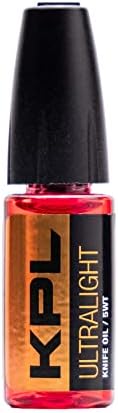
Tuf-Glide Prevention
Essential for 1095 steel. Keeps the rust away without leaving a sticky residue.
Check Price on Amazon
Morakniv Bushcraft
The budget king. If the JG3 is too pricey, the Mora offers 90% of the performance for 20% of the cost.
Check Price on AmazonFrequently Asked Questions (FAQ)
Is the ESEE JG3 full tang?
Yes, the ESEE JG3 is full tang. The steel runs through the entire length of the handle, ensuring maximum strength and durability.
Can I strike a ferro rod with this knife?
Absolutely. The JG3 is famous for its sharp 90-degree spine. It scrapes ferrocerium rods effectively to produce showers of sparks for fire starting.
Does the leather sheath have a belt loop?
Yes, the leather sheath is a deep pouch style with a belt loop. It is designed for right-handed carry but can be worn on the left side (cross-draw).
How do I prevent the blade from rusting?
Keep the blade clean and dry. After use, especially with food or wet wood, wipe it down and apply a thin coat of mineral oil (food safe) or a rust inhibitor like Tuf-Glide.
Conclusion
The ESEE JG3 is a breath of fresh air in a market saturated with “tactical” pry bars. It returns to the roots of what a knife should be: a cutting tool. James Gibson and ESEE have created a knife that feels like an extension of the hand.
It is not perfect—the lack of a finger guard requires mindful usage, and the steel demands respect and maintenance. But for the woodsman who values skill over gear, the JG3 is a masterpiece. It bridges the gap between the modern durability of ESEE and the traditional soul of Nessmuk.
Whether you are comparing it to the Fallkniven S1 or looking for a fixed blade to complement your Victorinox Cadet, the JG3 earns its place in the Camp Lore hall of fame.