Buck Knives Review: Is the Legend Still Sharp?
There are few names in the cutlery industry that evoke as much nostalgia, respect, and debate as Buck Knives. From the belts of deer hunters in the 1960s to the pockets of modern EDC enthusiasts, the brand has cemented itself as an American icon. But does the legacy hold up against modern super-steels and high-tech manufacturing? In this comprehensive Buck Knives review, we dive deep into the metallurgy, the “forever warranty,” and the real-world performance of their most famous blades to determine if they are still the best outdoor knives for your money.
The Buck Legacy: More Than Just Brass and Wood
When Hoyt Buck produced the first Buck Knife in 1902, he was a young Kansas blacksmith looking for a better way to temper steel so it would hold an edge longer. Fast forward over a century, and that quest for the perfect heat treat remains the company’s backbone. Unlike many brands that simply stamp out blades from generic sheets of metal, Buck is famous for the “Paul Bos Heat Treat.”
Paul Bos, an industry legend, developed a heat-treating protocol for Buck that squeezes every ounce of performance out of standard steels. This is why a standard Buck 110 review often praises its edge retention even though the steel chart suggests it should be average. It is the alchemy of manufacturing that separates Buck from the budget blades you might find in M-Tech knife reviews or similar entry-level imports.
Today, Buck operates out of Post Falls, Idaho. While they do have a select few budget models made overseas, their core lineup—the knives that matter—are proudly made in the USA. They occupy a unique space in the market: higher quality than the mass-produced blister packs at big-box stores, yet more affordable than premium boutique brands.
In-Depth Analysis: Performance and Build
Build Quality and Materials
Buck is synonymous with durability. The classic “Folding Hunter” and “Special” fixed blades are built like tanks. We are talking about heavy brass bolsters, genuine ebony wood (which Buck sustainably sources through a partnership with Taylor Guitars), and robust phenolic resins.
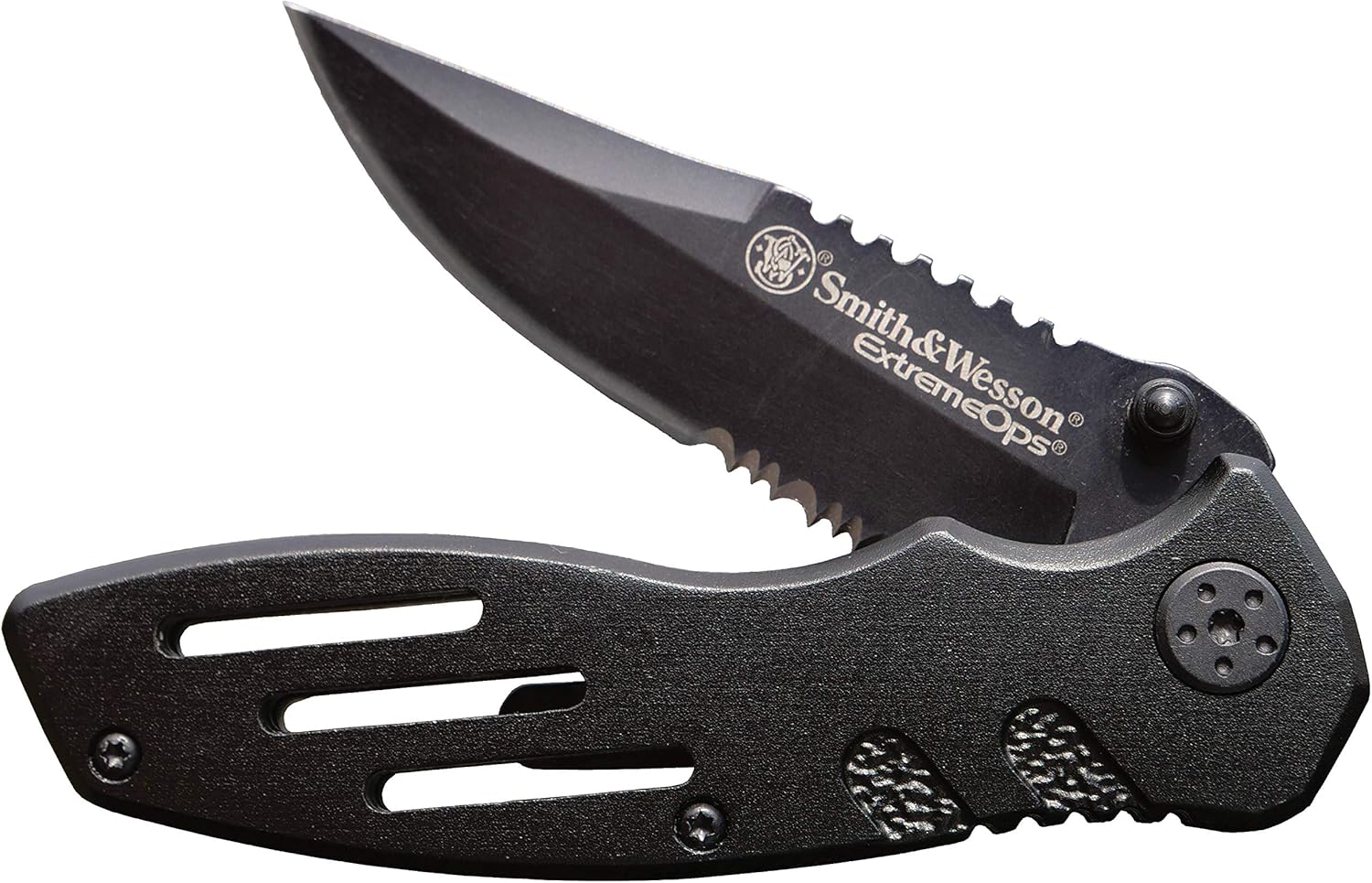
However, the build quality goes beyond aesthetics. The fit and finish on USA-made Bucks are consistently high. The transitions between the wood and the brass are smooth—you can’t feel the seam with your fingernail. This level of refinement is often missing in competitors discussed in Smith & Wesson knife reviews, where jagged edges or gaps in the liners can be common.
That said, traditional Buck knives are heavy. A Buck 110 weighs over 7 ounces. In a world where people count grams for their hiking gear, this can be a drawback. But for many, that weight signals reliability. It feels like a tool, not a toy.
Blade Performance and The “Bos” Factor
Most standard Buck knives use **420HC Stainless Steel**. In the broader knife world, 420HC is considered an entry-level steel. It is generally soft and easy to sharpen but rarely praised for edge retention.
This is where Buck is different. Thanks to their cryogenic heat treatment process (freezing the steel to -110°F during tempering), Buck’s 420HC performs significantly better than the same steel from other manufacturers. It offers excellent corrosion resistance and toughness. While it won’t hold an edge as long as the CPM-S30V seen in our Kershaw Blur S30V review, it is incredibly easy to resharpen in the field.
For those demanding premium performance, Buck has introduced their “Pro” lines, which utilize S30V, S35VN, and even MagnaCut steels. This allows the brand to compete directly with high-end tactical manufacturers.
Locking Mechanisms
The lockback mechanism found on the 110 and 112 is legendary for a reason. It is one of the strongest locking mechanisms ever invented. When that bar snaps into place, the blade is virtually a fixed blade. It handles negative pressure (whacking the spine) better than many liner locks.
However, it is not a “fidget-friendly” mechanism. It requires two hands to close safely. If you are looking for rapid deployment and one-handed closing, you might prefer the XR locks mentioned in our SOG-TAC XR review. But for pure safety and strength during heavy cutting tasks like field dressing a deer, the Buck lockback is superior.
Ergonomics and Grip
Buck designs are generally traditional. The handles are contoured but lack the aggressive finger choils or gimping found on modern tactical knives. The smooth phenolic handles of the 119 Special are comfortable but can become slippery when wet with blood or water.
Conversely, the wood handles on the 110 provide a bit more traction and warmth. For those who dislike the cold, slick feel of aluminum or steel handles, the organic feel of a Buck knife is a major selling point.
Check Price on AmazonThe Legends: Best Buck Knives Reviewed

1. Buck 110 Folding Hunter
The Buck 110 is arguably the most famous folding knife in history. Released in 1964, it revolutionized the industry by proving a folding knife could be strong enough for hunting.
The Experience: It is heavy, shiny, and beautiful. The clip point blade is fantastic for piercing and slicing. It has a hollow grind that makes it an exceptional slicer for meat and apples alike. It is not an EDC for gym shorts, but it is the ultimate belt knife.
Compared to the lightweight utility of something like the Ka-Bar Dozier, the 110 feels like a piece of heavy machinery. It invokes a sense of heritage that plastic knives simply cannot replicate.
- Blade Length: 3.75″
- Steel: 420HC (Standard) or S30V (Pro)
- Handle: Ebony Crelicam Wood & Brass
- Lock: Lockback
Verdict: The absolute King of classic folders. Every knife enthusiast should own one.
Check Price on Amazon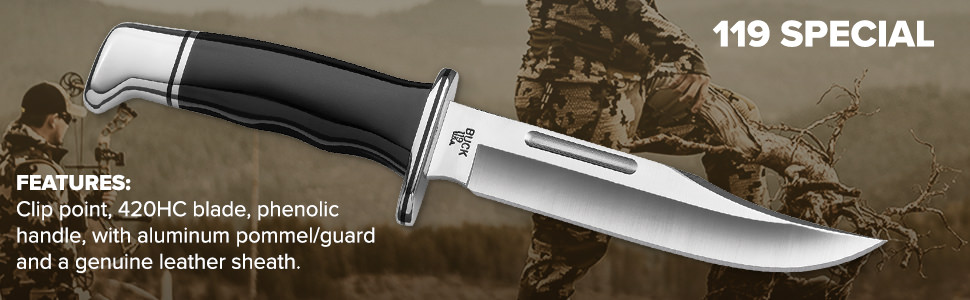
2. Buck 119 Special
If the 110 is the famous folder, the Buck 119 Special is the movie star fixed blade. Known for its distinct clip point and blood groove (fuller), it has appeared in countless films (often in the hands of the villain, ironically, despite being a hunting knife).
The Experience: This is a dedicated outdoor knife. The Phenolic handle is indestructible, though slick. The aluminum pommel and guard are perfectly fitted. While we might look at the Fallkniven S1 for pure survival durability due to its convex grind, the Buck 119 excels at processing game and general camp chores. The tip is very fine, which is great for detail work but means you shouldn’t pry with it.
- Blade Length: 6.0″
- Steel: 420HC
- Handle: Black Phenolic
- Sheath: Genuine Leather
Verdict: The best-looking hunting knife ever made, with performance to match at a great price point.
Check Price on Amazon
3. Buck 112 Ranger
For many, the 110 is just too big for daily carry. Enter the Buck 112 Ranger. It features the same build quality, brass, and wood, but in a shorter, more manageable package.
The Experience: This fits much better in the hand for average users. It retains the clip point blade but shortens it to 3 inches. It is still heavy for its size compared to modern options like the Victorinox Cadet, but it handles hard use much better than a Swiss Army Knife.
Verdict: The “Goldilocks” size for a traditional lockback.
Check Price on Amazon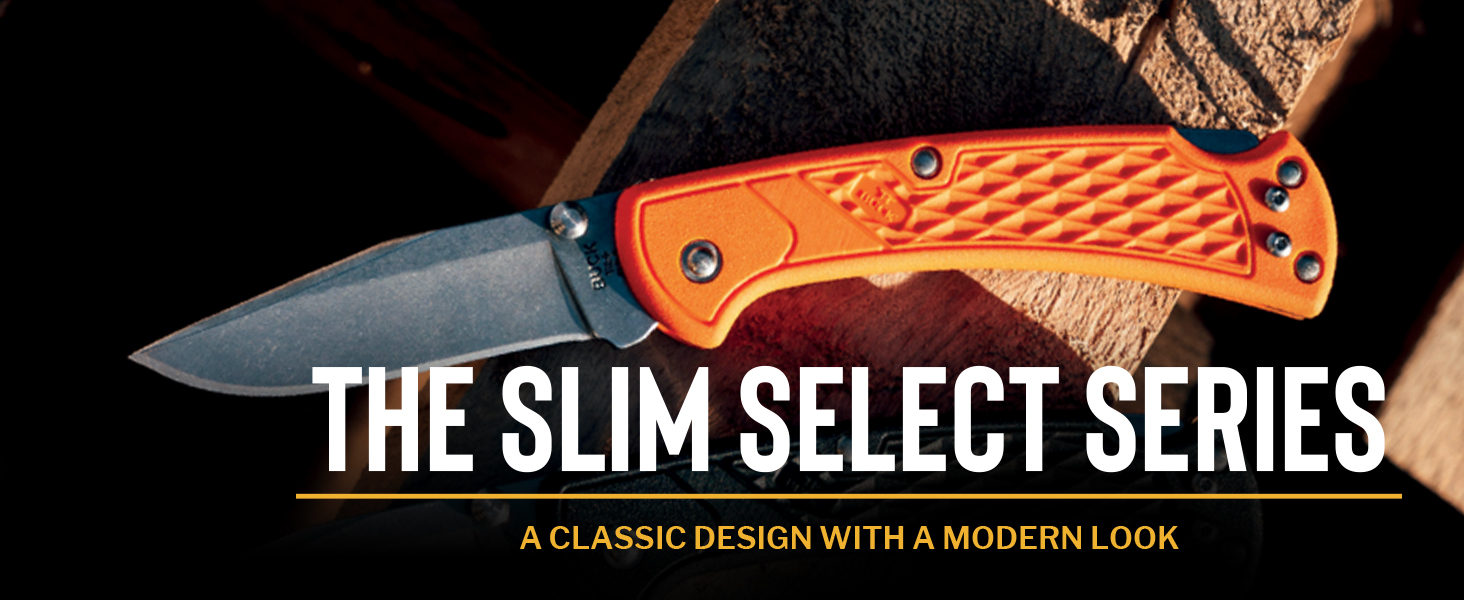
4. Buck 110 Slim Select
Buck realized they were losing the modern EDC market to brands like Spyderco and Kershaw. Their answer was the Slim Series. This takes the geometry of the 110 but replaces the heavy brass and wood with lightweight GFN (Glass Filled Nylon) and adds a thumb stud and pocket clip.
The Experience: This is a fantastic budget EDC. It competes directly with the knives in our Blue Ridge Knives reviews but offers that superior Bos heat treat. It’s light, functional, and deeply affordable.
Verdict: The modern evolution of a classic. Perfect for those who want a Buck with a pocket clip.
Check Price on AmazonSee Buck Knives in Action
Sometimes you need to see the scale and finish of these knives to truly appreciate them. Check out this overview of the Buck 110 and 112 comparison to see which size might fit your hand better.
Buck vs. The World: How They Compare
Buck vs. Case Knives
Both are American legends. Case is known for their slipjoints (knives that don’t lock), like the Trapper and Stockman. Buck is known for the Lockback. If you want a non-threatening pocket knife for whittling, Case is great. If you need a knife for hunting or safety, Buck wins on strength.
Buck vs. Modern Tactical Brands (Spyderco, ZT, Cold Steel)
Comparing a Buck 110 to a Zero Tolerance flipper (see our ZT knife reviews) is apples to oranges. ZT uses powder metallurgy steels and titanium frames for high-speed deployment and lighter weight. Buck focuses on tradition and cutting geometry.
However, for pure outdoor survival, a Buck 119 holds its own against the Cold Steel Wild West Bowie. While the Bowie is a chopper, the Buck is a processor. If you are field dressing an elk, you want the Buck. If you are building a shelter, you might want the Cold Steel or an ESEE JG3.
Buck vs. Budget Folders
Against budget options like the QSP Hawk, Buck offers better warranty support and USA manufacturing (on most models). The QSP might use D2 steel which holds an edge longer, but D2 is harder to sharpen and can rust. Buck’s 420HC is virtually rust-proof and field-sharpenable.
Key Features of Buck Knives
- Paul Bos Heat Treat: The industry gold standard for heat treating 420HC steel.
- Forever Warranty: Buck guarantees their knives against defects in material and workmanship for the life of the knife.
- Hollow Grind: Most Buck hunting knives feature a deep hollow grind, making them incredible slicers.
- Classic Materials: Heavy use of Brass, Nickel Silver, Ebony, and Phenolic resin.
- Made in USA: The majority of their iconic models are manufactured in Post Falls, Idaho.
- Custom Shop: Buck is one of the few production companies that allows you to fully customize a 110 or 119 with exotic steels and handles on their website.
Pros and Cons
| Pros | Cons |
|---|---|
|
|
Buying Guide: Which Buck is Right for You?
For the Hunter
If you are processing deer or large game, the Buck 113 Ranger Skinner or the classic Buck 119 Special are your best bets. For a folder, the 110 is the standard, but consider the 110 Hunter Sport for a lighter weight version with S30V steel.
For Everyday Carry (EDC)
If you work in an office, the heavy 110 might pull your pants down. Look at the Buck 112 Ranger or the Buck 501 Squire. If you want something modern with a pocket clip, the Buck Spitfire or the 110 Slim Pro are excellent choices that compete with the functionality seen in our Spyderco reviews.
For Survival/Camping
While Buck is known for hunting, the Buck 124 Frontiersman or the Buck 104 Compadre are built for camp tasks. They are full tang and robust. However, for salt-water environments, you might want to look at specialized rust-proof options like those mentioned in the Spyderco Caribbean review.
Frequently Asked Questions
1. Are all Buck Knives made in the USA?
No. Approximately 80-85% of their knives, including all the classic 110s, 119s, and high-end models, are made in Post Falls, Idaho. Some budget fixed blades and folders are made overseas to keep costs down. Always check the packaging or the blade stamp—USA models are clearly marked “USA”.
2. What is the “Forever Warranty”?
Buck warrants that each knife will be free of defects in material and workmanship for the life of the knife. They will repair or replace it. This does not cover normal wear and tear or misuse (like using your knife as a screwdriver).
3. How often do I need to sharpen a Buck Knife?
It depends on usage. With the standard 420HC steel, if you use it daily for cardboard or wood, you will likely need to touch up the edge once a week. The Pro models with S30V will hold an edge much longer but are harder to sharpen.
4. Can I buy a Buck 110 with a pocket clip?
Yes. The Buck 110 Slim series and the 110 Hunter Sport models come with pocket clips. The traditional brass and wood 110 comes with a leather belt sheath, not a clip.
5. Is the Buck 119 a full tang knife?
Technically, it is a “rat-tail” tang, meaning the steel narrows as it goes through the handle. While not as robust as the full-width tang found in a Fallkniven S1, it is more than strong enough for hunting and general camping. It has proven itself for over 70 years.
6. How do I clean my Buck Knife?
For the folders, use compressed air to blow out pocket lint. You can wash it with mild soap and warm water, but be sure to dry it thoroughly and oil the pivot. Brass bolsters can be polished with standard metal polish if they tarnish (patina).
7. Why does my Buck knife utilize a hollow grind?
A hollow grind creates a very thin edge behind the blade. This maximizes slicing performance, making it ideal for skinning and food prep. It is less durable for chopping than a flat or convex grind, but superior for slicing.
8. What is the date code on my Buck Knife?
Buck stamps a symbol next to the model number on the blade to indicate the year of manufacture. You can look up these symbols on the Buck Knives website to date your specific knife.
Final Verdict: Is a Buck Knife Worth It?
In an era of $400 titanium flippers and super-steels that require diamond plates to sharpen, Buck Knives remains a refreshing constant. They offer a masterclass in how to make a tool that works, lasts, and carries a soul.
Whether you choose the iconic Buck 110 for its history, the Buck 119 for your next hunting trip, or a Buck Slim for your EDC, you are buying into a legacy of American craftsmanship. They are not the most high-tech knives on the market, but they are undeniably some of the most effective.
If you want a knife that you can pass down to your grandchildren, knowing it will work just as well for them as it did for you, get a Buck.
Check Price on Amazon