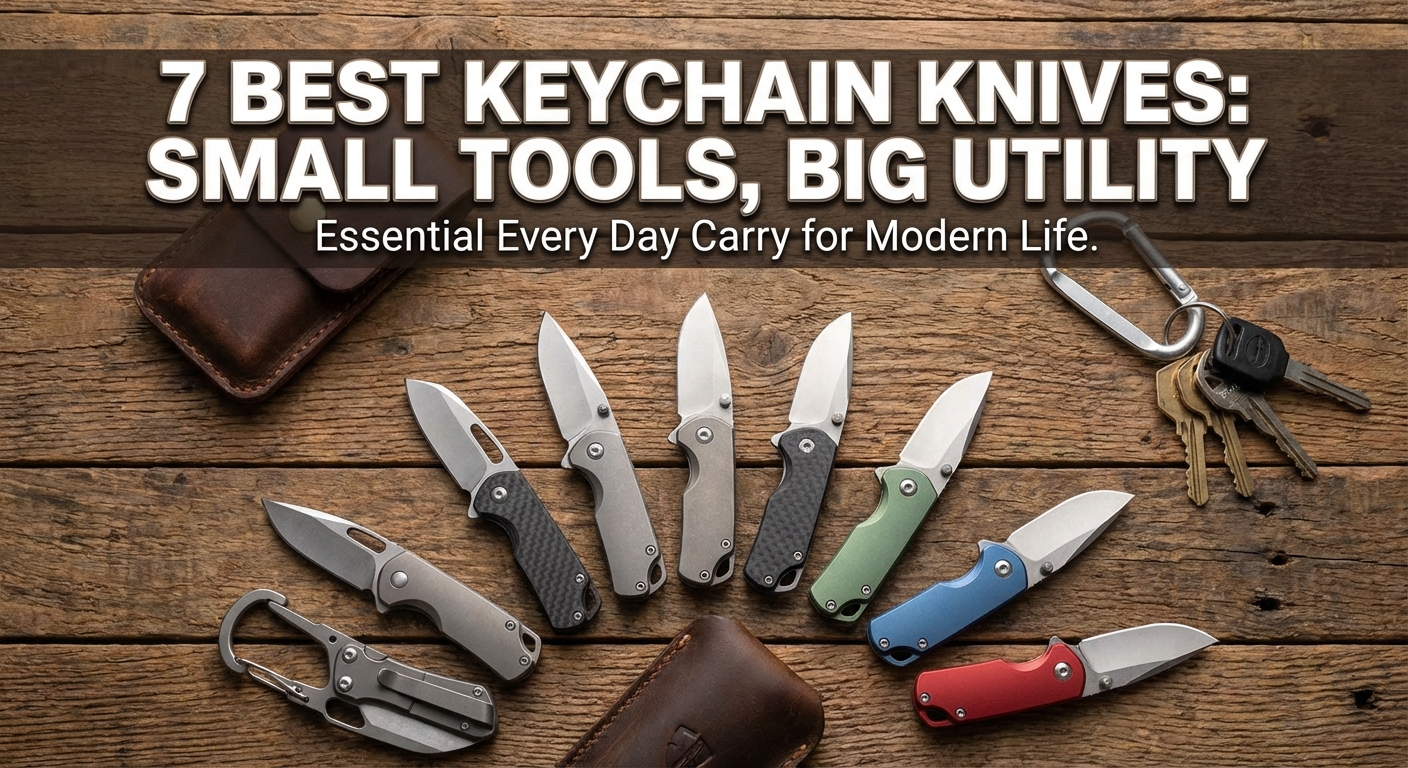
7 Best Keychain Knives: Small Tools, Big Utility
Don’t let the size fool you. These micro-blades offer serious cutting power for your everyday carry (EDC) without the bulk.
Introduction: Why You Need a Keychain Knife
The philosophy of Everyday Carry (EDC) is simple: have what you need, when you need it. While many knife enthusiasts pride themselves on carrying substantial folders like the SOG-TAC XR or the robust ZT knives, reality often dictates a more discreet approach. Whether you are working in an office environment where a large blade raises eyebrows, or you simply want a backup tool that disappears into your pocket until called upon, a keychain knife is the answer.
A keychain knife isn’t just a novelty item. Modern metallurgy and engineering have allowed manufacturers to shrink high-performance tools into packages smaller than a car key fob. We aren’t talking about the cheap, novelty blades you find at gas stations—often associated with low-tier brands like M-Tech. We are talking about genuine cutting instruments from industry titans like Spyderco, Kershaw, and Victorinox.
In this guide, we evaluate the 7 best keychain knives based on steel quality, ergonomics, locking mechanisms, and the “fidget factor.” We’ve tested these against cardboard, clamshell packaging, and paracord to ensure they aren’t just jewelry—they are tools.
At a Glance: Top Picks Comparison
| Model | Blade Steel | Lock Type | Weight | Best For |
|---|---|---|---|---|
| Victorinox Classic SD | Stainless (Inox) | Slipjoint | 0.7 oz | Overall Utility |
| Spyderco Ladybug 3 | VG-10 | Back Lock | 0.6 oz | Slicing Performance |
| Kershaw Cinder | 3Cr13 | Liner Lock | 0.9 oz | Budget & Bottle Opener |
| Civivi Mini Elementum | 14C28N | Frame Lock | 1.4 oz | Modern EDC Style |
| James Brand Elko | Sandvik 12C27 | Slipjoint | 1.3 oz | Minimalist Aesthetics |
| Cold Steel Micro Recon 1 | 4034SS | Tri-Ad Lock | 1.1 oz | Heavy Duty Use |
| Gerber Key Note | 5Cr15MoV | Liner Lock | 2.3 oz | Box Opening |
Deep Dive Reviews
1. Victorinox Classic SD

No list of keychain tools is complete without the Swiss Army Knife. While we have extensively reviewed the larger Victorinox Cadet, the Classic SD is the undisputed king of the keyring. It is ubiquitous for a reason. It packs a small blade, scissors, a nail file, tweezers, and a toothpick into a package that weighs less than an ounce.
The steel is soft enough to sharpen easily on the bottom of a coffee mug if needed, but resistant enough to corrosion to survive years in a pocket full of lint and moisture. It’s not a tactical blade, but for trimming a loose thread or opening a letter, it is perfection.
Pros
- Includes excellent scissors (often more useful than the blade).
- Non-threatening appearance acceptable in almost all environments.
- Extremely lightweight (0.7 oz).
Cons
- Slipjoint mechanism (non-locking blade).
- Plastic scales can pop off with heavy abuse.

2. Spyderco Ladybug 3

If you want a “real knife” that just happens to be tiny, the Spyderco Ladybug is the gold standard. Unlike many keychain knives that use cheap steel, the Ladybug utilizes VG-10, a premium Japanese stainless steel known for great edge retention. If you hunt around, you can even find salt-water versions using H-1 steel, similar to the technology found in the Spyderco Caribbean.
The ergonomics are surprising; the FRN (Fiberglass Reinforced Nylon) handle has bi-directional texturing that locks into your fingers. It features a legitimate back lock mechanism, making it safer for piercing cuts than a standard slipjoint.
Pros
- Superior VG-10 steel holds a razor edge.
- Ergonomic thumb ramp allows for surprising force.
- Strong lock-back mechanism.
Cons
- Pricey for its size.
- The thumb hole is small for large hands.
3. Kershaw Cinder

Designed by Rick Hinderer, a name usually associated with overbuilt tactical folders (like those competing with ZT Knives), the Cinder is a budget-friendly masterpiece of geometry. It doesn’t use premium steel—sticking to 3Cr13—but at this price point and size, it doesn’t need to.
The brilliance lies in the grip. It allows a three-finger hold that feels incredibly secure. Plus, the integrated bottle opener is robust and works without opening the blade. It rivals the utility of budget favorites like the Ka-Bar Dozier but at a fraction of the size.
Pros
- Integrated bottle opener is always ready.
- Very affordable.
- Hinderer design provides excellent grip.
Cons
- 3Cr13 steel requires frequent sharpening.
- Bulky compared to the Victorinox.
4. Civivi Mini Elementum

The full-sized Elementum took the knife world by storm, challenging established brands like Kizer and QSP (see our QSP Hawk review). The Mini Elementum shrinks that winning formula down to keychain size.
It features 14C28N steel, which is an excellent budget stainless steel that outperforms the standard 8Cr13MoV found on many competitors. The action is snappy, running on ceramic ball bearings, and the fit and finish are superb. The frame lock is solid, turning this into a fidget-friendly, functional piece of jewelry.
Pros
- Premium 14C28N steel.
- Beautiful brass or copper handle options available.
- Smooth flipper action.
Cons
- The flipper tab can snag in the pocket.
- The handle is very small, requiring a pinch grip.
5. Cold Steel Micro Recon 1

Cold Steel is famous for excess—giant swords and the massive Wild West Bowie. But they also make the Micro Recon 1, which might be the toughest keychain knife on the planet. It mimics the tactical look of its bigger brothers, featuring G10 scales (rare on keychain knives) and the Tri-Ad lock.
While the Tri-Ad lock on this micro version isn’t quite as indestructible as the full-sized version due to physics, it is still vastly stronger than any liner lock in this category. It brings a tactical pedigree to your keyring.
Pros
- G10 scales offer incredible traction.
- Looks and feels like a shrunken tactical knife.
- Very secure locking mechanism.
Cons
- The tactical “aggressive” look isn’t for everyone.
- Stiff lock release.
6. The James Brand Elko

For the minimalist who cares about aesthetics as much as function, The James Brand Elko is the answer. It is sleek, modern, and typically found in the pockets of designers and architects. But don’t let the looks deceive you; it uses Sandvik 12C27 steel, a respectable European stainless.
It acts as a slipjoint knife but also includes a pry bar/screwdriver/bottle opener on the keyring loop. It bridges the gap between a tool and a fashion accessory, much like the Victorinox Cadet does for the gentleman’s carry.
Pros
- Stunning minimalist design.
- Useful pry bar tool included.
- High quality anodized aluminum handles.
Cons
- Expensive for what you get (the “hipster tax”).
- No locking mechanism.
7. Gerber Key Note

The Gerber Key Note is unique. It doesn’t try to be a miniature hunting knife (you won’t be using this like a skinning knife for deer). Instead, it is a dedicated package opener with a chisel grind.
The blade is stout, short, and blunt-nosed, designed specifically for scraping and slicing tape. It can be deployed with a flipper tab or a nail nick. It’s bulky compared to the Ladybug, but it feels substantial in hand, perfect for warehouse workers or anyone who opens a lot of Amazon boxes.
Pros
- Dual-purpose blade (scrape and cut).
- Safe, blunt tip prevents accidental stabs.
- Robust build quality.
Cons
- Heavy for a keychain (2.3 oz).
- Chisel grind can be annoying to sharpen for beginners.
Watch: Keychain Knives in Action
Seeing is believing. Watch this detailed breakdown to see how some of these micro-blades handle real-world tasks compared to full-sized options.
Buying Guide: What to Look for in a Keychain Knife
Choosing a keychain knife is different from choosing a primary EDC like the Kershaw Blur. You have to balance weight, size, and utility.
1. Weight and Bulk
This is the most critical factor. If the knife is too heavy, it will ruin your ignition switch or weigh down your pocket. Aim for under 1.5 ounces. Knives like the Gerber Key Note push the limit but offer more utility, whereas the Victorinox Classic SD is featherlight.
2. Steel Selection
Don’t expect super-steels like CPM-20CV or M390 on most keychain knives, although Spyderco pushes boundaries with VG-10 and K390. For budget options, 8Cr13MoV or 420HC (like in Buck Knives) is acceptable because you likely won’t be processing wood or game with these blades.
3. Locking Mechanism
Safety matters. A slipjoint (non-locking) is fine for light tasks, but if you plan on putting pressure on the blade, opt for a lock-back (Spyderco Ladybug) or a frame lock (Civivi Mini Elementum). A collapsible blade on your fingers is a painful lesson.
4. Deployment
How do you open it? Two-handed opening (nail nick) is slower but safer in a pocket full of keys. One-handed opening (thumb stud or flipper) is convenient but carries a slight risk of accidental deployment if the detent is weak. Brands like Smith & Wesson often prioritize speed, but on a keychain, security is paramount.
Frequently Asked Questions
Final Verdict: Which One Should You Buy?
The world of keychain knives is vast, but your choice should be driven by your daily needs.
- The All-Rounder: If you want versatility, buy the Victorinox Classic SD. It remains the champion of utility.
- The Cutter: If you need real slicing performance, the Spyderco Ladybug 3 is a miniature lightsaber.
- The Budget Pick: The Kershaw Cinder offers incredible ergonomics and a bottle opener for less than the cost of lunch.
- The “Cool” Factor: The Civivi Mini Elementum brings modern flipper joy to your keyring.
Whichever you choose, remember that the best knife is the one you have with you. A keychain knife ensures you are never caught unprepared.