Boker Kalashnikov Review: The King of Budget Automatics?
Is the Boker Plus Kalashnikov 74 the most reliable automatic knife under $60? We put the legend to the test.

In the knife world, few names carry as much weight as Kalashnikov. Synonymous with rugged durability, simplicity, and effectiveness, the name evokes the legendary reliability of the AK-47 assault rifle. When Boker Plus licensed the name for their automatic knife series, they had big shoes to fill. Years later, the Boker Kalashnikov stands as perhaps the most popular entry-level automatic knife on the market.
But does it deserve the hype? Can a knife that often sells for under $50 truly be reliable enough for tactical carry or heavy EDC (Everyday Carry)?
We’ve spent months testing various iterations of this blade—from the standard AUS-8 drop points to the upgraded D2 steel variants. While we have extensively reviewed high-end tactical folders like the SOG-TAC XR and heavy-duty fixed blades like the Fallkniven S1, the Kalashnikov occupies a unique space. It’s the “people’s switchblade”—accessible, fun, and surprisingly tough.
In this comprehensive review, we will dissect the ergonomics, action, steel performance, and overall value of the Boker Kalashnikov to help you decide if this snappy auto belongs in your pocket.
Quick Specs: Boker Plus Kalashnikov 74
| Blade Length | 3.25 inches (Standard Model) |
|---|---|
| Overall Length | 7.625 inches |
| Blade Material | AUS-8 or D2 (depending on model) |
| Handle Material | Cast Aluminum |
| Lock Type | Button Lock (Plunge Lock) |
| Action | Coil Spring Automatic |
| Weight | 3.70 oz |
| Price Range | $45 – $65 |
Design & Ergonomics: Inspired by History
The design cues of the Boker Kalashnikov 74 are deliberately aggressive. The handle features molded finger grooves that are meant to evoke the structural ribs of the AK-47’s stamped steel magazine. While this is largely an aesthetic homage, it serves a functional purpose: grip.
Handle Construction
The handle is made from cast aluminum. This is a common material for automatic knives, also seen in the Kershaw Launch series and some Kershaw Blur models. The aluminum is lightweight and strong, but Boker coats it in a thick paint (usually black, desert tan, or OD green).
Note on Wear: The finish on the Kalashnikov is notorious for wearing down. Unlike the hard-anodized finish you might find on a premium Zero Tolerance (ZT) knife, the Boker’s paint will scuff and scratch. However, for many users, this “battle-worn” look is part of the appeal. It feels like a tool meant to be used, not a safe queen.
Ergonomics in Hand
The handle is fairly neutral despite the finger grooves. It fits well in a standard hammer grip and a reverse grip. The texture isn’t overly aggressive—most of the traction comes from the deep jimping on the spine and the shape of the handle itself. If you have very large hands, you might find the standard size slightly cramped, in which case the XL version might be a better fit.
The Action: Why Everyone Loves It
The primary reason anyone buys a Boker Kalashnikov is the action. It is a side-opening coil spring automatic. You press the button, and the blade flies out with authority.
The “kick” on the Kalashnikov is substantial. In the budget category, many automatics feel sluggish or have weak springs that fail to lock up fully. Boker has tuned the spring tension perfectly here. It fires hard—hard enough that you need to have a firm grip on it.
This reliability makes it a viable option for first responders or military personnel who might need one-handed deployment in high-stress situations. It is significantly faster than manual thumb-stud openers like the Ka-Bar Dozier or even flippers like the QSP Hawk.
The Button Lock
The knife utilizes a plunge lock (often referred to as a button lock). When the blade is open, a plunger engages a notch in the blade tang to hold it rigid. To close it, you press the button and fold the blade back manually against the spring tension.
For a deeper dive into how this mechanism compares to others, check out our guide on the best button lock knives. One critique of the Kalashnikov is that the button is flush with the handle. While this prevents accidental deployment in the pocket, it can sometimes be hard to find by feel with gloved hands.
Blade Performance: AUS-8 vs. D2
Historically, the Boker Kalashnikov came standard with AUS-8 stainless steel. In recent years, Boker has introduced D2 tool steel variants, creating a divide in the user base.
The Classic AUS-8
AUS-8 is a Japanese stainless steel that was the industry standard for mid-range knives in the 1990s and 2000s. Today, it is considered a budget steel.
- Pros: It is incredibly corrosion-resistant and very easy to sharpen. You can get a razor edge on it with a basic stone or rod.
- Cons: Edge retention is mediocre. If you are cutting cardboard boxes all day, you will need to strop or touch up the edge frequently.
The D2 Upgrade
For roughly $10-$15 more, you can often find the D2 version. D2 is a semi-stainless tool steel known for excellent hardness and edge retention.
- Pros: Holds an edge significantly longer than AUS-8. It is a “working” steel.
- Cons: It is harder to sharpen (see our sharpening systems guide for help) and is not fully stainless, meaning it can spot with rust if exposed to moisture and not oiled.
Verdict on Steel: If you live in a humid environment or near the ocean (perhaps looking for something like the rust-proof Spyderco Caribbean), stick to the AUS-8 or the black-coated D2. For general EDC where cutting performance matters most, the D2 upgrade is absolutely worth the extra cost.
See It In Action
To truly appreciate the snap of the Kalashnikov’s action, you need to see it. Check out this overview of the various models available in the series.
Comparison: Boker Kalashnikov vs. The Competition
The budget automatic market is crowded. Here is how the Kalashnikov stacks up against other popular tactical and budget options.
| Model | Price | Steel | Action | Best For |
|---|---|---|---|---|
| Boker Kalashnikov | ~$50 | AUS-8 / D2 | Auto (Coil Spring) | All-around EDC / Beater |
| Kershaw Launch 4 | ~$85 | CPM-154 | Auto (Coil Spring) | Premium Compact Carry |
| Smith & Wesson M&P | ~$45 | 4034 SS | Spring Assisted | Entry Tactical |
| SOG-TAC XR | ~$80+ | D2 / Cryo D2 | XR Lock (Manual) | Heavy Duty Tactical |
Vs. Smith & Wesson Knives
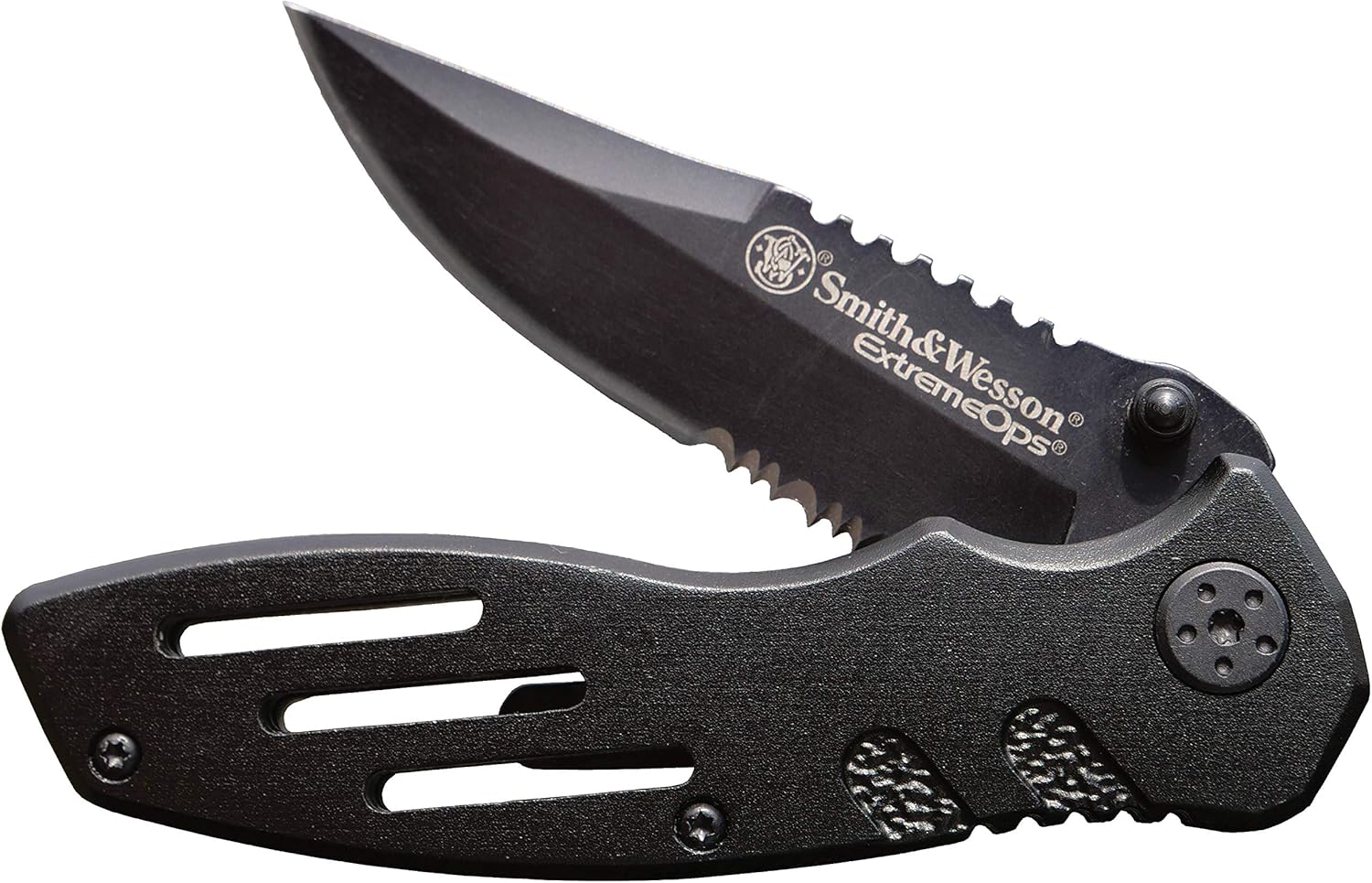
Many users cross-shop the Kalashnikov with Smith & Wesson knives. Generally, the Boker is superior in build quality. While S&W knives often use spring-assist mechanisms (where you must start the blade opening manually), the Boker is a true automatic. The Boker’s aluminum handle also feels more substantial than the plastic-heavy handles often found on budget S&W models.
Vs. Cheap Gas Station Knives
It is tempting to compare the Boker to the M-Tech knives found at truck stops. There is no comparison. The internal springs in the Boker are heat-treated and designed for thousands of cycles. M-Tech automatics or assists often fail after a few months of hard use. The Kalashnikov is a legitimate tool; the others are often novelties.
Alternatives for Restricted Areas
If you live in a state where automatics are illegal, you cannot carry the Kalashnikov. In that case, we recommend a robust button lock manual folder or a sturdy back lock like the Buck 110 or 112 series. For a tactical feel without the spring, the Cold Steel folders or fixed blades are excellent alternatives.
Pros & Cons
✅ Pros
- Incredible Value: Hard to beat for under $50.
- Snappy Action: Fires hard and reliably every time.
- Deep Carry Clip: Rides low in the pocket for discreet carry.
- Variety: Available in Dagger, Wharncliffe, Drop Point, and tons of colors (including the famous “Dessert Warrior”).
- Ergonomic: Secure grip inspired by the AK-47.
❌ Cons
- Paint Wear: The handle coating scratches and wears off easily.
- Pocket Clip Strength: The clip can be a bit weak and bend if snagged.
- Blade Play: Minor side-to-side play is common in this price range (though usually adjustable).
- Legal Restrictions: Being an automatic, it is illegal to carry in many jurisdictions.
Frequently Asked Questions
Is the Boker Kalashnikov legal to carry?
This depends entirely on your location. In the United States, federal law allows ownership, but state laws vary wildly regarding carry. Some states allow automatics for everyone, others only for law enforcement, and some ban them entirely. Always check your local laws before buying.
Does the Boker Kalashnikov have a safety lock?
No, the standard Kalashnikov 74 does not have a secondary safety switch to prevent the button from being pressed. However, the button is recessed (flush), which minimizes accidental deployment. If safety is a major concern, you might prefer a Blue Ridge Knives manual folder.
Can I sharpen the D2 steel version easily?
D2 is harder to sharpen than the AUS-8 version. We recommend using a diamond sharpening rod or a guided system. Avoid pull-through sharpeners as they can chip D2’s hard edge. See our sharpening guide for tips.
What is the “Dessert Warrior” version?
The “Dessert Warrior” is a famous, limited-edition run of the Boker Kalashnikov featuring a pink handle with sprinkles and a blue blade, resembling a donut. It started as a typo (Desert vs Dessert) and became a community favorite.
Is this knife good for self-defense?
While any sharp object can be used for defense, the Kalashnikov is primarily an EDC tool. However, its rapid deployment makes it popular among tactical users. For dedicated defensive options, you might look at neck knives or fixed blades like the ESEE JG3.
How do I fix blade play on my Kalashnikov?
Small amounts of play are normal for budget autos. You can tighten the pivot screw slightly with a Torx driver (usually T8). Don’t over-tighten, or the blade won’t deploy. A drop of Blue Loctite on the pivot screw helps keep it in the sweet spot.
Is the clip reversible?
No, the pocket clip on the standard Boker Kalashnikov is tip-up, right-hand carry only. It is not reversible for left-handed users.
Can I use this for field dressing game?
In a pinch, yes. The drop point blade shape is versatile. However, the automatic mechanism can get clogged with blood and fur, which is hard to clean. For hunting, we strongly suggest a fixed blade like those in our best field dressing knives list.
Final Verdict
The Boker Plus Kalashnikov 74 is not a perfect knife. The paint wears off, the steel isn’t a super-powder metallurgy marvel, and the clip could be stronger. But despite these minor flaws, it remains the undisputed king of budget automatic knives.
It offers a satisfying, reliable action that puts smiles on faces. It is rugged enough to be a daily beater but cheap enough that you won’t cry if you lose it. Whether you are looking for your first automatic knife, a reliable backup for your tactical kit, or just a cool piece of engineering to open Amazon boxes, the Kalashnikov delivers.
If you can legally own one, every knife enthusiast should have at least one Kalashnikov in their collection. We recommend opting for the D2 steel version for the best performance longevity.
Ready to join the Kalashnikov family?
Click below to see the latest colors, blade shapes, and pricing.
Buy Now on Amazon