Are Magnetic Knife Strips Bad for Knife Edges? A Deep Dive into Kitchen Storage Safety
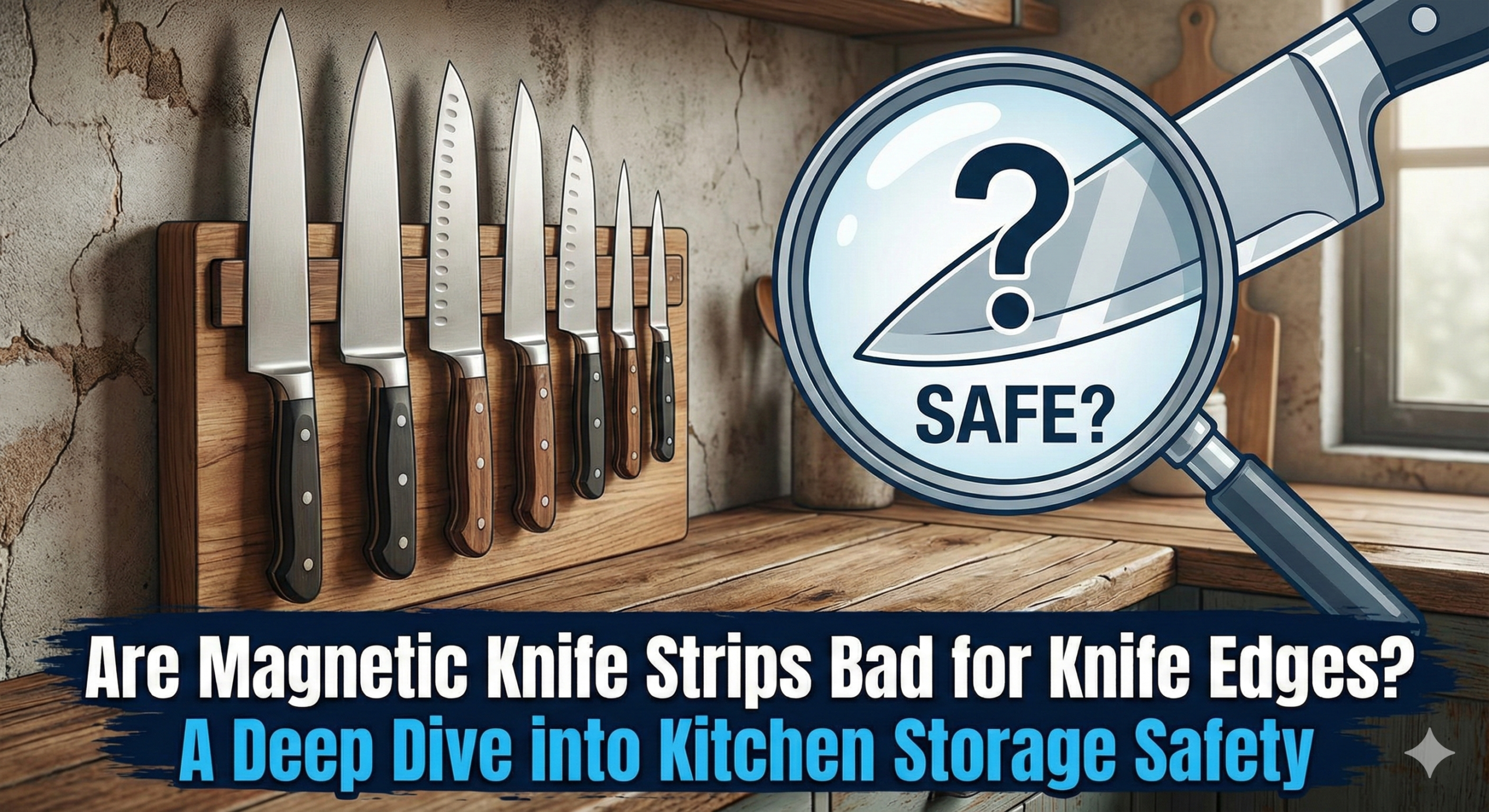
In the world of culinary arts, the debate over knife storage is almost as heated as the debate over stainless steel vs. carbon steel. For years, professional chefs and home cooks alike have gravitated toward magnetic knife strips. They look sleek, they save precious drawer space, and they make you feel like a master chef grabbing a tool mid-service. But a lingering question remains: Are magnetic knife strips bad for knife edges?
The short answer is no, not if you choose the right strip and use the correct technique. However, the long answer is filled with nuance regarding materials, magnetic force, and the microscopic fragility of a knife’s apex. If you are investing in high-end cutlery, such as premium Japanese kitchen knives, understanding how your storage solution interacts with your blade is crucial.
This comprehensive guide will break down the mechanics of magnetic storage, debunk common myths, and teach you exactly how to store your knives to ensure they stay razor-sharp for years to come.
How Magnetic Knife Strips Interaction with Steel
To understand if magnetic strips are harmful, we first need to understand the physics at play. A magnetic knife holder consists of a series of strong magnets—usually neodymium or ferrite—embedded within a housing bar. When a ferromagnetic object, like a chef’s knife, comes into close proximity, the magnetic flux pulls the steel tight against the surface.
The “Clack” Factor
The primary concern most critics have is the “clack” sound heard when a knife snaps onto a metal strip. This sound is the audible evidence of an impact. If the cutting edge (the very sharpest part of the blade) hits the metal strip first, it can roll, chip, or dull the edge instantly. This is particularly dangerous for harder, more brittle steels found in brands like Shun or Miyabi.
However, this is rarely a fault of the magnet itself, but rather the user’s placement technique or the surface material of the strip.
Metal Strips vs. Wood-Encased Magnets: A Crucial Distinction
Not all magnetic strips are created equal. The material that contacts your blade is the single most important factor in preventing damage.
1. Exposed Metal Strips (Aluminum or Stainless Steel)
These are the industrial-style rails often seen in commercial kitchens. While they are durable and easy to sanitize, they pose the highest risk to your edges. Metal-on-metal contact creates friction. If you slide the knife while removing it, you risk scratching the beautiful Damascus finish on a Dalstrong or Shun knife. More critically, if the edge snaps against the hard metal, micro-chipping is almost guaranteed over time.
2. Wood or Silicone-Encased Strips
These are the “gold standard” for home kitchens. The magnets are hidden behind a layer of wood, bamboo, or soft-touch silicone. This layer acts as a shock absorber. Even if you are slightly careless when racking your knife, the wood is softer than the steel edge, meaning the wood will dent before your knife dulls. For anyone looking for the best knife holders that preserve sharpness, wood-encased magnetic strips are the superior choice.
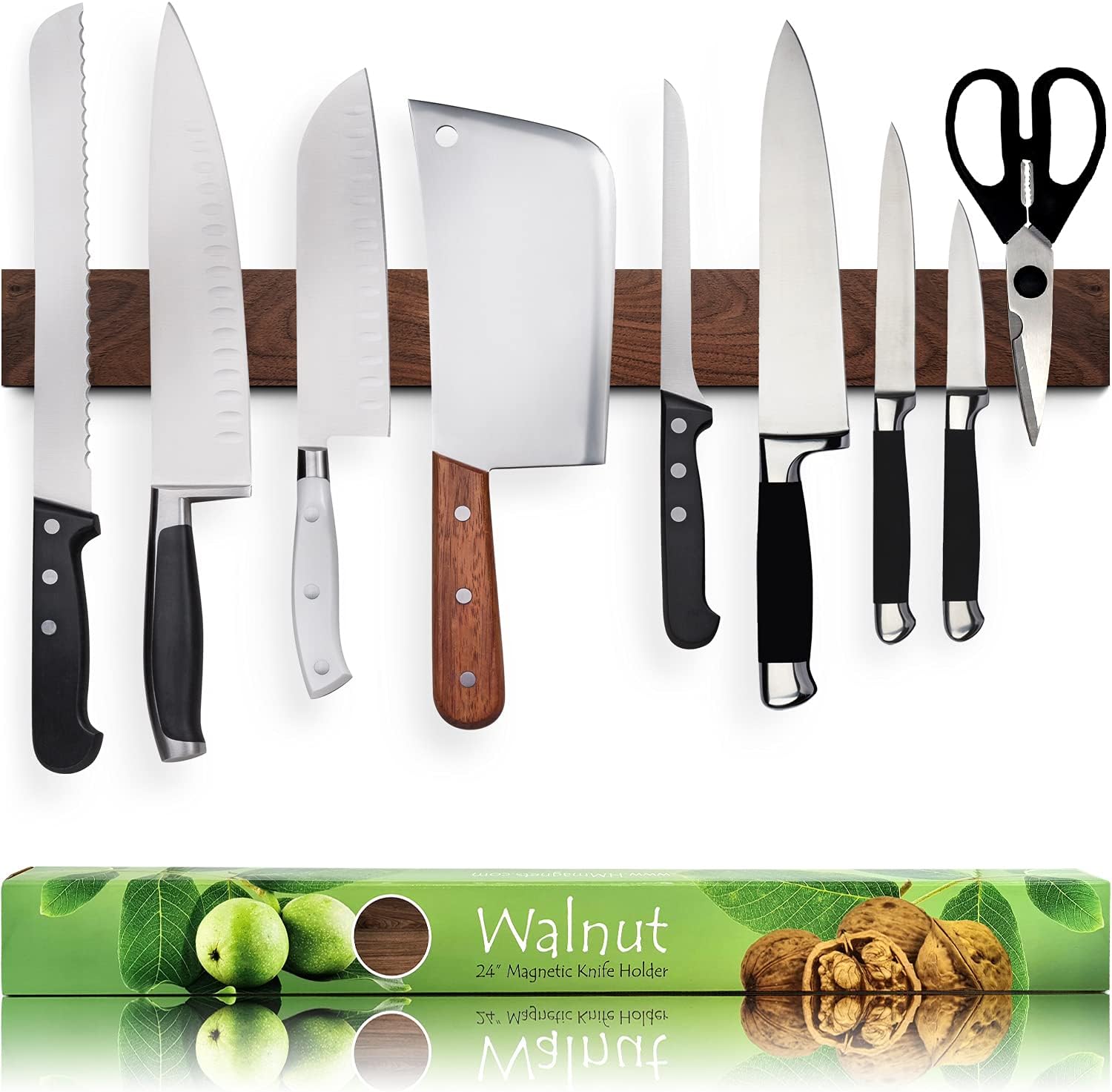
Recommended: Premium Walnut Magnetic Knife Bar
Gentle on edges, strong hold, and elegant design.
Check Price on AmazonMyth Busting: Does Magnetism “Mess Up” the Steel?
A persistent myth in the cutlery world is that storing knives on a magnet will align the iron molecules in the blade, causing the knife to become magnetic itself, which then attracts metal filings during sharpening.
While it is true that storing a knife on a strong magnet can impart a slight magnetic charge to the blade, this effect is negligible for daily cooking. Unless you are sharpening your knives on a grinding wheel where metal dust is flying everywhere, a slightly magnetized knife poses no performance issues. It certainly does not affect the heat treat or the structural integrity of the steel.
If you are concerned about metal filings sticking during stone sharpening, a simple wipe down solves the problem. It is a minor inconvenience compared to the hygiene issues of a dirty knife block.
Are Certain Knives More Vulnerable?
The risk of using a magnetic strip varies depending on what is in your arsenal. Let’s look at how different knives react.
- German Knives (Wusthof, Zwilling): These generally use softer steel (around 56-58 HRC). They are more forgiving. If they hit a metal strip, the edge might roll, which can be fixed with a honing steel. See our comparison of Wusthof vs Zwilling vs Shun for more on steel hardness.
- Japanese Knives (Shun, Global, Miyabi): These utilize harder steel (60+ HRC) which is more brittle. A hard impact against a metal strip can cause chipping, which requires removing metal to fix. Wood-faced strips are mandatory for these.
- Ceramic Knives: Since ceramic is non-ferrous, it is not magnetic. Magnetic strips are useless for ceramic knives. Attempting to force them to stick or storing them loosely near the strip can lead to catastrophic breakage.
The “Twist and Roll” Technique: How to Use a Strip Correctly
Even the best wood-covered magnet can damage a knife if the user pulls the knife straight off by the handle, dragging the edge across the surface. Here is the expert-approved method to rack and un-rack your tools.
To Attach the Knife:
- Hold the knife firmly by the handle.
- Approach the strip with the spine (the dull back of the blade) slightly angled toward the strip.
- Let the spine make contact first.
- Gently roll the flat of the blade onto the magnet until it secures.
- Ensure the edge is not touching any other knives.
To Remove the Knife:
- Grasp the handle securely.
- Twist the spine outward, rotating the knife away from the strip using the edge as the pivot point (without dragging the edge).
- Once the magnetism breaks, pull the knife away from the wall.
- Never slide the knife horizontally along the strip, as this can cause scratches.
Knife Storage Showdown: Which is Best?
If you are still on the fence, let’s compare magnetic strips against the other two most common storage methods: the traditional countertop block and the drawer organizer. For a deeper dive, check out our guide on how to store knives without a block.
| Feature | Magnetic Strip | Knife Block | Drawer Organizer |
|---|---|---|---|
| Edge Safety | High (if wood-faced & used correctly) | Medium (Risk of dulling on insertion) | High (Knives are separated) |
| Hygiene | Excellent (Easy to clean, airy) | Poor (Slots can harbor mold/bacteria) | Good (If cleaned regularly) |
| Counter Space | Maximized (Wall-mounted) | Occupies significant space | Hidden (Occupies drawer space) |
| Accessibility | Instant | Good | Requires opening drawer |
| Aesthetics | Modern, Display-focused | Traditional | Invisible |
While blocks are traditional, they are often difficult to clean inside. See our review of the best knife sets with blocks if you prefer that aesthetic. However, for sheer hygiene and edge preservation, a magnetic strip or a high-quality drawer organizer usually wins.

Alternative: Bamboo In-Drawer Knife Organizer
Perfect if you don’t want to drill holes in your backsplash.
Check Price on AmazonPros and Cons of Magnetic Knife Strips
✅ Advantages
- Hygiene: No hidden slots for moisture or bacteria to accumulate.
- Visibility: You can see exactly which knife you are grabbing—no more guessing if you’re pulling a Chef knife or a Santoku.
- Versatility: Fits any size knife, unlike blocks with pre-sized slots.
- Space Saving: Frees up counter space and drawer real estate.
- Universal: Works for cheap beaters or affordable chef knives just as well as expensive ones.
❌ Disadvantages
- Installation: Requires drilling into the wall or backsplash (though heavy-duty adhesive versions exist).
- Safety: Blades are exposed; potential hazard for children or pets who can reach the counter.
- Fall Risk: Weak magnets can cause heavy cleavers or butcher knives to slip.
- Edge Damage: Only if used improperly or with metal-on-metal strips.
Frequently Asked Questions
Do magnetic knife holders dull knives?
Not inherently. Magnetic holders only dull knives if the blade edge strikes the strip during placement, or if the strip is made of hard metal. Using a wooden magnetic strip and placing the knife spine-first prevents dulling.
Can I put ceramic knives on a magnetic strip?
No. Ceramic knives are made of zirconium dioxide, which is not magnetic. They will not stick to a magnetic strip and could fall and break if you try.
Is it safe to hang heavy knives like cleavers on a magnet?
It depends on the strength of the magnet. High-quality strips with strong neodymium magnets can hold heavy cleavers, but you should always test the hold before letting go. Ensure the strip is securely mounted to the wall studs.
Do magnetic strips scratch Damascus steel?
Metal magnetic strips can scratch the delicate acid-etched finish of Damascus steel. To protect the finish of high-end knives like those discussed in our Miyabi vs Shun comparison, always use a wood-covered or silicone-coated magnetic strip.
Final Verdict: Are Magnetic Strips Safe?
Magnetic knife strips are not bad for knife edges—bad habits are bad for knife edges.
When used correctly, a magnetic strip is arguably the most hygienic and convenient way to store your culinary tools. It keeps them dry, prevents the cross-contamination common in knife blocks, and turns your collection into a visual centerpiece. The key is to invest in a wooden or silicone-coated strip to provide a soft landing for your steel, and to practice the spine-first twisting motion when retrieving your knives.
Whether you are rocking a robust Mercer or Victorinox for daily prep, or a delicate hand-forged Gyuto, a magnetic strip is a safe, professional choice. Just ensure you install it securely away from high-traffic areas where it might be bumped.
Ready to upgrade your kitchen storage? Check out our top recommendations below.
Top Pick: Ouddy 16 Inch Magnetic Knife Bar
Stainless steel with powerful magnetic grip. Best value for the money.
See It On Amazon