Made In Chef Knife Review: Is This French-Forged Blade the New Standard?
By Culinary Gear Experts | Updated 2025
In the last five years, the “Direct-to-Consumer” (DTC) revolution has upended the kitchenware industry. Brands like Made In Cookware have surged in popularity by promising professional-grade quality at a fraction of the retail price. But when it comes to cutlery, marketing hype often dulls faster than a cheap blade. The question serious home cooks are asking is: Does the Made In Chef Knife actually compete with the best chef knife brands like Wusthof and Zwilling?
Unlike many DTC brands that outsource to China, Made In took a different route. They went straight to Thiers, France—the capital of French cutlery since the Middle Ages—to forge a knife that claims to be the perfect hybrid of durability and precision. We purchased the Made In 8-Inch Chef Knife and put it through weeks of rigorous testing in our test kitchen. From breaking down chickens to chiffonading basil, we evaluated its sharpness, edge retention, and ergonomics.
If you are tired of overpaying for heritage brands but skeptical of Instagram ads, this review is for you.
Product Overview: The Specs
The Made In Chef Knife is a fully forged, full-tang blade. It is designed to be a workhorse, sitting comfortably between the heavy German style and the delicate Japanese style. Here is the technical breakdown.
| Blade Length | 8 Inches (20cm) |
| Steel Type | X50CrMoV15 (Nitrogen Treated) |
| Hardness (HRC) | 58-60 HRC |
| Manufacturing Method | Fully Forged |
| Handle Material | POM (Synthetic) or Olive Wood |
| Weight | Approx. 7.5 oz (212g) |
| Origin | Thiers, France |
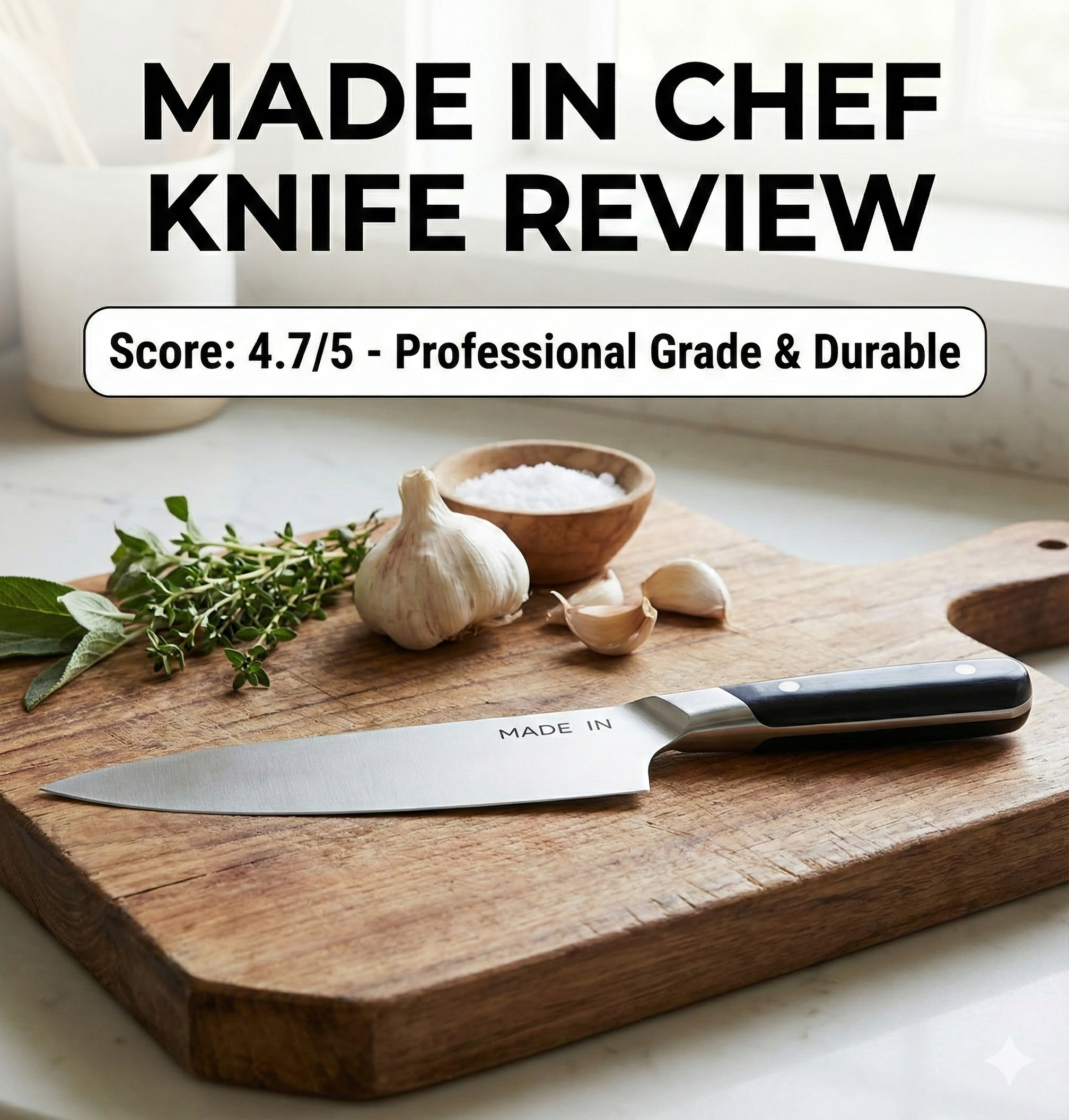
Made In Chef Knife Score
A masterclass in balance and utility. It feels more expensive than it is.
 Check Price on Amazon
The Blade: French Tradition Meets Nitrogen Science
The core of any knife is its steel. Made In uses X50CrMoV15, which is the standard high-carbon stainless steel used in best German kitchen knives like Wusthof Classic and Zwilling Pro. However, Made In adds a twist: Nitrogen Gas Treatment.
What Does Nitrogen Treatment Do?
During the forging process, the steel is treated with nitrogen. This stabilizes the microstructure of the blade, increasing corrosion resistance and allowing the edge to be hardened slightly more without becoming brittle. While most German knives sit at 56-58 HRC, the Made In knife pushes towards 58-60 HRC. This puts it in a sweet spot: tougher than a Shun or Miyabi (which are prone to chipping), but with better edge retention than a standard Henckels.
Geometry and Profile
The profile is distinctly French. Unlike the deep belly of a German knife that encourages a heavy rocking motion, the Made In blade is straighter. It resembles a Gyuto vs Chef Knife hybrid. You can still rock chop, but it excels at push-cutting and slicing. The tip is fine and precise, making it useful for shallot work that typically requires a paring knife.
Handle and Ergonomics: The “Extension of Your Hand”
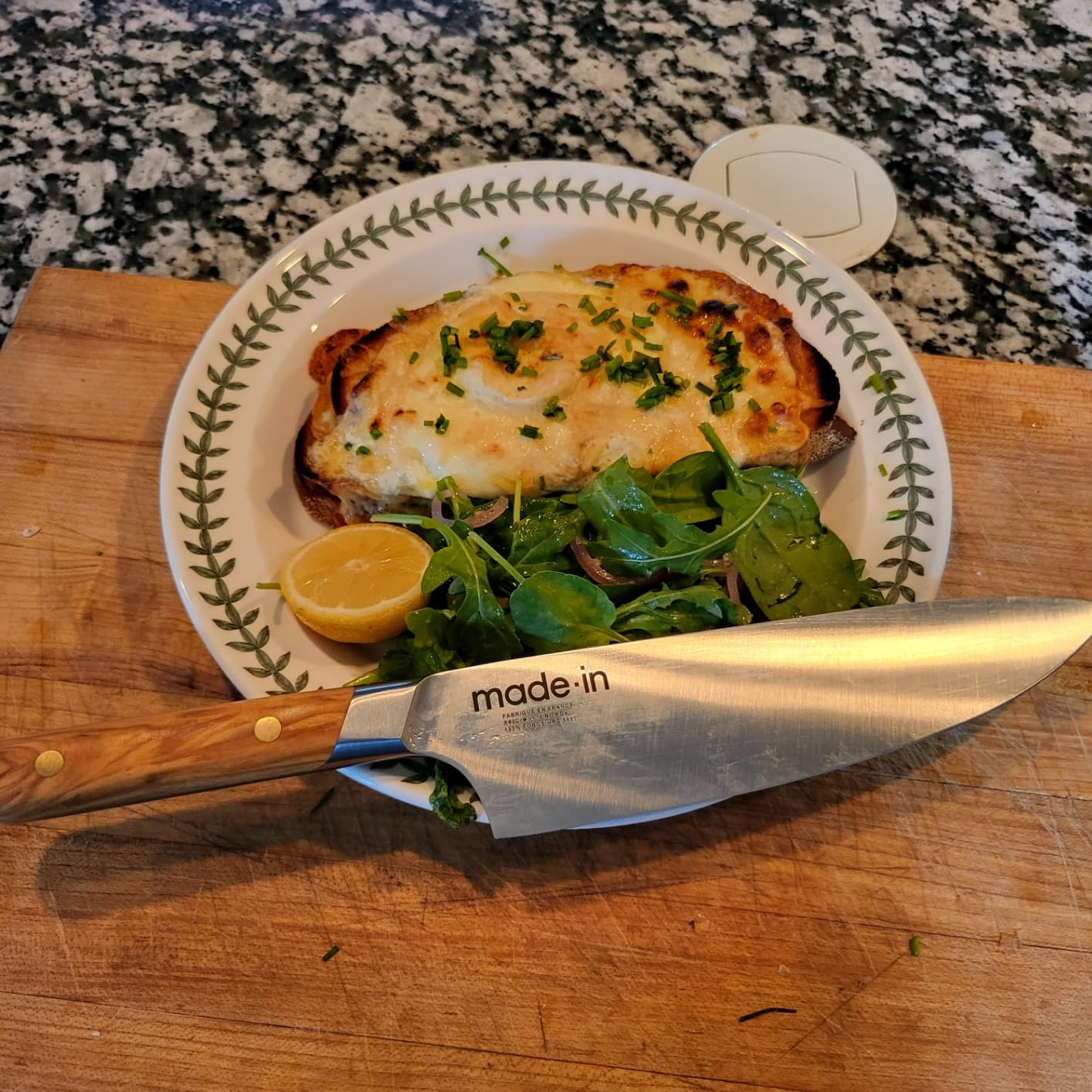
A sharp knife is useless if it hurts to hold. Made In opted for a classic, triple-riveted handle available in POM (a dense, durable plastic) or premium Olive Wood. We tested the POM version, which comes in their signature “Made In Red” and Black.
The Grip
The handle shape is oval but slightly squared off, providing a secure grip that doesn’t rotate in your hand when cutting dense vegetables like squash. It is a full-tang construction, meaning the metal runs all the way to the butt of the knife. This is a critical distinction when comparing stamped vs forged knives; full tang offers superior balance.
Balance Point
The balance is impeccable. It sits right at the bolster (where the handle meets the blade). This makes the 7.5 oz weight feel lighter than it is, reducing wrist fatigue during prep-heavy meals. It doesn’t have the handle-heavy feel of a Wusthof Icon, nor the blade-heavy feel of a cheap stamped knife.
Performance Test: In The Kitchen
We ran the Made In knife through our standard gauntlet of kitchen tasks.
1. The Paper Test
Out of the box, the factory edge was shaving sharp. It sliced through magazine paper with zero tearing, indicating a high-quality initial grind.
2. The Tomato Test
The skin of a ripe tomato is the nemesis of dull knives. The Made In blade bit into the skin immediately without needing pressure. This rivals the sharpness we usually see in high-end Japanese knives.
3. The Carrot & Squash Test
Here is where the geometry shines. Because the blade isn’t overly thick at the spine, it didn’t “wedge” or crack the carrots. It sliced cleanly through. For the butternut squash, the stiffness of the forged steel provided confidence—there was no flexing or wobbling.
Pros and Cons
✅ The Good
- Nitrogen Steel: Excellent edge retention and durability (58+ HRC).
- Origin: Authentic French craftsmanship from Thiers.
- Balance: Perfectly weighted for a pinch grip.
- Warranty: Lifetime warranty against defects.
- Value: Costs significantly less than Wusthof or Zwilling for equal performance.
❌ The Bad
- Sheath: Does not come with a sheath (you need a knife holder).
- Cleaning: The branding on the blade can fade with heavy scrubbing.
- Availability: Often sold out due to high demand.
- Spine: The spine corners are a bit sharp (not rounded), which can irritate the finger in a pinch grip after hours of use.
Comparison: Made In vs The Competition
The biggest question buyers have is how Made In stacks up against the titans of the industry.
Made In vs. Wusthof Classic
The Wusthof Classic is the gold standard.
- Steel: Both use X50CrMoV15, but Made In’s nitrogen treatment makes it slightly harder.
- Feel: Wusthof is heavier and has a larger bolster (finger guard). Made In feels more agile.
- Price: Made In is typically 30-40% cheaper.
- Verdict: If you want a tank, get Wusthof. If you want agility and value, get Made In.
Made In vs. Misen
This is the battle of the DTC brands. We conducted a full Misen Chef Knife review recently.
- Steel: Misen uses Japanese AUS-10 (harder, more brittle). Made In uses French Stainless (tougher).
- Design: Misen has a unique sloped bolster. Made In is more traditional.
- Feel: Made In feels more premium and substantial. Misen feels more like a budget upgrade.
- Verdict: Made In is the superior knife for longevity and durability.
Made In vs. Victorinox Fibrox
The Victorinox is the budget king.
- Comparison: There is no contest in build quality. Made In is fully forged; Victorinox is stamped. Made In is a joy to use; Victorinox is purely utilitarian.
- Verdict: Upgrade to Made In if you care about the cooking experience.
Maintenance: Keeping It Sharp
Because Made In uses nitrogen-treated steel, it holds an edge well, but it still requires care.
Honing
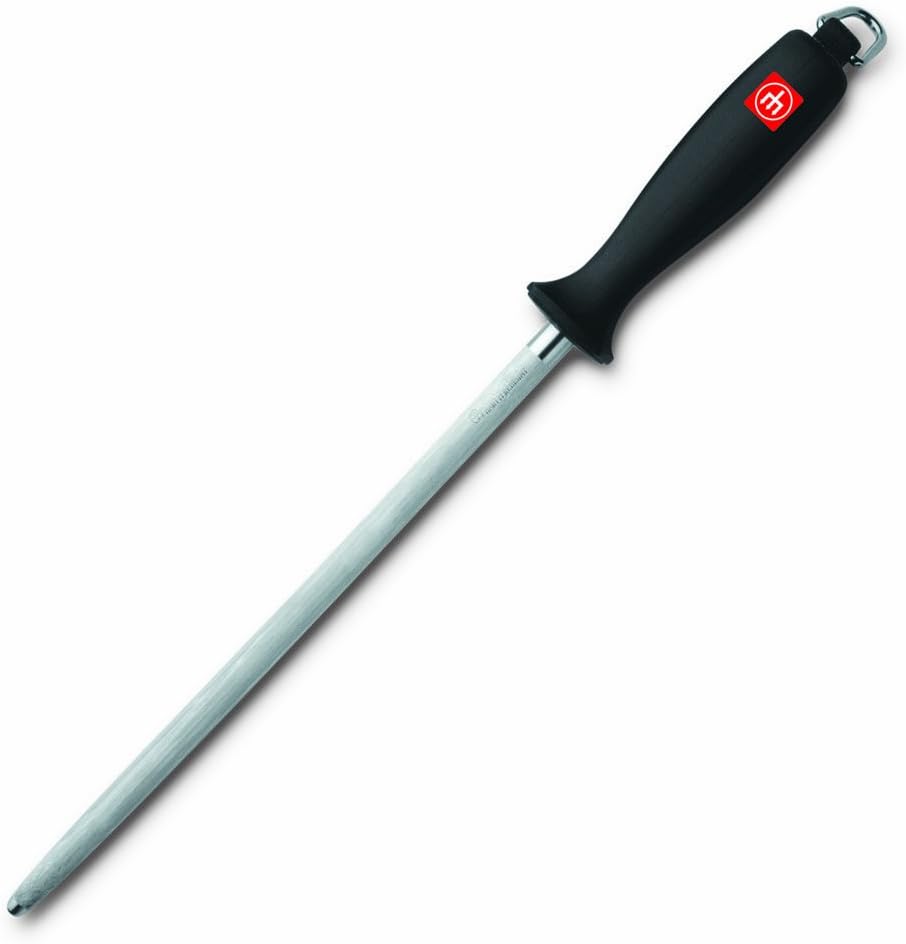
You should hone your knife every few uses to realign the edge. Read our guide on sharpening stone vs honing steel to understand the difference. A standard steel rod works perfectly for the Made In knife.
Sharpening
When the edge eventually dulls (usually after 6-9 months of daily use), it will need sharpening. We recommend using a whetstone or a high-quality electric system. Check our list of best electric knife sharpeners compatible with 15-20 degree edges.
Storage
Never throw this knife in a drawer. The edge will chip. Use a knife drawer organizer or a magnetic strip. If you travel, ensure you know how to travel with kitchen knives safely using a roll or guard.
Frequently Asked Questions
Where are Made In knives manufactured?
Made In knives are forged in Thiers, France, a town renowned as the capital of French cutlery for over 600 years. They are produced by a 5th generation family-owned manufacturer, ensuring authentic craftsmanship.
Is the Made In chef knife dishwasher safe?
No. Like all high-quality forged knives, the Made In knife should be hand washed and dried immediately. The dishwasher’s high heat and harsh detergents can damage the handle materials and dull the blade significantly.
What is the angle of the Made In chef knife?
The Made In Chef Knife is sharpened to a total angle of approximately 25 degrees (12.5 degrees per side). This is sharper than traditional German knives (typically 20-22 degrees per side), offering a precision cut while maintaining enough metal behind the edge for durability.
Does Made In offer free sharpening?
Made In does not currently offer a free sharpening mail-in service. However, the nitrogen-treated steel is user-friendly and easy to sharpen at home. If you prefer professional help, check local services or our guide on the best knife sharpeners.
Final Verdict: Should You Buy the Made In Chef Knife?
The Made In 8-Inch Chef Knife is a triumph of modern D2C economics meeting old-world craftsmanship. It successfully strips away the retailer markup without stripping away quality.
It is not just “good for the price”—it is legitimately a top-tier tool that stands shoulder-to-shoulder with Henckels and Victorinox upgrades. The French profile offers a level of refinement that bulky German knives lack, while the nitrogen-treated steel provides a toughness that delicate Japanese knives can’t match.
We recommend buying the Made In Chef Knife if:
- You want a professional-grade knife for under $120.
- You prefer a knife that balances durability with precision slicing.
- You value transparency and European manufacturing.
If you are building your kit, this is the perfect centerpiece. It handles everything from Santoku-style veggie prep to heavy meat fabrication with grace.