Benchmade Bugout Review: The Undisputed King of Ultralight EDC?
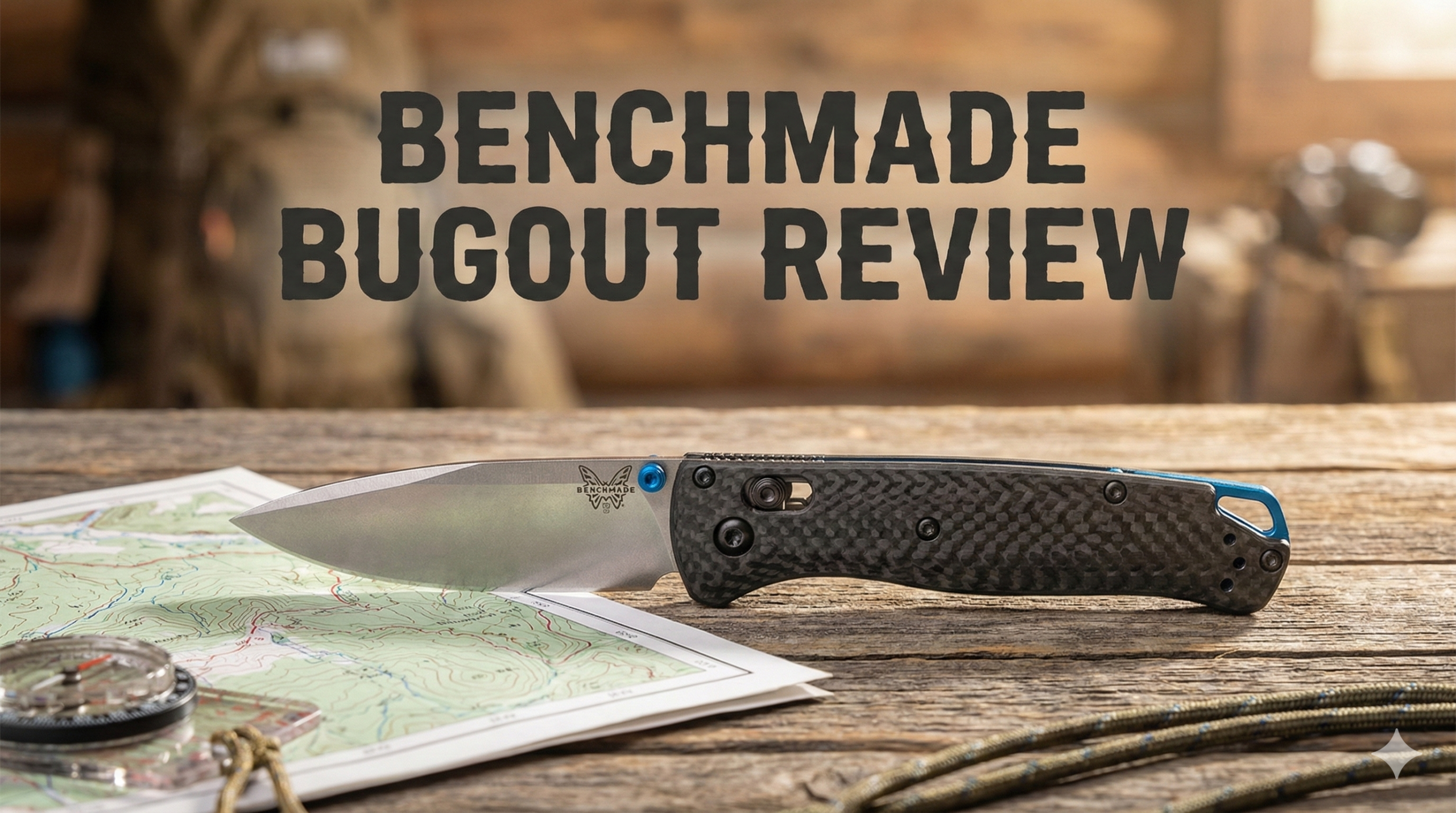
If you have spent any time in the Everyday Carry (EDC) community over the last five years, you’ve likely heard the name “Bugout” whispered with a mix of reverence and controversy. The Benchmade 535 Bugout didn’t just enter the market; it disrupted it entirely. Originally designed for backpackers counting every ounce, it accidentally became the gold standard for general EDC knives.
But does it still hold up? With a price tag that has crept up over the years and competitors flooding the market with lightweight folders, is the Bugout still the king of the ultralight hill? In this comprehensive review, we strip the Bugout down to its screws, test the S30V steel, and determine if this featherweight fighter deserves a spot in your pocket today.
Whether you are opening Amazon packages, whittling by the campfire, or prepping a survival kit, understanding the capabilities of your tool is paramount. We will explore everything from blade geometry to the reliability of the AXIS lock.
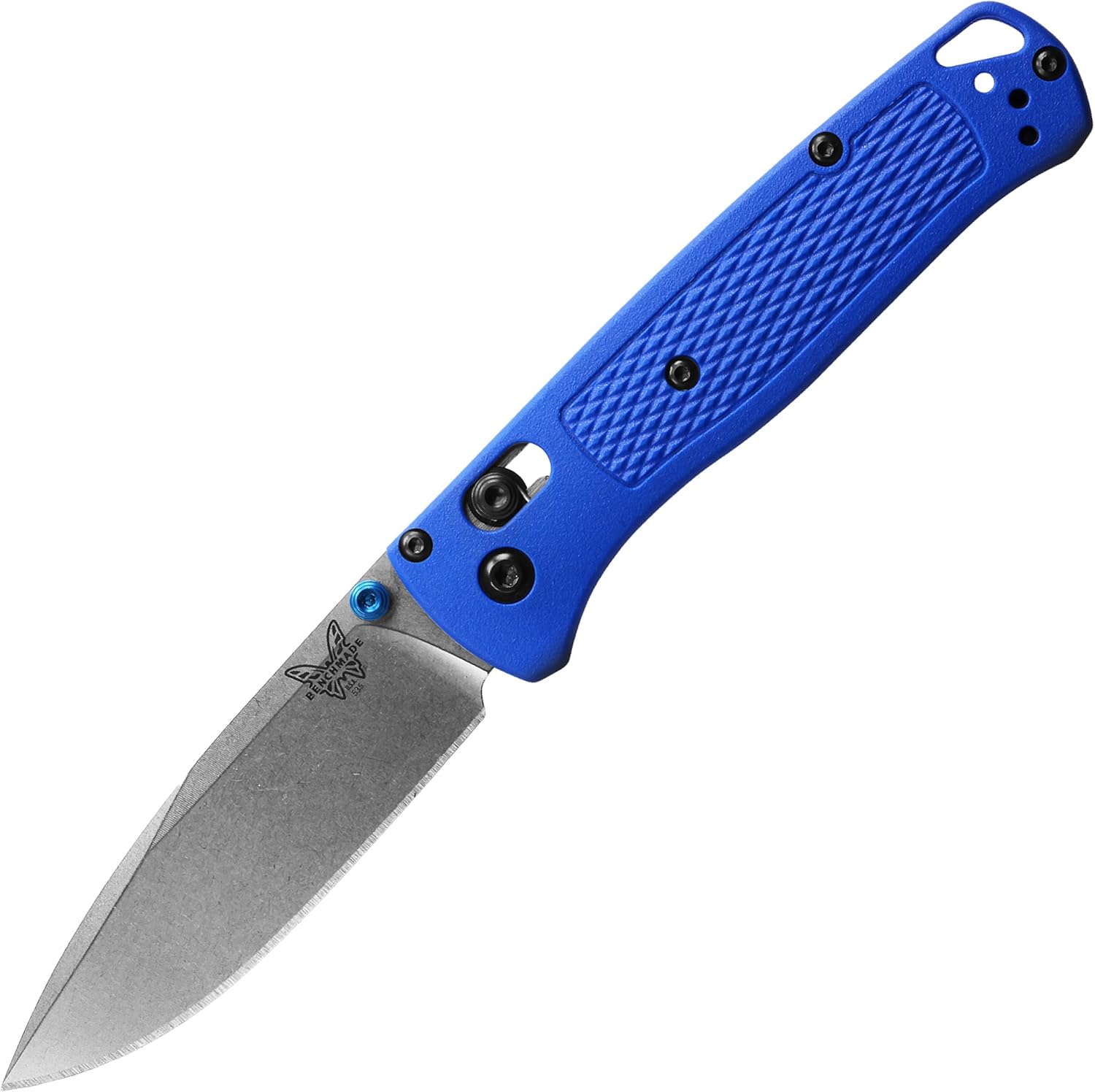
Looking for the ultimate lightweight EDC? The Bugout disappears in your pocket but performs like a beast.
Check Price on AmazonTechnical Specifications
Before we dive into the subjective experience, let’s look at the raw numbers. Understanding these specs is crucial, much like knowing the difference between stamped and forged knives when equipping a kitchen—details matter.
| Blade Length | 3.24 inches (8.23 cm) |
|---|---|
| Blade Thickness | 0.090 inches (2.29 mm) |
| Open Length | 7.46 inches (18.95 cm) |
| Closed Length | 4.22 inches (10.72 cm) |
| Weight | 1.85 ounces (52.45 g) |
| Handle Thickness | 0.42 inches (10.67 mm) |
| Blade Steel | CPM-S30V Premium Stainless Steel |
| Handle Material | Grivory |
| Lock Type | AXIS Lock |
The Blade: CPM-S30V Performance
The heart of the Bugout is its blade. Benchmade opted for CPM-S30V steel for the standard 535 model. For years, S30V was the “super steel” of the industry. While newer steels like MagnaCut and S45VN have entered the chat, S30V remains a powerhouse for EDC tasks.
Edge Retention and Toughness
In our testing, the Bugout held a working edge through weeks of cardboard cutting, zip-tie slicing, and food prep. S30V offers a fantastic balance between edge retention and corrosion resistance. It is significantly harder than budget steels, meaning you won’t need to sharpen it every few days.
Blade Shape and Grind
The blade features a classic drop-point shape with a high flat grind. This geometry is where the Bugout truly shines. Because the blade stock is so thin (0.090 inches), it is an absolute laser beam through material. It slices apples without wedging and glides through heavy-duty cardboard.
However, users should note the distinction in maintenance. Unlike softer steels, S30V can be tricky to sharpen if you let it get completely dull. Knowing the difference between a sharpening stone and a honing steel is vital here; you’ll want to hone regularly to maintain that razor edge.
Warning: This is a slicing tool, not a prying tool. Do not try to pry open paint cans with a tip this thin; it will snap. Use the right tool for the job.

Need a blade that stays sharp longer? The S30V steel on the Bugout is an industry favorite for edge retention.
Check Price on AmazonHandle & Ergonomics: The “Grivory” Debate
Here lies the most controversial aspect of the Benchmade Bugout: the handle scales. They are made from Grivory, a glass-filled nylon thermoplastic. It is incredibly lightweight, durable, and weather-resistant.
The “Flex” Issue
If you squeeze the handle scales hard in the middle, you can feel them flex slightly. When the knife first launched, internet forums exploded with complaints about this. In reality? It doesn’t matter. During actual cutting tasks, your hand pressure reinforces the scales. The flex is a trade-off for achieving that sub-2-ounce weight.
Ergonomics
The ergonomics are surprisingly neutral and comfortable. The handle accommodates a four-finger grip for most hand sizes. There is aggressive jimping (texture) on the spine of the liners and the handle, providing a secure thumb ramp for detailed cuts. It feels secure, even when wet.
If you are used to the heavy, substantial feel of carbon steel fixed blades, the Bugout might feel “toy-like” at first. Give it a week. The lack of weight prevents hand fatigue during extended use.
The AXIS Lock Mechanism
Benchmade’s patented AXIS lock is the star of the show. It is fully ambidextrous, allowing you to open and close the knife without your fingers ever crossing the path of the blade—a huge safety plus.
The action on the Bugout is addictive. Pull back the lock bar, and the blade swings freely. With a little practice, you can flick it open and closed with pure kinetic energy. It’s one of the best “fidget” factors in the knife world.
Reliability: The lock is rated for significant force. While the Bugout isn’t a hard-use tactical folder, the lock is far stronger than the handle itself. It will not fail under normal EDC use.
Carry Experience: The Disappearing Knife
This is why you buy a Bugout. Weighing in at just 1.85 ounces, it is lighter than many car key fobs. You can clip it into gym shorts, dress slacks, or hiking pants, and you will forget it is there until you need it.
The Deep Carry Pocket Clip is excellent. It is a “fold-over” design that allows the knife to sit completely flush inside your pocket, showing nothing but the clip. This makes it discreet and office-friendly.
For those interested in other minimal carry options, you might compare this experience to the best neck knives, which also prioritize weight and accessibility, though the Bugout offers far more utility in a folding package.

Tired of heavy knives dragging down your pants? Experience the 1.85oz featherweight champion.
Check Price on AmazonThe “AR-15 of Knives”
Because the Bugout is so popular, the aftermarket support is insane. You are not stuck with the flexible Grivory scales. You can buy scales in:
- Titanium (adds rigidity and a premium feel)
- Carbon Fiber (keeps it light but stiff)
- Brass or Copper (adds heft and patina)
- G10 (classic grip)
You can swap the thumb studs, the backspacers, and the screws. Buying a Bugout is often just the beginning of building your perfect custom knife.
Pros & Cons Cheat Sheet
The Good
- Insanely lightweight (1.85 oz)
- Premium S30V steel slices perfectly
- Ambidextrous AXIS lock is safe and fun
- Deep carry clip is standard
- Massive customization potential
The Bad
- Grivory handles feel “cheap” to some
- Price has increased significantly ($160+)
- Omega springs in the lock can break (rarely)
- Not suitable for heavy prying
Bugout vs. The World
Benchmade Bugout vs. Spyderco Para 3 Lightweight
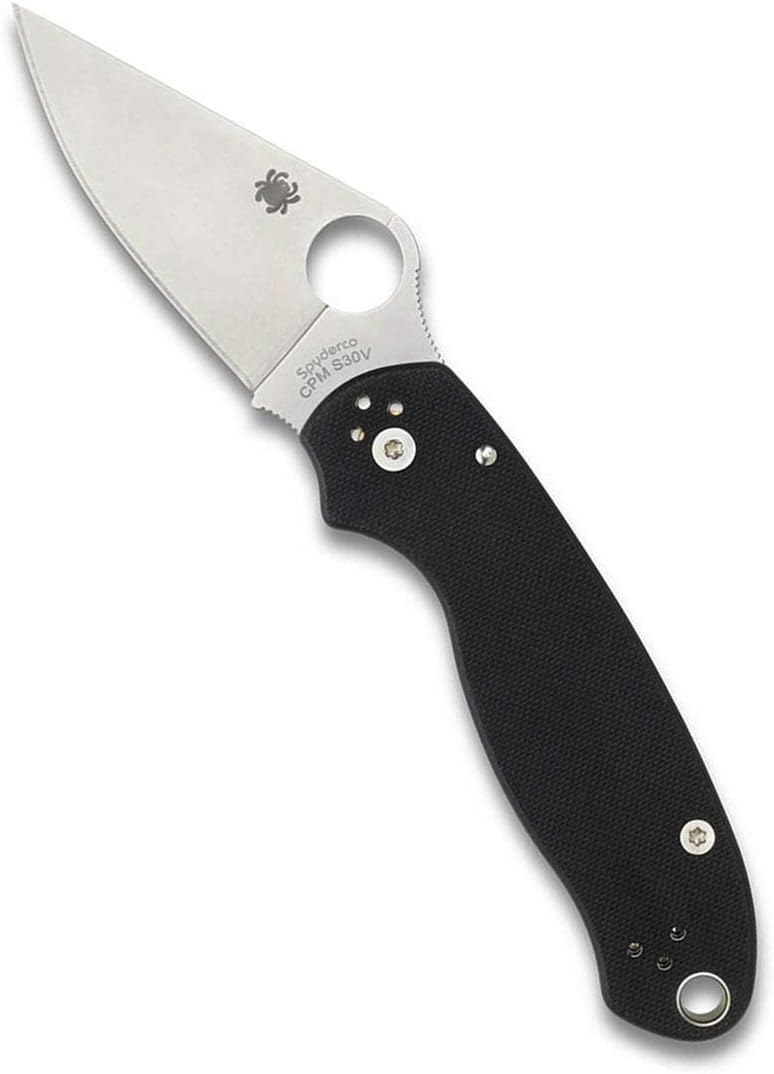
The Para 3 Lightweight is the Bugout’s main rival. The Para 3 has a better finger choil and arguably better ergonomics for hard cuts. However, the Bugout is slimmer in the pocket and has a longer cutting edge relative to its handle size. If you want sliciness, go Bugout. If you want hard-use ergonomics, go Para 3.
Benchmade Bugout vs. Mini Bugout
The Mini Bugout is… well, smaller. It’s great for people with smaller hands or restrictive local knife laws (sub-3-inch blade). However, for most adults, the full-size Bugout is the sweet spot. It isn’t a large knife to begin with.
Just as you would evaluate different types of knives and their uses for specific tasks, the choice between the Mini and Standard comes down to your hand size and legal restrictions.
Frequently Asked Questions
Is the Benchmade Bugout worth the high price tag?
Yes, primarily for the warranty (LifeSharp) and the weight-to-performance ratio. You are paying for American manufacturing, premium steel, and a knife that disappears in the pocket but performs like a full-size tool. However, value is subjective, and many budget knives now offer good performance for less.
Can the Bugout handle heavy-duty tasks?
It can handle heavy cutting (thick cardboard, rope, wood carving) easily. It cannot handle abuse like prying, batoning through logs, or serving as a screwdriver. It is a slicing tool, not a pry bar.
Does the Bugout rust?
The S30V blade is stainless and highly resistant to rust. However, the internal liners and springs are steel and can corrode if exposed to saltwater without cleaning. Maintenance is key.
Is the Bugout hard to sharpen?
S30V is a hard steel. It takes longer to sharpen than cheap kitchen knives, but it holds that edge much longer. We recommend diamond plates or a guided sharpening system for best results.
What happens if the Omega Springs break?
The Omega springs in the AXIS lock are a known weak point, though failure is statistically rare. If they break, Benchmade will replace them for free under their warranty. You can also buy aftermarket springs online and replace them yourself easily.
Is the Benchmade Bugout legal to carry?
In most US states, yes. It is a manual folder with a blade usually around 3.24 inches. However, laws vary by city and country (especially strict in the UK/NYC). Always check your local regulations.
Is it good for food prep?
Surprisingly, yes. The thin blade stock makes it an excellent camp kitchen knife for slicing veggies or meat. It works better than many thick “tactical” knives.
Can I replace the scales myself?
Absolutely. The Bugout is designed to be disassembled (though doing so technically voids the warranty if you strip a screw, Benchmade is usually lenient). There are hundreds of tutorials on YouTube.
Ready to upgrade your EDC? Join thousands of satisfied users who trust the Bugout daily.
Check Price on AmazonFinal Verdict
The Benchmade Bugout is a modern classic for a reason. It redefined what we expect from a lightweight knife. It isn’t perfect—the price is high and the handles feel plasticky to some—but functionally, it is nearly flawless.
It cuts better than knives twice its weight. It carries better than knives half its size. If you want one knife to do it all—hike, office carry, camp, and work—the Bugout is the one to beat.