Master the Art of Sashimi: The Ultimate Starter Sushi Knives
Making sushi at home is an incredibly rewarding culinary pursuit. It demands focus, respect for high-quality ingredients, and above all, precision. You can source the freshest, sushi-grade Bluefin tuna in the world, but if you attempt to slice it with a thick, dull Western chef’s knife, you are going to destroy it.
A standard kitchen knife operates like an axe—it wedges into food and forces it apart. When dealing with delicate raw fish, this wedging action crushes the cellular structure, turning the flesh mushy, releasing its natural juices, and utterly ruining the mouthfeel. To achieve those impossibly glossy, translucent slices of sashimi that melt on your tongue, you need a blade specifically engineered for the task: a sushi knife.
However, diving into the world of Japanese cutlery is intimidating. Terms like Yanagiba, Sujihiki, single-bevel grinds, and high-carbon steel can overwhelm a newcomer. If you are looking for the best sushi knife for beginners, you need a blade that offers authentic performance without a grueling learning curve or an astronomical price tag. In this exhaustive 2026 guide, we will review the top five entry-level sushi knives, demystify the geometry, and set you on the path to becoming a home sushi master.
1. Why You Absolutely Need a Dedicated Sushi Knife
The traditional Japanese sushi knife is called a Yanagiba (which translates to “willow blade”). These knives are characterized by their extreme length, narrow profile, and signature single-bevel edge. They are designed to do one thing perfectly: slice through raw protein in a single, frictionless motion.
When you use a Yanagiba, the flat back of the blade (which features a slight concave depression called the urasuki) glides cleanly against the fish, creating an air pocket that prevents sticking. The aggressively angled front side pushes the slice gently away. Because the edge angle is so acute (often 10 to 12 degrees, compared to a German knife’s 20 degrees), it severs the flesh microscopically clean.
Using a dedicated slicing knife is not just about aesthetics; it fundamentally preserves the flavor and texture of the seafood. For a beginner, owning a dedicated slicing knife also ensures that the blade remains razor-sharp, as it is never subjected to the edge-dulling abuse of chopping hard vegetables or bones.

2. What Makes a Good Beginner Sushi Knife?
If you hand a massive, 300mm ultra-high-carbon forged Yanagiba to a beginner, they are likely to chip the blade, rust the steel, and struggle to maneuver it on a small home cutting board. A beginner’s knife needs to strike a balance between authenticity and forgiveness.
- Blade Length: Professional sushi knives are incredibly long (10.5 to 13 inches) to allow for long pull-cuts on massive fish. For a beginner working in a home kitchen, an 8.2-inch (210mm) to 9.5-inch (240mm) blade is much easier to control and steer.
- Steel Type: High-carbon steel is traditional, but it rusts within minutes if left wet. For your first knife, high-carbon stainless steel (like AUS-8 or VG-10) is highly recommended. It takes a wicked edge but is forgiving if you forget to wipe it down immediately.
- Price Point: You shouldn’t spend $300 on your first sushi knife. You need a blade that you aren’t terrified to practice sharpening on. The $50 to $120 range is the sweet spot for a high-quality starter blade.

3. #1 Best Overall Beginner Sushi Knife: Mercer Culinary Asian Collection Yanagi
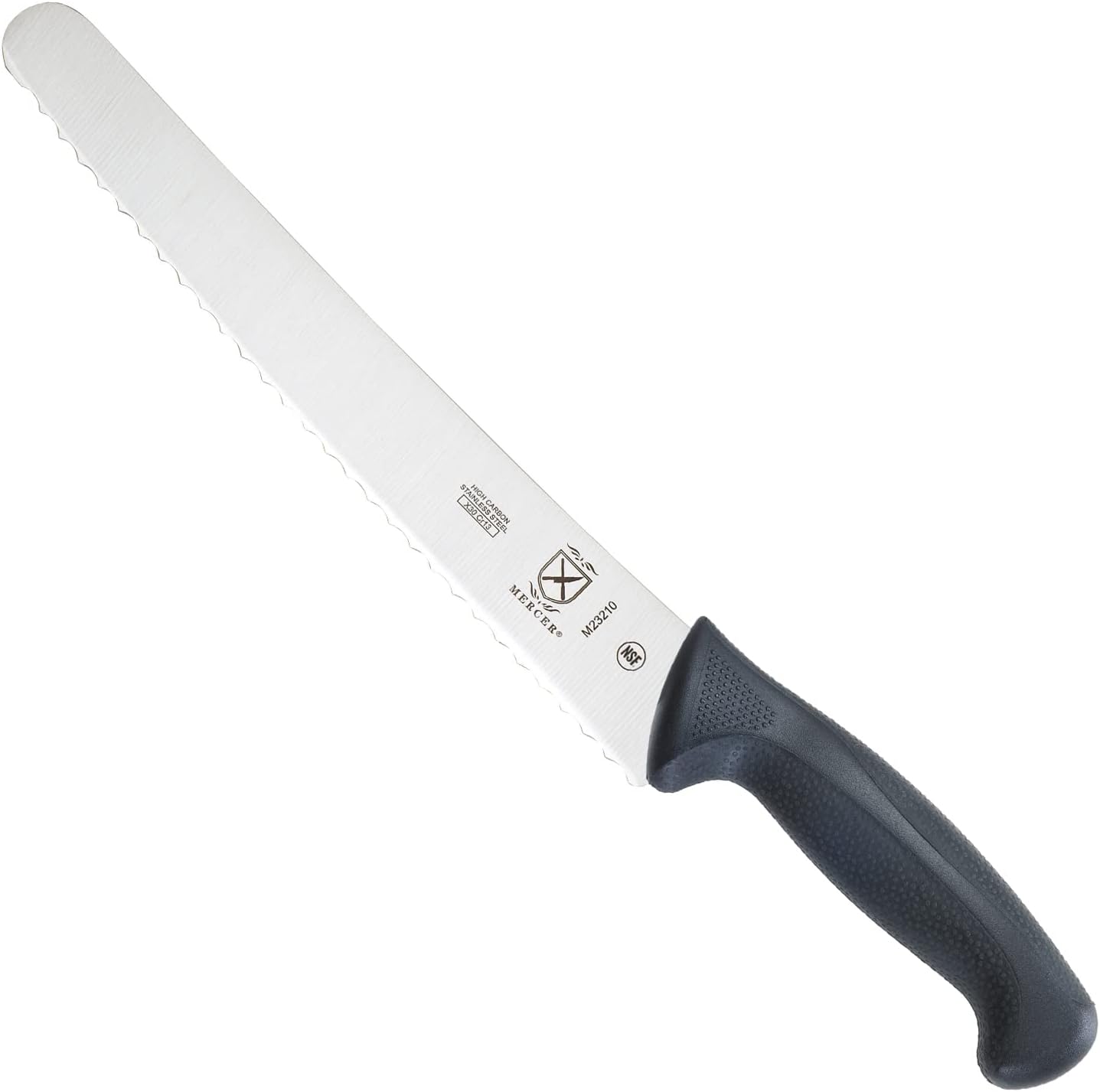
If you want to experience the authentic feel of a traditional single-bevel Yanagiba without breaking the bank, the Mercer Culinary Asian Collection Yanagi (10-inch) is the absolute best place to start. Mercer is renowned for producing high-quality culinary school knives, and this blade delivers exceptional value.
Constructed from high-carbon German steel, this knife resists rust incredibly well. While it doesn’t hold an edge as long as premium Japanese steel, it is remarkably easy to sharpen—which is exactly what a beginner needs to practice their whetstone technique. It features a traditional wooden handle and the vital single-bevel geometry needed for true sashimi slicing.
Pros
- Extremely budget-friendly.
- Authentic single-bevel design.
- German steel is highly rust-resistant.
- Traditional wood handle is comfortable and lightweight.
Cons
- Edge retention is average; requires frequent touch-ups.
- Fit and finish on the handle is basic.

4. #2 Best Budget Authentic Japanese: Tojiro DP Sujihiki
Sometimes, jumping straight into an asymmetric, single-bevel Yanagiba is too frustrating for a home cook used to Western knives. If you want top-tier Japanese performance but with the familiar feel of a standard carving knife, the Tojiro DP Sujihiki (240mm) is a masterpiece.
A Sujihiki is a double-bevel slicing knife. It tracks perfectly straight and doesn’t “steer” into the fish like a Yanagiba does. Tojiro is legendary for providing immense value, utilizing a VG-10 stainless steel core clad in softer stainless layers. This knife is blisteringly sharp out of the box. In fact, when analyzing the overall value proposition in the culinary world, figuring out if Tojiro is better value than Shun often points to Tojiro being the undisputed king of affordable performance.
Pros
- Double bevel is much easier for beginners to steer.
- Premium VG-10 steel core holds an incredible edge.
- Highly versatile; doubles as a fantastic meat carving knife.
- Durable, full-tang Western-style handle.
Cons
- Not a traditional Yanagiba shape.
- VG-10 steel can be brittle if twisted or dropped.

5. #3 Best Easy-Care Option: Kai Wasabi Black Yanagiba
If the thought of oiling a wooden handle and meticulously drying carbon steel stresses you out, the Kai Wasabi Black Yanagiba (8.25-inch) is your solution. Manufactured by the same parent company that produces premium Shun knives, the Wasabi line is designed for maximum hygiene and minimal maintenance.
This knife features a Daido 1K6 high-carbon stainless steel blade that handles moisture exceptionally well. The true standout feature is the handle: it is made of a unique blend of polypropylene and bamboo powder, meaning it is completely waterproof, antibacterial, and practically indestructible. At 8.25 inches, it is the perfect length for a beginner navigating a cramped apartment kitchen.

6. #4 Best High-End Intro: Yoshihiro Shiroko High Carbon Kasumi Yanagi
For the ambitious beginner who wants to jump straight into traditional Japanese craftsmanship, the Yoshihiro Shiroko Kasumi Yanagi is a stunning piece of functional art. Handcrafted in Japan, this knife is not a mass-produced stamped blade; it is forged using traditional Kasumi methods.
It utilizes Shiroko (White Steel #2), an ultra-pure carbon steel that takes a legendary, terrifyingly sharp edge. Because it is carbon steel, it will rust if you do not dry it and oil it after every single use. However, using a true carbon steel Yanagiba will force you to develop the meticulous, respectful habits required of a true sushi chef. It features a beautiful D-shaped Magnolia wood handle and a water buffalo horn bolster.

7. #5 Best Modern Hybrid: DALSTRONG Phantom Series Yanagiba
Dalstrong is a modern disruptor in the knife industry, known for aggressive styling and premium packaging. The Dalstrong Phantom Series Yanagiba (9.5-inch) is an excellent entry point for someone who wants the performance of Japanese steel with a slightly heavier, more robust build.
Forged from Japanese AUS-8 steel, it provides great edge retention while remaining highly resistant to corrosion. It features a traditional D-shaped Pakkawood handle, but adds modern touches like a brass mosaic pin and a hand-polished spine for grip comfort. It also comes with a protective polymer sheath, making it great for storage in a crowded knife drawer.

8. Single Bevel vs. Double Bevel for Beginners
The geometry of the blade is the most important factor when choosing your first sushi knife. Most Western cooks are entirely unfamiliar with single-bevel knives.
A Double Bevel knife (like a Sujihiki or standard Chef’s knife) is sharpened symmetrically on both sides like a “V”. When you push it through food, it displaces the material equally left and right. It tracks perfectly straight and is ambidextrous.
A Single Bevel knife (like a Yanagiba) is ground steeply on one side, and flat on the back. This asymmetrical shape creates the sharpest possible apex, but it inherently wants to “steer” or pull to the left (for a right-handed knife) as it moves through dense food. It requires the chef to slightly angle their wrist to compensate. While it has a steeper learning curve, it is the only way to achieve the true, mirror-finish slices on sashimi that professional chefs demand.

9. Preparing Vegetables for Sushi Rolls (Maki)
While the Yanagiba is the undisputed king of slicing the raw fish itself, making sushi at home also involves a significant amount of vegetable prep. Slicing cucumber into fine julienne strips, preparing avocado, and dicing scallions for spicy tuna rolls should not be done with your fragile Yanagiba.
For the vegetable prep phase of sushi making, you need a dedicated prep knife with a thinner, flatter profile. Understanding the nuances of Santoku vs Nakiri for best veg prep is crucial here. A Nakiri, with its flat, rectangular blade, is ideal for the rapid push-cutting required to create the perfect, uniform vegetable matchsticks that fit neatly inside your maki rolls without tearing the seaweed paper (nori).
10. Carbon Steel vs. Stainless Steel for Sushi Knives
The metallurgical makeup of your sushi knife dictates how you must treat it in the kitchen.
Traditionalists swear by High-Carbon Steel (like White Paper or Blue Paper steel). It achieves an unparalleled level of sharpness and is relatively easy to resharpen on a whetstone. However, it is highly reactive. If you slice a lemon and leave the knife on the counter for 20 minutes, it will rust. You must wipe it dry immediately.
Modern beginners often prefer Stainless Steel (like VG-10 or AUS-8). Because of the high chromium content, these blades resist oxidation and rust. To fully understand how this affects your blade’s longevity and edge retention, diving into the science of stainless vs carbon chromium edge retention and rust risk is highly recommended. Stainless is much more forgiving for a busy home cook who might forget to oil their blade after dinner.
11. Sushi Knife Sharpening and Maintenance
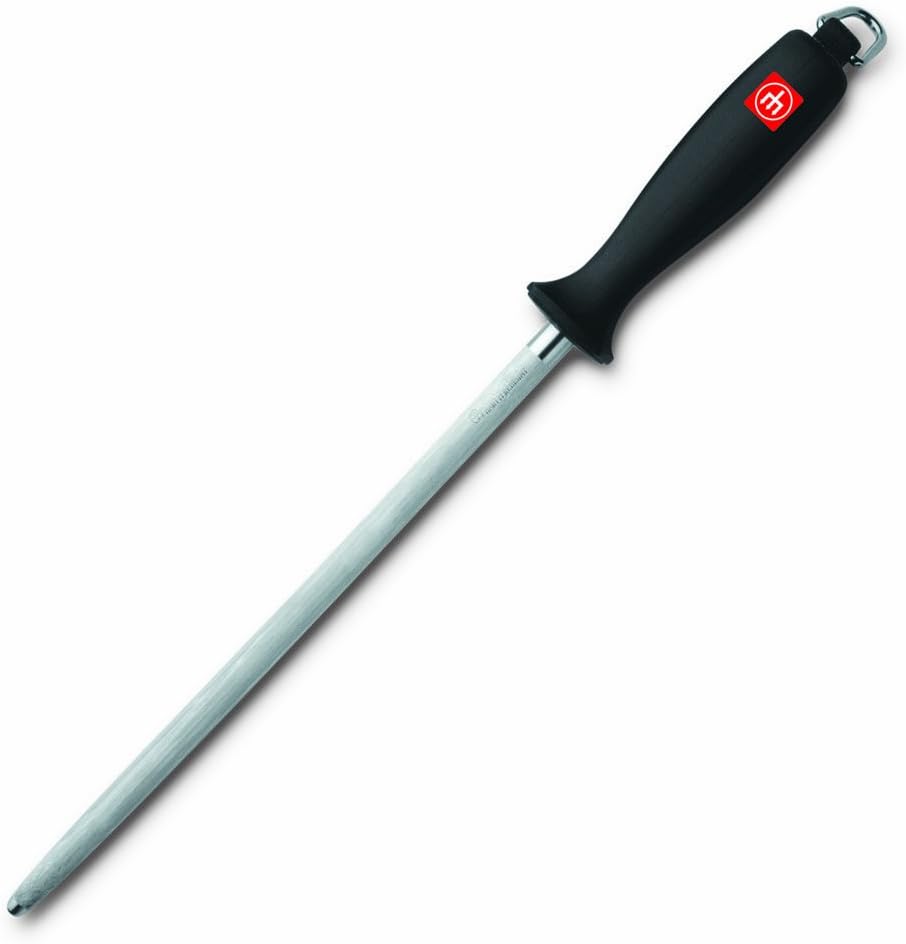
A dull sushi knife is worse than useless; it is dangerous to your fingers and devastating to the texture of expensive seafood. You cannot use a pull-through carbide sharpener on a single-bevel Japanese knife—you will permanently destroy the edge geometry.
You must learn to use whetstones. Because the front bevel (the shinogi) is so wide and flat, it is actually quite easy for a beginner to find the correct angle on the stone compared to a tiny double-bevel edge. You sharpen the front side until a burr forms, then lay the back of the blade completely flat on the stone to gently snap the burr off, preserving the hollow urasuki. If you are serious about maintaining your investment, studying the ultimate knife sharpening guide for professional edges is a mandatory step in your sushi journey.

12. The Hiki-Giri Technique: Mastering the Pull Cut
Having the right knife is only half the battle; the technique is what yields the final result. You must unlearn the Western instinct to push the knife down into the food.
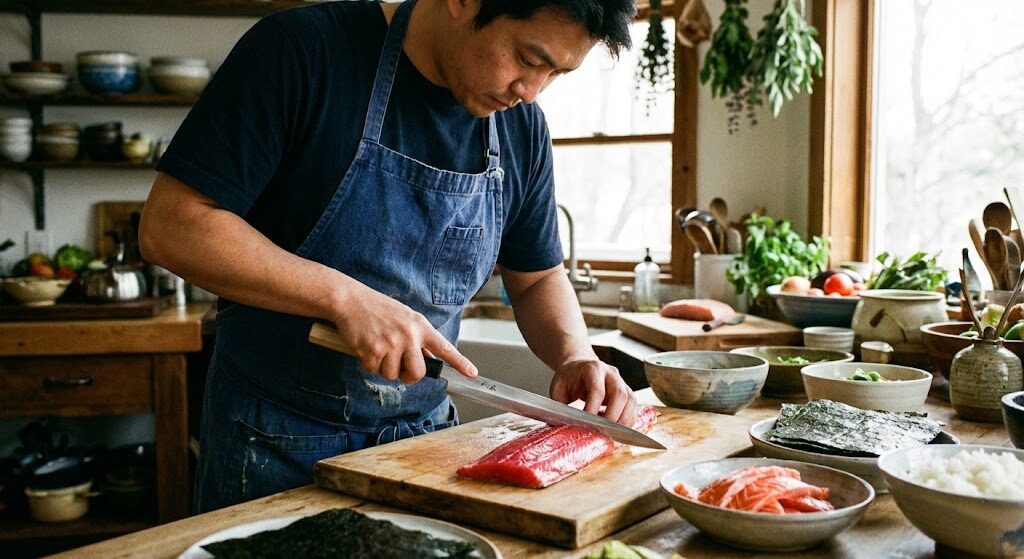
Sushi slicing utilizes the Hiki-Giri (the pull cut). You start by placing the heel of the Yanagiba against the far side of the fish block. In one fluid, continuous motion, you pull the knife back toward your body, drawing the entire length of the blade through the fish, letting the blade exit the cut gracefully at the tip. You never push down, and you never saw back and forth. The immense length of the sushi knife is what makes this single, graceful stroke possible.

Frequently Asked Questions
Your Journey into Sushi Mastery Starts Here
Preparing sushi at home is a beautiful, meditative process that forces you to slow down and respect your ingredients. Purchasing the best sushi knife for beginners is the first step in honoring that tradition. Whether you choose the highly affordable Mercer Yanagi to practice your whetstone skills, or the versatile Tojiro Sujihiki for ease of use, upgrading from a standard chef’s knife will instantly elevate your sashimi presentation.
Respect the blade, master the pull-cut, keep your edges sharp, and you will be serving restaurant-quality sushi rolls and sashimi platters to your friends and family in no time.
Ready to Slice Like a Pro?
Don’t let a dull knife ruin beautiful seafood. Shop the top-rated beginner sushi knives and start creating flawless sashimi tonight.
Shop Sushi Knives on Amazon