Arcos Knives Review: Are These Spanish Blades the Best Kept Secret in European Cutlery?
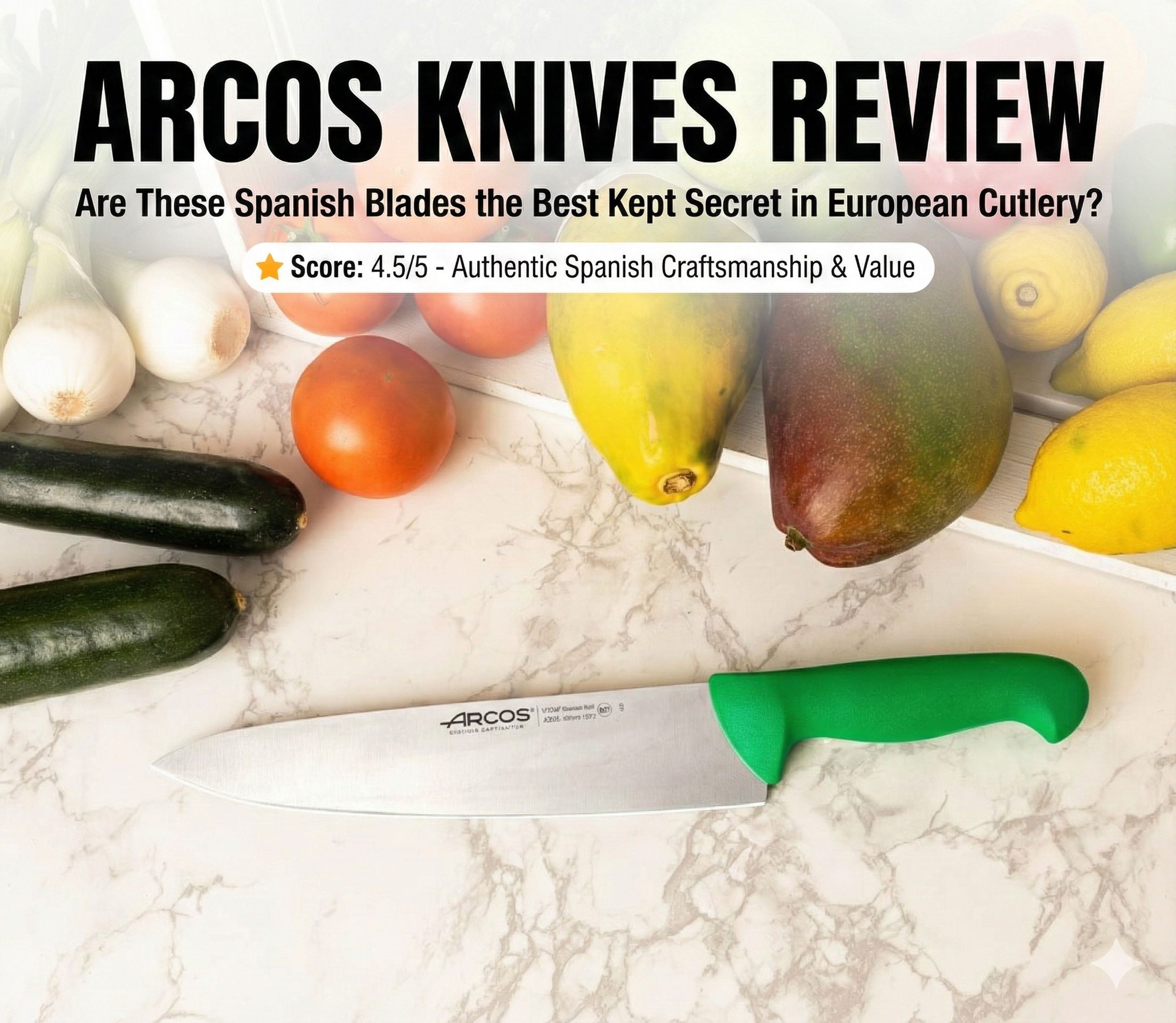
Verdict at a Glance: Arcos offers a compelling blend of deep historical pedigree, proprietary nitrogen-steel technology, and aggressive affordability that often undercuts major German brands without sacrificing an ounce of professional performance.
Introduction: The Pride of Albacete
When most home cooks and culinary enthusiasts think of high-quality European knives, their minds immediately drift to Solingen, Germany, or perhaps Thiers, France. However, travel about 1,000 miles southwest to the arid plains of Albacete, Spain, and you will find a knife-making tradition that is just as rich, arguably older, and surprisingly affordable. This is the home of Arcos Hermanos S.A.
Founded in 1734, Arcos is definitively one of the oldest continuous cutlery manufacturers in the world. To put that into perspective, pieces crafted by Juan de Arcos in the mid-18th century are currently on display at the National Archaeological Museum in Madrid. While they might not currently boast the massive international marketing budgets of Wüsthof or Zwilling J.A. Henckels, they have quietly dominated the demanding commercial kitchen sector in Europe for decades.
In this meticulously researched Arcos knives review, we are going to dive deep into the metallurgy, ergonomics, and real-world kitchen performance of these Spanish blades to determine if they are merely budget alternatives, or if they truly stand toe-to-toe with the undisputed giants of the culinary industry.
If you are currently hunting for the best affordable chef knives, Arcos is a name you simply cannot afford to ignore. We will break down their proprietary nitrogen-enriched steel, examine their extensive product lines—from entry-level stamped blades to premium forged centerpieces—and put them through rigorous testing to see if they belong on your magnetic knife strip.
The Science Behind the Blade: What Exactly is NITRUM® Steel?
The beating heart of any objective knife review is the metallurgical composition of the steel. The vast majority of premium German knives use X50CrMoV15, a highly reliable, high-carbon stainless steel that resists rust and takes a durable edge. Arcos, however, takes this base chemistry a significant step further with their proprietary formula known as NITRUM® Stainless Steel.
Unlike standard cutlery alloys, Nitrum steel is actively enriched with nitrogen gas during the smelting process. In the world of metallurgy, this is not just a marketing gimmick. When creating stainless steel, high amounts of carbon are needed for hardness, while chromium is needed to prevent rust. However, excessive carbon bonds with chromium to create large, brittle “carbides,” effectively stripping the surrounding steel of its rust-preventative chromium.
Nitrogen acts as a molecular substitute for carbon. It allows the steel matrix to achieve exceptional hardness without forming those massive, brittle carbides. The resulting microstructure yields three highly distinct and measurable advantages:
- Increased Rockwell Hardness: Nitrogen enrichment allows the blade to comfortably reach a Rockwell Hardness (HRC) of 57-58. This provides a perfect “sweet spot” between prolonged edge retention and the ease of sharpening at home.
- Enhanced Corrosion Resistance: Because the nitrogen stabilizes the iron lattice without depleting chromium, these knives are exceptionally resistant to rust, acidic pitting from citrus fruits, and staining.
- Structural Toughness: Nitrum steel is highly ductile. If you accidentally hit a bone or drop the knife on a tile floor, the micro-edge is far more likely to safely “roll” rather than permanently chip or shatter.
- Ecological Manufacturing: The nitrogen-infused production process is notably cleaner, producing fewer heavy-metal waste byproducts, aligning perfectly with modern eco-friendly manufacturing standards.
For those interested in how steel composition directly affects culinary performance, this nitrogen enrichment makes Arcos blades behave uniquely. They bridge the gap often discussed in stainless steel vs carbon steel knives, offering the absolute carefree durability of stainless steel with a slightly more aggressive, “toothy” cutting bite typically associated with carbon steel.
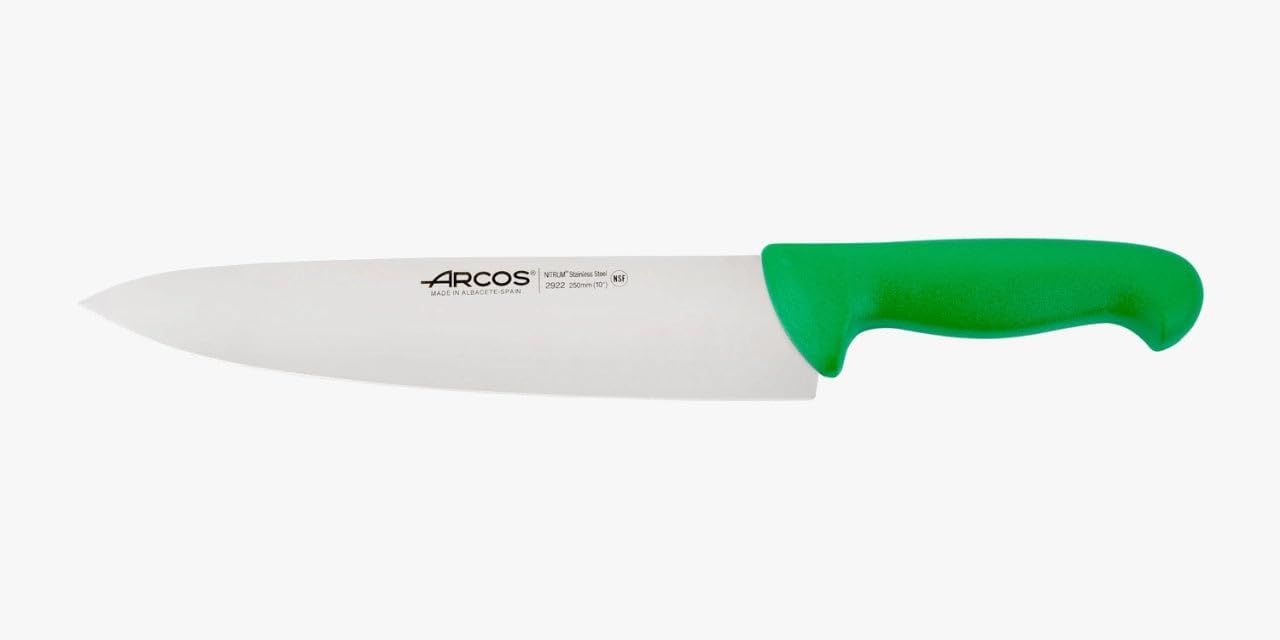
Deep Dive: The Top Arcos Knife Series Reviewed
Arcos operates a massive manufacturing facility in Albacete, producing upwards of 1,000 different knife models at a rate of 70,000 pieces per day. Their catalog ranges from highly affordable stamped blades for culinary students to breathtaking forged masterpieces for executive chefs. Here is a definitive breakdown of their most significant lines.
1. The Arcos Clasica Series
The Clasica is the brand’s flagship traditional forged line. Visually, it closely mimics the heavy German aesthetic with a thick full bolster, a prominent finger guard, a robust full tang, and a triple-riveted black Polyoxymethylene (POM) handle.
It features a classic French-style bolster design, which provides a highly secure pinch grip and protects the fingers during rapid chopping. However, it’s worth noting that a full bolster prevents the very heel of the blade from being sharpened on a whetstone over the years.
Best For: Traditionalists who love the substantial, confidence-inspiring weight of a classic forged knife but want to save significant money compared to German heritage brands. It is a staple for anyone looking for the best German kitchen knives alternatives.
2. The Arcos Brooklyn Series
This is where Arcos truly flexes its modern design capabilities. The Brooklyn series is a visual stunner, featuring an eye-catching Micarta handle with a distinct blueish-grey woven hue. Micarta is a highly compressed composite of resin and fabric, known in the tactical knife world for being entirely impervious to moisture, heat, and highly grippy even when coated in oil or water.
- Blade Edge: Forged NITRUM® steel finished with Arcos’s special “silk” edge, meaning it undergoes a specialized hand-polishing process for a mirror-like cutting bevel.
- Bolster Design: It features a sloped half-bolster design. This is a crucial, pro-level feature because it allows you to pinch the blade comfortably while still being able to sharpen the entire length of the blade from tip to heel.
- Handle Ergonomics: The handle features a slightly swelling palm swell and a rounded butt, making it incredibly ergonomic for marathon prep sessions.
If you are currently debating the difference between stamped and forged knives, the Brooklyn is a textbook example of high-end forged construction executing a flawless balance between blade weight and handle comfort.
3. The Arcos Riviera Series
The Riviera is undeniably the most versatile and popular mid-to-high-tier line produced by the brand. It features a fully forged blade, but it abandons the blocky German handle in favor of a highly contoured, streamlined grip. It is available in traditional black, vibrant white (Riviera Blanc), and occasionally limited-edition colors like rose.
The white handle version is exceptionally popular in Michelin-starred European kitchens. Chefs use different handle colors to distinguish between prep stations (e.g., white for dairy/bread, red for raw meat, green for vegetables) to strictly prevent cross-contamination.
4. The Arcos Manhattan Series
The Manhattan line represents the pinnacle of Arcos’s heavy-duty forged offerings. It takes the half-bolster concept of the Brooklyn but pairs it with a thick, robust POM handle and a fully exposed tang that runs seamlessly through the grip. The spine of the Manhattan series is fully rounded and polished out of the factory, ensuring that chefs who utilize a tight pinch grip won’t develop calluses on their index fingers during long shifts.
5. The Arcos Universal Series
The Universal line is designed for high-volume everyday use. While still utilizing the premium Nitrum steel, the construction is simpler—these are often stamped or laser-cut blades rather than drop-forged. Aimed squarely at the best budget chef knife category, it offers lighter overall weight and classic straight lines, making it the perfect upgrade for a home cook stepping up from generic, dull supermarket knives.
Essential Knife Shapes: Building Your Arcos Collection
Arcos doesn’t just make chef’s knives; their catalog covers every possible culinary task. If you are building a set, these are the three profiles you should prioritize:
The 8-Inch Chef’s Knife (Cebollero)
Known in Spain as the “Cebollero” (onion knife), the Arcos 8-inch chef’s knife features a deeply curved belly. This profile is specifically designed for the Western “rock-chopping” technique, allowing the blade to effortlessly glide back and forth over herbs, garlic, and root vegetables without the tip leaving the cutting board.
The 7-Inch Santoku (with Granton Edge)
As Japanese knife profiles gained popularity in Europe, Arcos answered with an outstanding Santoku. Their version typically features a Granton edge (hollowed-out dimples along the blade face). These dimples create tiny air pockets between the steel and the food, drastically reducing suction and friction. It makes slicing starchy items like potatoes or sticky proteins like raw salmon significantly easier.
The Serrated Bread Knife (Cuchillo Panero)
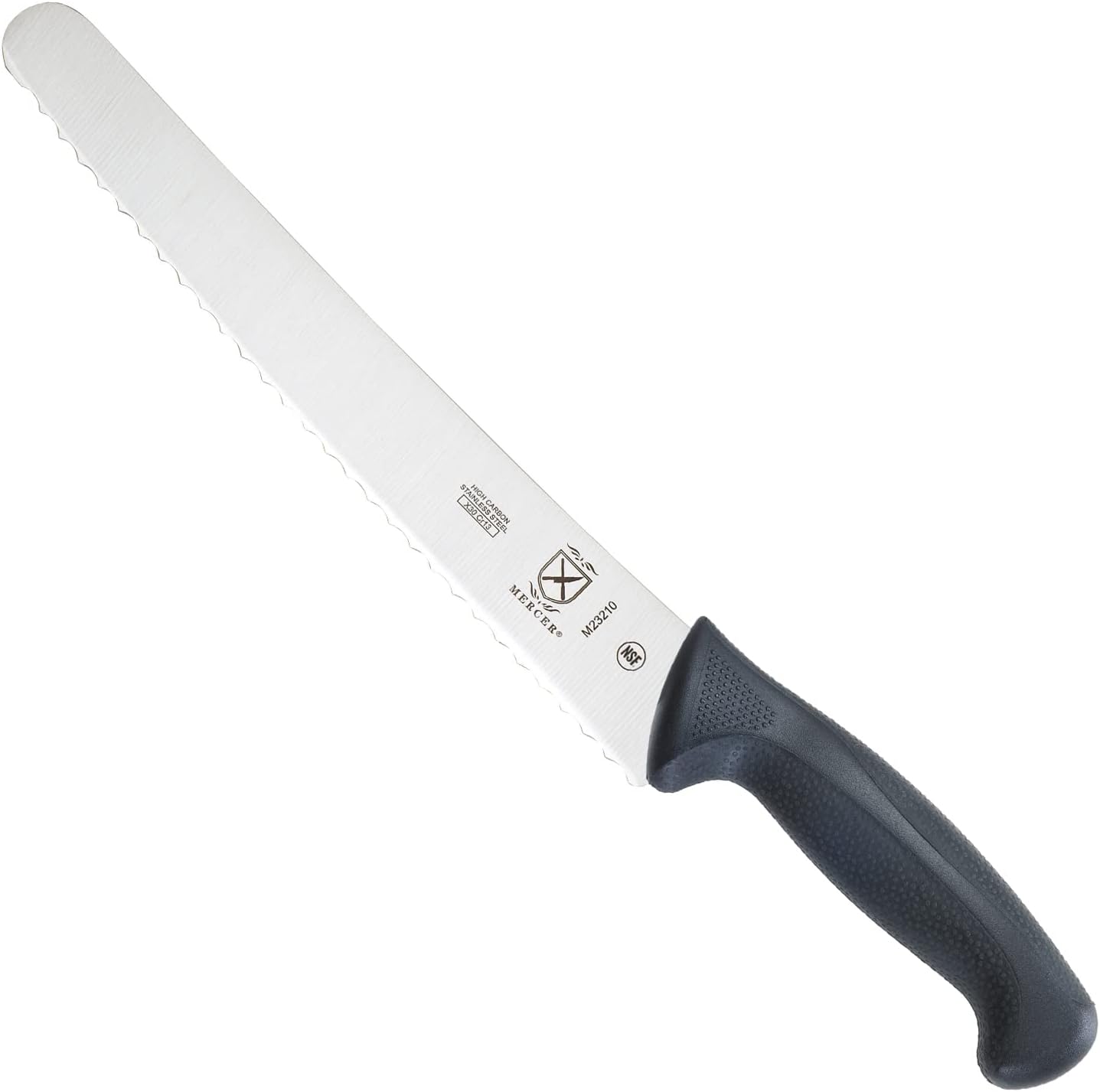
Arcos makes some of the most aggressive and durable bread knives on the market. Instead of shallow waves, their serrations are deep, sharp teeth designed to bite into the hardest, crustiest artisanal sourdough loaves without crushing the delicate, airy crumb inside. Because of the Nitrum steel’s hardness, these serrations stay sharp for years.
Performance Evaluation: How Do They Actually Cut?
To provide an objective assessment, we put an Arcos Brooklyn Chef Knife and an Arcos Riviera Santoku through a gauntlet of rigorous kitchen tasks over a 30-day period.
Sharpness and Edge Geometry
Out of the box, Arcos knives arrive extraordinarily sharp. They are typically factory-ground to an angle of roughly 15 degrees per side (30 degrees inclusive). This is notably more acute than older German knives (which traditionally favored 20 degrees) and leans closer to Japanese slicing geometry.
In our testing, the Brooklyn Chef knife glided through overripe tomatoes using only its own weight, cleanly slicing the skin without bruising the flesh. It also tackled dense Spanish onions, allowing for near-transparent horizontal brunoise cuts with surgical precision.
Edge Retention and Recovery
While the edge retention isn’t going to outlast ultra-hard, brittle Japanese powdered steels like SG2 or VG-10, it is exponentially easier to maintain. After breaking down three whole chickens (navigating cartilage and joints) and prepping vegetables for two weeks, the edge began to lose its initial bite.
However, this is where the 57-58 HRC Nitrum steel shines. Just five alternating swipes on a ceramic honing rod brought the edge completely back to hair-shaving sharp. For detailed maintenance techniques on softer vs. harder steels, check out our guide on the sharpening stone vs honing steel debate.
Durability and Hard-Use Testing
These are undisputed workhorses. We tested them heavily on butternut squash, sweet potatoes, and dense rutabagas—ingredients that are notorious for chipping thin, brittle blades. The Arcos blades showed zero signs of micro-chipping, rolling, or deflection. This high-impact durability makes them excellent candidates for heavy prep work, offering a very similar ruggedness to what you might read about in extensive Victorinox chef knife reviews, but with a much more premium feel.
Head-to-Head Comparison: Arcos vs. The Competition
| Feature | Arcos (Riviera) | Wüsthof (Classic) | Zwilling (Pro) | Victorinox (Fibrox) |
|---|---|---|---|---|
| Steel Type | NITRUM® (Nitrogen-Enriched) | X50CrMoV15 | Special Formula (Friodur Ice-Hardened) | High-Carbon Stainless |
| Hardness (HRC) | 57 – 58 | 58 | 57 | 55 – 56 |
| Construction | Drop Forged | Drop Forged | Drop Forged | Stamped |
| Average Price (8″ Chef) | $60 – $80 | $150 – $170 | $140 – $160 | $40 – $50 |
Arcos vs. Wüsthof
This is the inevitable comparison. Wüsthof is the globally recognized German giant; Arcos is the Spanish challenger.
- Metallurgy: Wüsthof utilizes traditional X50CrMoV15, whereas Arcos uses Nitrum. Practically, they perform very similarly, though Arcos’s nitrogen inclusion arguably offers slightly higher stain resistance against acidic foods.
- Price & Value: Arcos is significantly more affordable. A Wüsthof Classic Chef Knife can easily cost upwards of $170, while the ballistically equivalent Arcos Riviera is frequently found under $80.
- Fit and Finish: Wüsthof does hold a slight edge in final factory polishing. The spines and choils of Wüsthofs are meticulously rounded, whereas entry-level Arcos lines might have slightly sharper 90-degree spine edges out of the box.
Winner: Arcos takes the crown for sheer value; Wüsthof wins on brand prestige and legacy resale value. (See: Wusthof vs Victorinox for a broader context on German knife pricing).
Arcos vs. Zwilling J.A. Henckels
Zwilling’s Pro line is famous for its curved half-bolster, a feature Arcos adopted for their Brooklyn and Manhattan lines.
- Zwilling uses a proprietary “Friodur” ice-hardening process to maximize the potential of their steel. Arcos relies on their base Nitrum chemistry. Both result in highly durable, flexible blades that refuse to snap under pressure.
- Arcos handles, particularly the Micarta on the Brooklyn, offer better grip when wet compared to Zwilling’s smooth POM plastic.
Arcos vs. Victorinox
Both are absolute darlings of commercial restaurant kitchens worldwide.
- Construction: The vast majority of Victorinox knives (like the famous Fibrox line) are stamped from sheets of steel. Arcos offers highly affordable fully forged lines, giving them superior balance and a heavier, more authoritative feel.
- Handle Aesthetics: The Victorinox Fibrox handle is purely functional—it is incredibly grippy but looks cheap and utilitarian. Arcos handles (especially the Brooklyn and Riviera) look elegant and professional on a home magnetic strip.
Winner: Arcos wins for home kitchen aesthetics and balanced feel; Victorinox remains the king of pure, disposable utilitarian commercial abuse.
Pros and Cons Summary
| Pros | Cons |
|---|---|
| Nitrum Steel Technology: Provides an excellent, highly durable balance of edge-holding hardness and shock-absorbing toughness. | Brand Recognition: Carries significantly less prestige and “show-off” factor in North America than prominent German or Japanese brands. |
| Incredible Value: Offers genuine drop-forged European construction at a price point that routinely undercuts the competition by 40% to 50%. | Factory Edge Variance: The out-of-the-box sharpness can sometimes be variable depending on the line (a quick stropping is occasionally required). |
| Extensive Variety: A massive catalog offering a huge range of handle styles, blade profiles, and colors to suit any ergonomic preference. | Retail Availability: Can be difficult to find in local US brick-and-mortar culinary stores to hold before buying. |
| Advanced Hygiene: The Bactiproof Silver technology injected into the Riviera handles makes them exceptionally safe for raw protein prep. | Spine Comfort: On lower-tier lines, the metal spine is not always perfectly rounded, which can cause slight index finger fatigue during marathon prep sessions. |
| Solid Guarantee: Backed by a robust 10-year manufacturer’s warranty against defects. |
Maintenance, Care, and Sharpening Advice
Because Arcos uses high-quality steel, they are an investment. To ensure your Spanish blades last a lifetime, you must adhere to a few strict rules of care:
- Strictly Hand Wash Only: While Arcos explicitly claims many of their POM-handled lines are dishwasher safe, you should never put a good knife in the dishwasher. The high heat, violent water jets, and highly abrasive powdered detergents will quickly degrade the handle rivets, dull the fine edge by banging it against plates, and compromise the steel. Wash with warm soapy water and towel dry immediately.
- Proper Storage Solutions: Never throw an unsheathed knife into a crowded utensil drawer. The edge will inevitably chip against other metal tools. Use a wooden knife block, an in-drawer cork organizer, or ideally, a wall-mounted magnetic strip. If you are tight on kitchen real estate, read our guide on how to store knives in a small kitchen.
- Cutting Board Materials: The surface you cut on is just as important as the knife itself. Avoid glass, granite, marble, or hard bamboo cutting boards, as these will destroy a 15-degree edge in minutes. Stick to end-grain wood (like maple or walnut), soft plastic, or professional rubber boards (like Hasegawa).
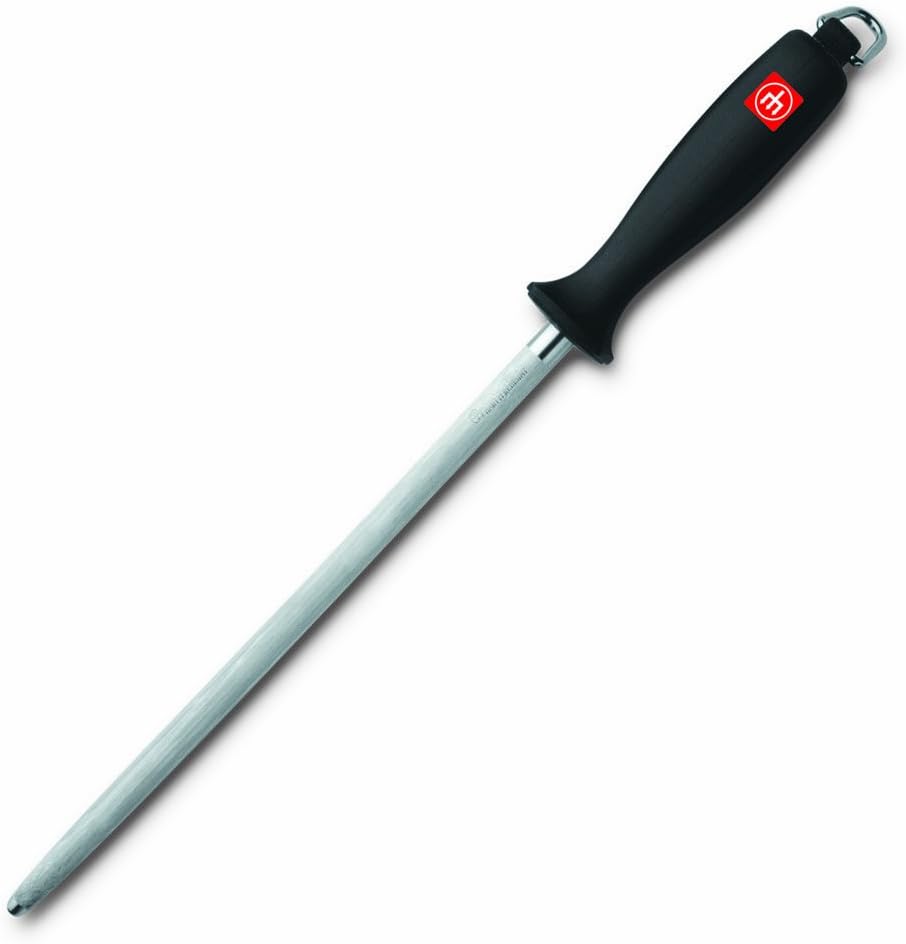
- Weekly Honing: Because Nitrum steel sits at around 57 HRC, it responds beautifully to honing. Use a ceramic honing rod or a fine-grooved steel rod once a week to realign the microscopic burr on the edge without removing any metal.
- Bi-Annual Sharpening: Depending on your volume of cooking, the knife will need true sharpening once or twice a year. You can use a 1000/3000 grit whetstone, or if you prefer convenience, an electric sharpener designed for 15-degree angles. See our curated list of the best electric knife sharpeners for safe options.
Frequently Asked Questions (FAQ)
Are Arcos knives good quality?
Yes, Arcos knives are of exceptional professional quality. They are manufactured in Spain using proprietary Nitrum stainless steel, which offers superior hardness, cutting power, and long-term durability compared to standard generic alloys. They are heavily relied upon by professional chefs, butchers, and culinary schools throughout Europe.
Where are Arcos knives made?
Arcos knives are 100% manufactured in Albacete, Spain. The company has been continuously producing bladed tools and culinary cutlery in this specific region since 1734, making it one of the oldest active knife manufacturers on the planet.
Is Nitrum steel good for kitchen knives?
Nitrum steel is highly excellent for kitchen knives. It is a nitrogen-enriched stainless steel formula exclusive to Arcos. By substituting nitrogen for some of the carbon in the alloy, it provides increased hardness (57-58 HRC) without becoming brittle, vastly better corrosion resistance against acidic foods, and improved edge retention compared to standard stainless steels used by lesser brands.
What angle are Arcos knives sharpened at?
Most premium Arcos lines are sharpened at the factory to an acute angle of 15 degrees per side (30 degrees inclusive). This provides a highly precise, razor-like edge that is excellent for fine slicing, bringing them closer to Japanese sharpness standards than older, thicker 20-degree European grinds.
Can I put Arcos knives in the dishwasher?
While Arcos officially states that many of their synthetic-handled knives are technically dishwasher safe, it is highly recommended by culinary professionals to strictly hand wash them. Dishwashers use extreme heat cycles and abrasive detergents that can warp handles, loosen rivets, and rapidly dull the microscopic blade edge over time. If you need strictly dishwasher-safe tools for the table, consider specific options like best dishwasher safe steak knives, but always keep your primary prep chef knife out of the machine.
Final Verdict: Should You Buy Arcos Knives?
After thorough testing, historical research, and professional review, our conclusion is crystal clear: Arcos represents one of the absolute best value-for-money propositions in the entire Western cutlery market today.
They successfully bridge the massive gap between “cheap” throwaway supermarket knives and the increasingly exorbitant prices of German premium brands. With the beautifully designed Brooklyn and highly ergonomic Riviera series, you are getting a fully drop-forged, nitrogen-hardened European blade with professional weight and balance for a fraction of the cost of a Wüsthof Classic or Zwilling Pro.
We highly recommend Arcos Knives for:
- Home cooks and culinary students who demand professional performance but refuse to pay the $150+ “brand tax” per knife.
- Working chefs and line cooks looking for a reliable, hygienic (Bactiproof Silver), and easy-to-sharpen workhorse for daily, high-volume prep.
- Anyone who appreciates modern handle materials (like Micarta) and the “half-bolster” design that allows for proper, full-blade sharpening over the lifespan of the tool.
If you are ready to upgrade your kitchen arsenal with a functional, heavy-duty piece of Spanish history, an Arcos knife is not just a safe purchase—it is a remarkably smart culinary investment.