Benchmade 940 Osborne Review: Is The “Quintessential EDC” Still King?
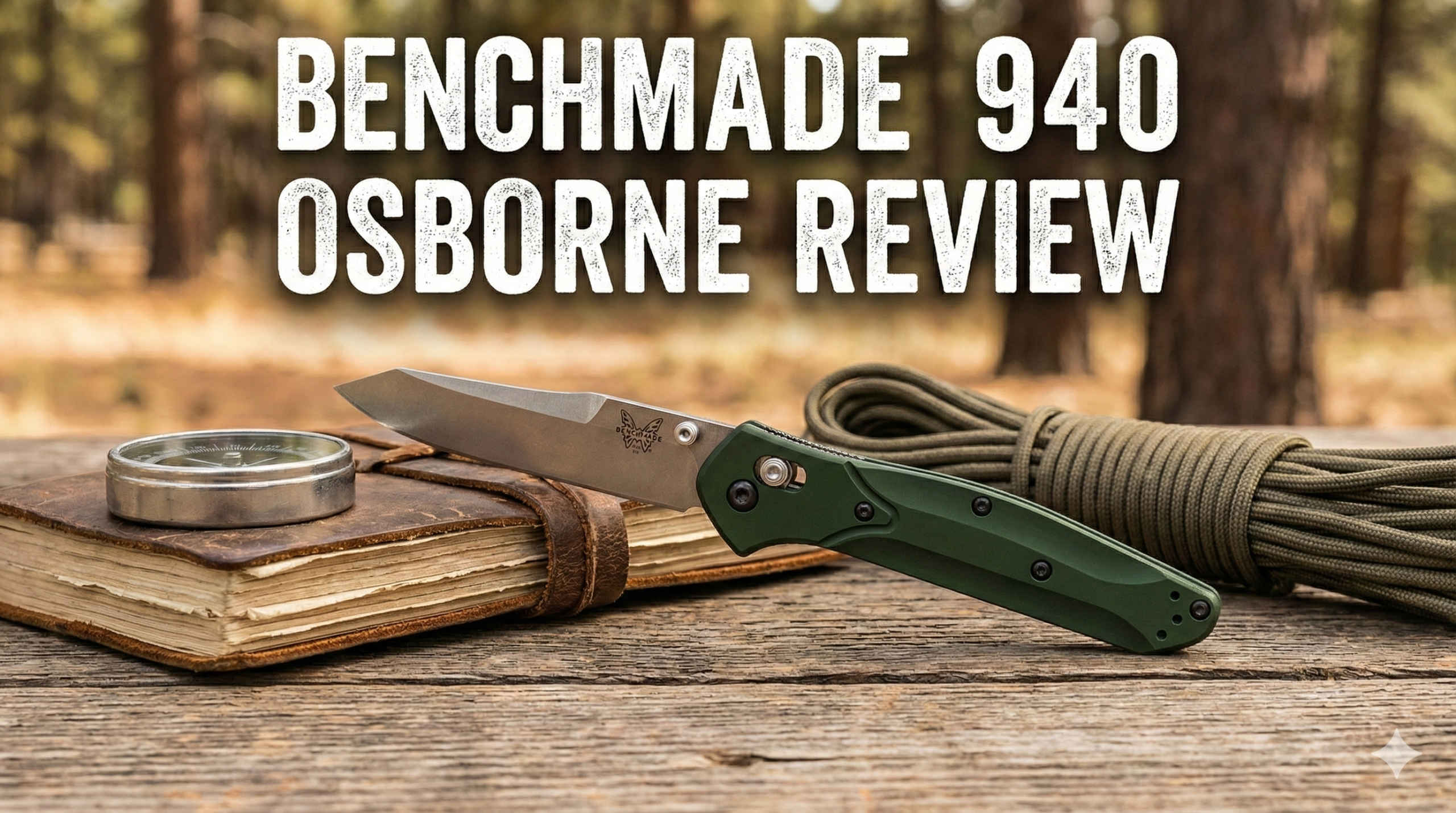
In the vast and ever-expanding universe of everyday carry (EDC) pocket knives, very few models ever achieve true “grail” or “icon” status. Even fewer manage to hold onto that coveted title for over two decades. The Benchmade 940 Osborne is one of those incredibly rare exceptions. Designed by the late, legendary knifemaker Warren Osborne and released at the turn of the millennium in 2000, this knife is frequently cited as the ultimate “measuring stick” by which all modern EDC folders are judged.
However, the knife market has evolved at a breakneck pace since the 940 was first introduced. We now live in an era dominated by ultra-premium powdered super-steels like MagnaCut and CPM-20CV, frictionless ceramic ball-bearing pivot systems, and space-age lightweight composites. Does a utilitarian design formulated in the late 1990s still hold its ground against highly engineered modern competitors? Can a $200+ production knife still justify its premium price tag today?
In this exhaustively detailed review, we put the classic green aluminum 940 through rigorous testing. We will break down its metallurgy, internal mechanics, edge geometry, and aftermarket potential to determine if the Osborne still demands a prime spot in your pocket.
The Legacy of Warren Osborne
To truly understand the genius of the 940, you have to understand the man who created it. Warren Osborne was not just a designer; he was a rancher from Texas who understood the realities of hard, daily labor. While he eventually became world-renowned for his exquisite, highly decorated custom folding knives that sold for thousands of dollars, he never lost his pragmatic, working-man roots.
When Benchmade approached Osborne to design an EDC knife, he sought to create a tool that was aesthetically refined enough to wear with a tailored suit in an office setting, yet ruggedly overbuilt enough to process game, cut thick bailing twine, or pry apart wooden crates on a ranch. The 940 is the physical manifestation of that dual-purpose philosophy. It is a gentleman’s tactical folder—a contradiction that Osborne executed flawlessly.

Own a piece of undisputed knife history. The 940 is slim, tough, and overbuilt to last a lifetime of hard use.
Check Price on AmazonTechnical Specifications
Before diving into performance analytics, let’s examine the raw dimensions. The “magic trick” of the 940 has always been its extraordinary blade-to-handle ratio. It manages to pack a highly capable, nearly 3.5-inch blade into a remarkably slender, unobtrusive handle profile.
| Blade Length | 3.40 inches (8.64 cm) |
|---|---|
| Blade Thickness | 0.115 inches (2.92 mm) |
| Open Length | 7.87 inches (19.99 cm) |
| Closed Length | 4.47 inches (11.35 cm) |
| Weight | 2.90 ounces (82.21 g) |
| Handle Material | 6061-T6 Aluminum (Green Anodized) |
| Blade Steel | CPM-S30V Premium Stainless |
| Lock Mechanism | AXIS® Lock |
| Origin | Made in the USA |
Reverse Tanto: Geometry & Grind
The most defining, instantly recognizable visual characteristic of the Benchmade 940 is its blade shape: the Reverse Tanto. Unlike a traditional drop point, spear point, or clip point, the reverse tanto carries the spine’s full thickness almost all the way to the absolute tip before angling down sharply in a pronounced swedge.
Why does this geometric oddity matter? It creates an incredibly robust, reinforced tip. If you are familiar with the different types of knives and their uses, you know that snapped or bent tips are the most common catastrophic failure point in EDC knives. The 940 eliminates this vulnerability. You can dig into dense wood, pierce heavy-duty zip ties, or puncture tough clamshell plastic packaging without any fear of snapping the point.
Edge Geometry (Thickness Behind the Edge)
The blade features a high flat grind. However, it is crucial to note that the 940 is not a dedicated slicer. In the knife community, we measure “BTE” (Behind The Edge) thickness to determine slicing efficiency. The 940 is generally ground thicker behind the edge (often around 0.022 to 0.025 inches) compared to a laser-thin knife like the Spyderco Paramilitary 2.
This means that while it handles thick cardboard and apples, it will exhibit a “wedging” effect—it pushes material apart rather than effortlessly gliding through it. This is a deliberate design choice; that extra steel behind the edge prevents the blade from chipping or rolling when subjected to lateral stress or hard twisting cuts.
CPM-S30V Steel Performance
The standard 940 comes equipped with CPM-S30V blade steel. Developed by Crucible Industries specifically for the cutlery market in collaboration with Chris Reeve, S30V was for many years the undisputed industry standard for high-end production knives.
It is a powder metallurgy steel, meaning the molten steel is atomized into a fine powder before being forged, resulting in a perfectly even distribution of wear-resistant vanadium carbides. It offers an exceptionally balanced trifecta: great edge retention, high toughness for a stainless steel, and excellent corrosion resistance.
Some vocal modern enthusiasts argue that for a knife costing over $200, Benchmade should automatically upgrade the base model to S90V, 20CV, or MagnaCut. While that argument holds merit, S30V remains an objectively excellent steel for 95% of users. It resists rust exceptionally well, which is vital if you carry your knife in humid environments or sweat heavily at work. Understanding the fundamental difference between stainless and carbon steel will help you appreciate why S30V is a preferred “set it and forget it” option.
Sharpening Protocol: S30V can be notoriously stubborn and “glassy” to sharpen if you allow it to become completely dull. We highly recommend maintaining the edge regularly with a strop loaded with diamond emulsion rather than waiting for it to fail. Understanding the difference between a sharpening stone and honing steel is key to keeping this blade hair-popping sharp for decades.

The thick spine and Reverse Tanto tip offer unparalleled structural integrity. Never worry about a broken tip during hard tasks again.
View Blade Details on AmazonHandle & Ergonomics: The “Chalky” Aluminum
The classic 940 features 6061-T6 Aluminum scales anodized in a distinctly matte, forest green finish. This is masterfully paired with an anodized purple titanium backspacer that adds a subtle, classy pop of color to the otherwise utilitarian tool.
Durability and Patina
Aircraft-grade aluminum is phenomenally tough. Unlike FRN (fiberglass reinforced nylon) or plastic handles that can flex under heavy grip pressure, these aluminum scales are rigid slabs. You can drop the knife on solid concrete, and while the aluminum might dent or scratch, it absolutely will not crack or shatter.
Over years of pocket carry, the green anodization will inevitably wear down on the high edges, revealing the bright silver aluminum beneath. In the EDC community, this is heavily desired and referred to as “Boba Fett wear” or a character-building patina.
Texture and Grip Dynamics
The texture of a brand new 940 is often described as “chalky” or dry to the touch. It provides decent friction without tearing up the hems of your pockets the way aggressive G10 texturing does. However, it is important to note that in extremely wet, oily, or bloody conditions, smooth aluminum can become quite slippery.
The ergonomic shape itself is a masterclass in neutral design. It lacks deep finger grooves, meaning it accommodates large, medium, and small hands equally well, whether held in a standard hammer grip, a choked-up pinch grip, or a tactical reverse grip.
Internal Mechanics: Washers vs. Bearings
If you take apart the 940, you will find that the blade pivots on two oversized phosphor bronze washers. In the modern knife market, ball bearings have become the hot trend because they offer a frictionless, “guillotine” drop-shut action out of the box.
So, why stick with washers? Reliability. Ball bearings require a raceway, which acts as a magnet for pocket lint, sand, dirt, and gunk. If you drop a bearing knife in the mud, the action will grind to a halt. Washers, on the other hand, have a massive surface area that seals the pivot against debris. As the bronze washers polish themselves against the steel blade over months of use, the 940 develops a glassy, hydraulic smoothness that is impervious to dirt. It is a true testament to its “hard use” pedigree.
The Action: AXIS Lock Reliability
The 940 utilizes Benchmade’s legendary, patented AXIS® Lock. This brilliant mechanism uses a hardened steel, spring-loaded bar that slides back and forth in a slot cut into the steel liners. When the blade opens, the bar snaps forward over a flat ramp on the blade tang, wedging it securely in place.
The benefits of this lock are massive:
- Fully Ambidextrous: It is identical on both sides, making it the perfect choice for left-handed users without needing to buy a special “lefty” version.
- Operational Safety: Unlike a liner lock or frame lock, your fingers never cross the path of the closing blade. You pull the lock bar back, and gravity swings the blade shut safely.
- High Fidget Factor: Because the lock acts as the detent, pulling it back completely frees the blade. With a flick of the wrist, you can deploy and retract the blade in a fraction of a second.
The Omega Spring Caveat: The AXIS lock relies on two tiny wire springs shaped like the Greek letter Omega. These springs are the Achilles heel of the design and have been known to occasionally break after thousands of actuations. Fortunately, Benchmade’s stellar warranty service will replace them for free, and aftermarket titanium springs are cheap and easy to install yourself.
Pocket Profile & Clip Options
This is arguably where the 940 solidifies its dominance. Despite harboring a near 3.5-inch cutting edge, the knife simply disappears in the pocket. The closed width is exceptionally narrow. When clipped to the right pocket, it leaves plenty of room for your hand to slide past the knife to access your keys, phone, or wallet without scraping your knuckles.
The standard clip included is a black-painted “split arrow” clip. It is highly functional and offers excellent retention, but it is not a deep-carry clip, meaning about half an inch of the green handle will stick out of your pocket.
Pro-Tip: Many seasoned users contact Benchmade customer service and request a standard “Deep Carry” clip (often provided for free or a nominal shipping fee). This allows the knife to sit completely below the pocket line for discreet, urban carry.
Aftermarket & Customization
Because the 940 has been popular for over two decades, it boasts one of the largest aftermarket ecosystems in the knife industry, rivaled only by the Spyderco PM2 and Benchmade Bugout.
- Custom Scales: Companies like Flytanium and Applied Weapons Tech (AWT) offer replacement handle scales in milled Titanium, solid Copper, Brass, and aerospace Carbon Fiber. AWT scales even delete the steel liners, altering the weight and balance of the knife.
- Clips and Hardware: You can purchase deep carry titanium clips from LynchNW or MXG Gear in various anodized finishes to match the purple backspacer. Titanium screw sets and thumb studs are also widely available.
You can essentially buy a stock 940 and slowly upgrade every single component over time until it is a fully personalized, bespoke tool.
The 940 Family Tree (Variants Explained)
If the green aluminum isn’t your style, Benchmade offers several permanent variations of this iconic design:
- 940-1: The premium upgrade. It features stunning Carbon Fiber handles and upgrades the steel to ultra-wear-resistant CPM-S90V. It is significantly lighter and holds an edge much longer, but S90V is incredibly difficult to sharpen.
- 940-2: The tactical, utilitarian option. It features 3D-milled black G10 handles over green anodized barrel spacers. It retains the S30V steel but offers more grip than the aluminum version, usually at a slightly lower price point.
- 945 Mini Osborne: Released recently for those who live in jurisdictions with strict 3-inch blade limits. It scales the exact design down to a 2.92-inch blade.
- 9400 Auto Osborne: The automatic (switchblade) version. It removes the AXIS lock in favor of a push-button automatic deployment mechanism, keeping the identical handle and blade shape.
940 Osborne vs. The Competition
Benchmade 940 vs. Benchmade Bugout
This is the most common debate for first-time Benchmade buyers. The Benchmade Bugout is drastically lighter (1.85 oz vs 2.90 oz) due to its unlined Grivory handles. It is also ground much thinner behind the edge, making it a vastly superior pure slicer for food prep or thin cardboard. However, the 940 feels much more substantial, rigid, and durable. If you want a knife you can abuse and pry with, buy the 940. If weight and slicing ability are your absolute only concerns, get the Bugout.
Benchmade 940 vs. Spyderco Paramilitary 2 (PM2)
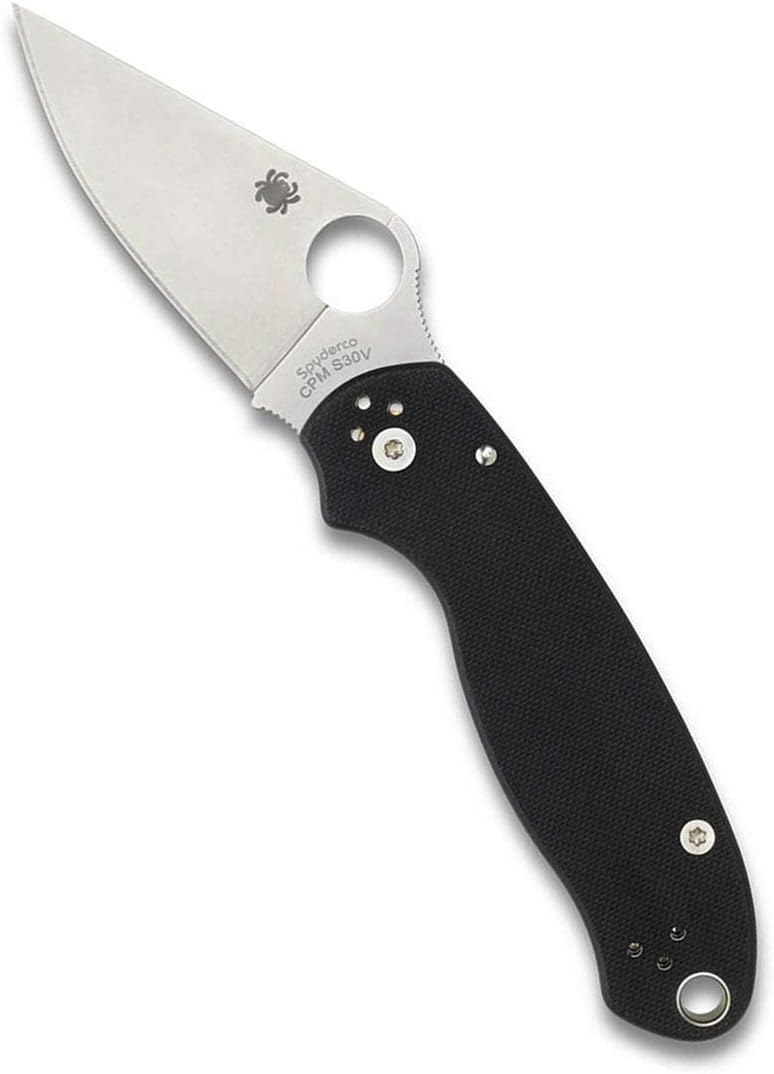
The PM2 is the other undisputed titan of the modern EDC world. The PM2 boasts vastly superior ergonomics for prolonged, heavy cutting tasks and features a slicey full-flat grind. However, the PM2 is famously a “pocket hog”—it is incredibly wide when closed. The 940 carries infinitely better in tailored jeans or office slacks, taking up a fraction of the pocket real estate.
Disassembly & Maintenance Protocols
Maintaining the 940 is straightforward but requires the right tools. You will need high-quality Wiha Torx bits (T6 for the body screws and clip, T10 for the pivot screw). Using cheap tools will strip the shallow hardware.
When cleaning, disassemble the knife and polish the phosphor bronze washers on a leather strop. Reassemble the pivot with a tiny drop of high-quality knife lubricant (like KPL or Nano-Oil) and secure the pivot screw with a small dab of Blue Loctite (never Red). Adjust the pivot until the blade drops shut freely without any side-to-side blade play.
Pros & Cons Summary
The Pros
- Perfectly engineered blade-to-handle ratio.
- The Reverse Tanto tip is practically unbreakable for EDC tasks.
- Slim, narrow profile completely disappears in the pocket.
- AXIS lock makes it 100% ambidextrous and incredibly safe.
- Phosphor bronze washers ensure flawless operation in dirty environments.
- Massive aftermarket for custom titanium and carbon fiber parts.
- Backed by Benchmade’s phenomenal LifeSharp lifetime warranty.
The Cons
- The “Benchmade Tax”: Price has increased significantly (now well over $200).
- The included standard split-arrow clip is not deep-carry.
- Thick edge geometry makes it a poor slicer compared to modern full-flat grinds.
- Smooth aluminum scales can become slippery when wet or oily.
- Omega springs present a known, albeit easily fixable, failure point.
- Factory centering and edge bevel symmetry can occasionally be inconsistent.
Expert Frequently Asked Questions
Is the Benchmade 940 worth the money in 2025?
Despite the undeniable price hikes over the last five years, yes. The bulletproof build quality, exceptional LifeSharp warranty, and timeless, highly functional design make it a definitive “buy once, cry once” tool. Furthermore, the 940 holds its secondary resale value incredibly well compared to budget imported brands.
Does the Benchmade 940 arrive sharp?
Generally, yes. Benchmade finishes their factory edges on a high-speed belt grinder. While it will shave arm hair straight out of the box, edge connoisseurs often note the factory bevels can be slightly “toothy.” A quick refinement on a leather strop will maximize its cutting potential.
Can I use the 940 for tactical self-defense?
While any sharp, locking object can theoretically be used for defense in a desperate situation, the 940 is explicitly designed as a utilitarian tool. The aluminum handle is slender and notably lacks a pronounced finger guard (quillon). In a high-impact thrusting motion, your hand could easily slide forward onto the live blade. It is vastly better suited for breaking down Amazon boxes than engaging bad guys.
How do I fix an off-center blade on my 940?
Blade centering can usually be remedied by carefully tightening the T10 pivot screw. If that fails to align it, the “paper trick” works wonders: loosen all body screws slightly, wedge a folded piece of paper between the blade and the liner on the side it favors to force it center, and then firmly re-tighten the body screws from bottom to top. Remove the paper, and the blade should hold dead center.
Is the 940 legal to carry everywhere?
With a blade length measuring exactly 3.4 inches, it easily clears the 3.5-inch or 4.0-inch legal limit in the vast majority of US states. However, because it features a locking mechanism (AXIS lock), it is strictly illegal to carry in restrictive international jurisdictions like the UK without explicit “good reason.” Always verify your specific local and state knife laws.
Does Benchmade really offer free sharpening?
Yes. The renowned LifeSharp service allows you to mail your knife to the Benchmade factory in Oregon at any point in your life. Their technicians will fully disassemble, ultrasonically clean, lubricate, tune the action, replace worn springs, and re-sharpen the blade to a factory edge entirely for free—you are only responsible for the cost of shipping it there.

Don’t settle for cheap imitations that will fail you in the field. Invest in the knife that literally defined the modern EDC category.
Check Availability on AmazonFinal Verdict: The Undisputed King of EDC
The Benchmade 940 Osborne is undeniably not the newest, flashiest knife on the block. It doesn’t feature the trendiest powdered metallurgy of the month, and it stubbornly refuses to adopt the ball-bearing trend. But what it does offer is a masterpiece of design efficiency that has weathered the test of time.
It provides the user with a substantial, highly capable, hard-use blade wrapped in a package that carries with the discreet footprint of a premium fountain pen. If you are looking to build a massive collection of safe queens, there are flashier options. But if you legitimately need one single knife to reliably serve you for the next two decades—carrying you seamlessly from rigorous camping trips to professional office environments—the 940 Osborne remains the smartest, most proven investment you can make. It is the quintessential EDC for a very profound reason.