Cangshan Knife Review: Design-Forward Cutlery or Just Hype?
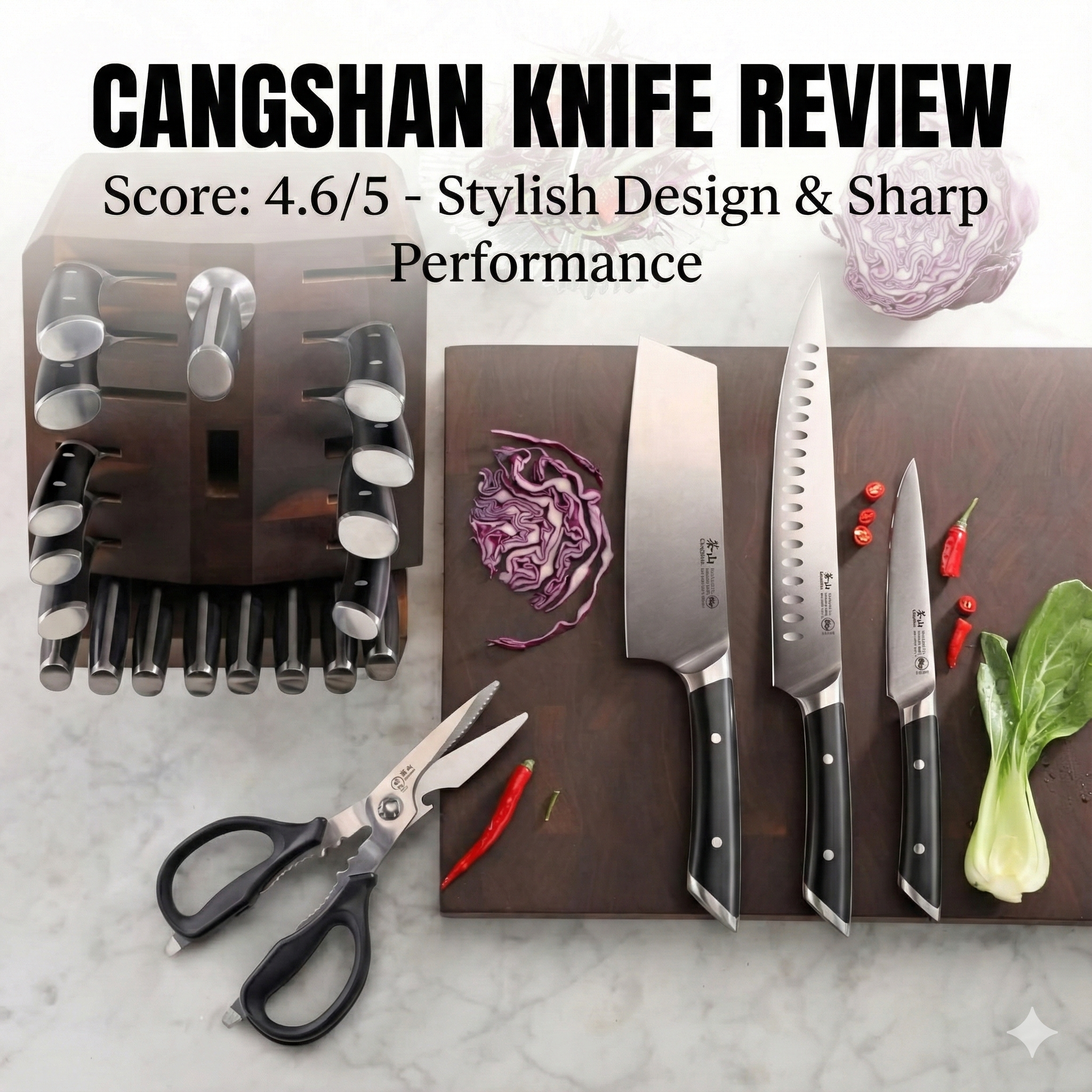
In the culinary world, brand loyalty runs astonishingly deep. For generations, home cooks, culinary students, and professional executive chefs have oscillated between the heavy-duty, indestructible durability of traditional German steel and the razor-sharp, lightweight precision of delicate Japanese blades. However, over the past decade, a new contender has forcefully entered the arena, disrupting the status quo with striking aesthetics and numerous Red Dot Design Awards. This represents the core of our definitive Cangshan knife review.
Cangshan Cutlery Company is relatively new when juxtaposed against the centuries-old, storied lineage of Solingen giants like Wüsthof or Zwilling J.A. Henckels. Yet, within a remarkably short timeframe, they have secured a prestigious partnership with Michelin-starred Chef Thomas Keller and have aggressively positioned themselves as a premium alternative that successfully bridges the gap between Eastern and Western knife-making philosophies.
But the overriding question remains: do they actually perform on the cutting board? Are they built to withstand the rigors of a bustling holiday kitchen, or are they simply “kitchen jewelry” designed to look good on an Instagram feed?
In this exhaustively comprehensive deep dive, we will analyze every facet of the brand. We will dissect the metallurgy, evaluate the handle ergonomics, test the edge retention, and scrutinize the proprietary manufacturing processes of Cangshan’s top series. We will compare them head-to-head against established industry titans to help you definitively decide if these modern knives deserve a coveted spot in your kitchen block.
Who is Cangshan? Addressing the “Made in China” Stigma
Cangshan was founded by Henry Liu and is headquartered in the United States, but the manufacturing occurs in Yangjiang, China. For many seasoned knife enthusiasts and professional chefs, the words “Made in China” instantly conjure negative images of stamped, flimsy, mass-market metal that rolls or dulls after dicing a single onion.
However, this generalization ignores historical context. Yangjiang is officially recognized as the “Capital of Knives and Scissors” in China, possessing a deeply rooted history of metalworking and blade-smithing that dates back over 1,400 years. Cangshan leans into this heritage, operating state-of-the-art, impeccably clean manufacturing facilities that look more like aerospace laboratories than traditional blacksmith forges.
Cangshan heavily distinguishes itself from generic mass-production by focusing heavily on importing premium raw steel. They absolutely do not use cheap, unbranded Chinese alloys for their high-end culinary lines. Instead, they import high-carbon German X50CrMoV15 steel and ultra-pure Swedish Sandvik 14C28N steel directly from Europe. They then process these premium materials using highly advanced, multi-stage heat-treatment technology in their Chinese facilities. This strategic hybrid approach allows them to offer luxury-tier materials and craftsmanship at a price point often significantly lower than their European and Japanese competitors.
If you are exploring the best chef knife brands on the market today, you will notice that Cangshan is unique in its intense emphasis on architectural design. They have won over 30 international design awards, including multiple Red Dot Design Awards and iF Design Awards, proving definitively that utilitarian kitchen tools can indeed be elevated to functional art.
Metallurgy and Construction: The Anatomy of a Cangshan Blade
A kitchen knife is fundamentally only as good as the steel from which it is forged, and the heat treatment it undergoes. Cangshan is highly transparent about its metallurgy, utilizing three primary types of premium steel across their various collections. Understanding these chemical differences is crucial for choosing the right knife for your specific cooking style.
1. German X50CrMoV15 Steel
Used extensively in their S1, V2, W, and Helena Series, this is the exact same industry-standard steel formula found in premium Wüsthof and Zwilling knives. It contains 0.5% Carbon for hardness, 15% Chromium for superb rust resistance, and additions of Molybdenum and Vanadium for tensile strength and grain refinement.
- Rockwell Hardness: 58 ± 2 HRC.
- Characteristics: Highly durable, incredibly easy to hone and sharpen, and very forgiving. It won’t chip easily if you accidentally strike a chicken bone or drop it in the sink.
- Comparison: If you want to know how this specific steel stacks up against traditional European makers, read our detailed guide on the best German kitchen knives.
2. Swedish Sandvik 14C28N Steel
This is where Cangshan truly shines and separates itself from the pack. Used in the acclaimed Thomas Keller, N1, and TN1 Series, this Swedish steel was originally developed for razor blades and high-end pocket knives. It is known for its incredible purity and nitrogen enrichment.
- Rockwell Hardness: 59-61 HRC.
- Characteristics: The addition of nitrogen allows the steel to achieve higher hardness without forming brittle chromium carbides. It holds a razor edge roughly 5 to 7 times longer than standard German steel, takes a terrifyingly sharp 16-degree angle, and resists acidic corrosion exceptionally well.
3. Japanese VG10 Core (Damascus Cladding)
Found in their exquisite J Series and Kita Series, this is designed for the culinary enthusiast who desires the traditional Japanese aesthetic and laser-like performance.
- Rockwell Hardness: 60-62 HRC.
- Characteristics: Extremely hard and capable of taking a microscopic edge. However, it is more brittle than German steel. It requires proper cutting technique (push-cutting rather than heavy rock-chopping) and a wooden cutting board to prevent chipping.
- Learn More: See our deep-dive metallurgical comparison of AUS-10 vs VG10 steel.
The Forging and Heat Treatment Process
Furthermore, the vast majority of Cangshan knives are fully forged, not stamped. This means they are created from a single, solid bar of steel that is heated to extreme temperatures and hammered into shape under immense pressure. This aligns the molecular grain of the steel, providing a robust full tang for perfect weight distribution and balance.
Cangshan also utilizes a proprietary CRYO Ice-Hardening process. After the blades are heated, they are deep-frozen to -300°F. This cryogenic tempering relieves internal stresses within the metal, maximizing edge retention and ensuring the blade will not warp over decades of use. To understand why this manufacturing distinction matters so much, check out our article on the difference between stamped and forged knives.

Comprehensive Deep Dive: The Best Cangshan Knife Series Reviewed
Cangshan boasts a somewhat dizzying array of distinct product lines. To the uninitiated, it can be overwhelming. We have rigorously tested and analyzed the most popular series to help you navigate their extensive catalog.
1. The Thomas Keller Signature Series (The Flagship)
This is the absolute crown jewel of the brand, meticulously designed from the ground up in partnership with world-renowned, multi-Michelin-starred Chef Thomas Keller. It won the prestigious Red Dot Design Award in 2019 and is utilized in his iconic restaurants, The French Laundry and Per Se.
Key Features:
- Steel Options: Available in ultra-premium Swedish Damasteel® RWL34 (Powdered Metallurgy) for the limited editions, or Swedish 14C28N for the standard professional line.
- Handle Design: Crafted from a dense white polymer composite. It is completely rivet-less, providing a flawless, hygienic, and sleek aesthetic.
- Ergonomics: It features a uniquely tapered, smooth bolster that actively encourages a professional “pinch grip” (gripping the blade itself with your thumb and index finger for maximum control).
The sharpness out of the box is genuinely frightening. The total lack of rivets entirely eliminates microscopic food traps, making it one of the most sanitary knives available on the commercial market. It feels dense and substantial in the hand, remarkably similar to a Wusthof Classic Ikon, but with a highly modern, minimalist flair.
2. The S1 Series (The High-Value Best Seller)
If you want the absolute best “bang for your buck” without crossing into luxury pricing, the S1 series is the definitive answer. It features a striking, modern “open-tang” design where the handle scales expose the solid steel running through the middle of the grip.
- Steel: Classic German X50CrMoV15.
- Handle: Ergonomic POM (polyoxymethylene) polymer, available in distinct bright white or deep black.
- Balance: Slightly handle-heavy, which prevents wrist fatigue and imparts a feeling of absolute control when performing fine tasks.
The S1 series performs identically to entry-level professional knives from European legacy brands. It is rugged enough for heavy daily prep work like breaking down whole chickens or halving butternut squash, yet refined enough for meticulously julienning carrots. For those searching for affordable chef knives that do not compromise on quality, this is a top-tier contender.
3. The TS Series (The Architectural Modernist)
The TS Series is visually unmistakable. It features a handle that looks arguably more like a high-end surgical instrument or a piece of modern architecture than a traditional kitchen knife. The handle is remarkably slim, entirely hollow to reduce weight, and seamlessly integrated with the blade in one fluid piece of steel.
The Pros: Incredible, feather-light balance and perfect hygiene (there are absolutely no crevices, seams, or wood pores for bacteria to hide in).
The Cons: Because the handle is entirely polished metal, it can become quite slippery if your hands are covered in olive oil, fat, or fish slime during heavy prep.
4. The Kita Series (The Japanese Hybrid)
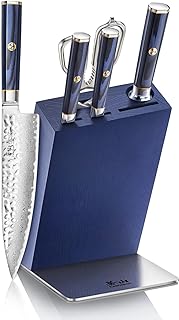
For lovers of the mesmerizing, wave-like Damascus steel aesthetic, the Kita series offers a premium Japanese VG10 cutting core protected by 67 layers of softer Damascus steel. It features a hand-hammered (Tsuchime) finish along the top half of the blade.
This hammered finish isn’t just for looks; it creates tiny air pockets that act as a non-stick surface, preventing starchy foods (like sliced potatoes or cucumbers) from adhering to the side of the blade. The Kita series typically features a traditional octagonal wooden handle, paying direct homage to traditional Wa-handles found on high-end Japanese knives. If you are deciding between a multi-purpose Santoku and a standard Chef’s blade, reading our guide on Chef Knife vs Santoku Knife might help you choose the ideal shape within this beautiful series.
5. The Haku & Oliv Series (The Naturalists)
For those who prefer the warmth and tactile feel of natural wood over sterile polymer or metal, Cangshan offers the Haku and Oliv lines. The Haku features deep, rich African Blackwood handles—an incredibly dense, moisture-resistant wood often used in high-end clarinets. The Oliv series, as the name suggests, utilizes stunning, highly grained Italian Olive wood.
Both of these lines use German X50CrMoV15 steel. They offer a more rustic, classic farmhouse aesthetic while maintaining Cangshan’s signature sharp 16-degree cutting edge. Note: Wooden handles require slightly more maintenance and should occasionally be treated with food-safe mineral oil to prevent drying or cracking.
Head-to-Head: Cangshan vs. The Culinary Giants
It is easy to claim high quality in a vacuum. But how does this relatively new challenger fare against the deeply established giants of the cutlery industry? We put them head-to-head in critical categories.
| Brand | Origin | Typical Steel | Blade Angle | Price Tier | Best For |
|---|---|---|---|---|---|
| Cangshan | Yangjiang, China | German X50 / Swedish 14C28N | 16 Degrees | Mid to Premium | Value, Modern Design, Swedish Steel |
| Wüsthof | Solingen, Germany | German X50CrMoV15 | 14-15 Degrees | Premium | Heritage, Heavy Durability, Resale Value |
| Shun | Seki City, Japan | VG-MAX / SG2 | 16 Degrees | Premium to Luxury | Sushi, Delicate Slicing, Damascus Aesthetics |
| Dalstrong | Yangjiang, China | Various (AUS-10, BD1N) | 8-12 Degrees | Mid-Tier | Aggressive Tactical Styling, Gifts |
Cangshan vs. Wüsthof
Wüsthof is the undisputed gold standard for German cutlery. Their Classic and Classic Ikon lines are legendary in culinary schools worldwide.
- Metallurgy: Both use the exact same base X50CrMoV15 steel (in Cangshan’s German lines). However, Cangshan hardens theirs slightly more (pushing 58+ HRC compared to Wusthof’s standard 58). If you upgrade to Cangshan’s Swedish steel lines, Cangshan objectively holds a sharper edge longer.
- Design Philosophy: Wüsthof is purely, unapologetically functional and traditional. Cangshan focuses heavily on sleek, modern aesthetics and highly polished finishes.
- Price Point: Cangshan is generally 30% to 40% cheaper for comparable or slightly superior metallurgical performance.
- The Verdict: Choose Wüsthof for heritage, warranty ease, and legacy resale value. Choose Cangshan for incredible value-for-money and modern kitchen design. (For a deeper German comparison, see: Wusthof vs Victorinox).
Cangshan vs. Shun
Shun heavily dominates the mass-market premium Japanese segment in North America.
- Sharpness & Geometry: Shun knives (utilizing VG-MAX steel) are generally thinner behind the edge and harder out of the box than Cangshan’s German lines. However, they are highly comparable in sharpness to Cangshan’s Kita or J series.
- Durability: Cangshan’s Swedish steel lines (like the Thomas Keller) are significantly tougher, more ductile, and far less prone to micro-chipping than Shun’s famously brittle edges.
- The Verdict: If you are a heavy-handed cook, or if you frequently cut near dense bones and squash, Cangshan is vastly safer and more forgiving. If you want true laser-precision for delicate sushi or paper-thin tomato slices, stick to Shun. (See more: Shun vs Wusthof).
Cangshan vs. Dalstrong
Both are newer, highly disruptive brands manufacturing in Yangjiang, China, utilizing imported steels.
- Aesthetics: Dalstrong leans heavily into aggressive, “tactical,” and highly flashy designs that appeal to a very specific demographic. Cangshan leans into minimalist, elegant, Bauhaus-inspired architectural design.
- The Verdict: Cangshan feels more refined and appropriate in a high-end, modern minimalist kitchen, whereas Dalstrong is often viewed as flashier and louder.
Pros and Cons Overview
The Pros
- Exceptional, verified heat treatment protocols (achieving 58-61 HRC consistently).
- Utilizes highly respected premium Swedish and German steels, avoiding cheap alloys.
- Stunning, Red Dot Award-winning designs that elevate kitchen decor.
- The 14C28N Swedish steel lines offer incredible edge retention for the price.
- Excellent, responsive customer service and a robust lifetime warranty against defects.
- Massive value for money when buying complete Acacia wood or magnetic Walnut block sets.
The Cons
- The “Made in China” origin stigma still bothers traditionalist cutlery purists.
- All-metal handles (like on the TS Series) can become slippery when working with fats or oils.
- The brand’s history and legacy are very short compared to centuries-old European or Japanese giants.
- Individual knives are often sold without protective sheaths (sayas) or blocks, which must be purchased separately.
- The sheer, overwhelming number of different series (over a dozen) can be highly confusing for a first-time buyer.
Knife Maintenance: Keeping Your Cangshan Razor Sharp
Even the most expensive, expertly forged knife in the world is utterly useless if it is allowed to become dull. Because Cangshan knives are heat-treated to a higher hardness than average supermarket knives, they require specific, respectful care to maintain their factory edge.
The Cutting Board Matters
Never, under any circumstances, cut on glass, granite, marble, or ceramic plates. These surfaces are harder than the steel and will instantly roll or chip the 16-degree edge. Stick to high-quality end-grain wood (like Walnut or Maple), soft plastic, or professional synthetic rubber boards (like Hasegawa).
Honing vs. Sharpening
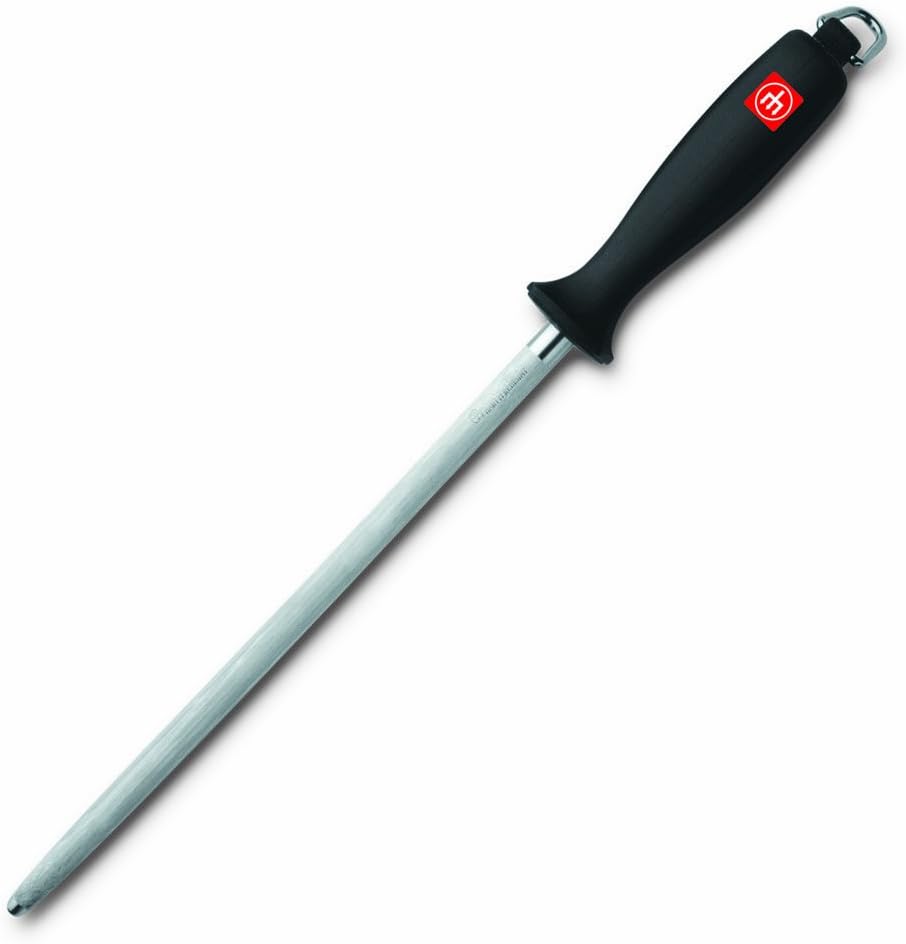
You should hone your Cangshan knife before or after every significant prep session. A honing steel (preferably ceramic, given the hardness of the Swedish and VG10 steels) does not remove metal; it simply realigns the microscopic “teeth” of the edge that get bent during cutting.
However, eventually (usually every 6 to 12 months for a home cook), you will need to physically remove metal to grind a brand-new edge—that is sharpening. For premium Swedish or Japanese steel, we highly recommend using a water whetstone (1000/3000 grit) rather than an aggressive electric pull-through sharpener, which can chew up the delicate geometry. Read our comprehensive guide on sharpening stone vs honing steel to master this essential culinary skill.
Storage Solutions
Never throw these knives loose into a crowded utensil drawer. It is highly dangerous for your hands and will rapidly ruin the blade as it clinks against spatulas and spoons. We strongly recommend a wall-mounted magnetic strip or a dedicated wooden block. If you have limited counter space in an apartment, check out how to store knives in a small kitchen or invest in a protective knife drawer organizer.
Cleaning and Rust Prevention
While most Cangshan knives are forged from “stainless” steel, it is vital to remember that “stainless” does not mean “stain-proof.” Highly acidic foods like lemons, onions, and tomatoes can cause micro-pitting if the juices are left sitting on the blade for hours. Wash the knife by hand with warm, soapy water and towel-dry it immediately after use. Never put a Cangshan knife in the dishwasher. The harsh, abrasive detergents and extreme heat cycles will ruin wooden/polymer handles and drastically dull the edge. If you do accidentally leave it wet and spot rust, don’t panic—it can be fixed. See our tutorial on how to remove rust from kitchen knives.
Frequently Asked Questions (FAQ)
Are Cangshan knives made in China?
Yes, the knives are manufactured in Yangjiang, China. However, it is critical to note that they source their raw steel from Germany (X50CrMoV15) and Sweden (Sandvik 14C28N) and use advanced, computer-controlled heat treatment processes that easily rival top-tier European manufacturing.
Is Cangshan a good, reliable knife brand?
Yes, Cangshan is widely considered an excellent brand, particularly regarding value for the price. They offer premium materials and award-winning designs that routinely outperform traditional brands in the same price bracket. Their ongoing design partnership with Chef Thomas Keller highly validates their quality in a professional restaurant setting.
Do Cangshan knives rust easily?
Most Cangshan knives are forged from high-alloy stainless steel, making them highly resistant to rust. However, like all premium cutlery, they must be hand-washed and dried immediately. Putting them in a dishwasher will cause rust spots and damage the handle. If you strictly require dishwasher-safe options for dining, consider looking at best dishwasher safe steak knives, but as a rule, keep large prep chef knives completely out of the machine.
What is the factory edge angle of Cangshan knives?
Cangshan typically hand-sharpens their knives to a precise 16-degree angle per side. This is noticeably sharper and finer than the traditional 20-degree angle found on older German knives, providing a distinct, razor-like cutting advantage right out of the box.
Final Verdict: Should You Buy Cangshan Knives?
After extensively reviewing the metallurgical composition, the architectural design philosophy, and the real-world cutting performance, our final verdict is resoundingly clear: Cangshan is not just a “pretty face” or a marketing gimmick. They are legitimate, highly capable cutting tools that offer incredible, disruptive value to the consumer.
If you are a strict traditionalist who insists on the “Made in Solingen” or “Made in Seki” stamps for heritage reasons, you might be better served sticking with Wüsthof, Zwilling, or Shun. However, if you are open-minded to modern global manufacturing, and you want a knife that performs exactly like a $200+ luxury blade for nearly half the price—while looking absolutely stunning displayed on your kitchen counter—Cangshan is a genuinely fantastic choice.
We highly recommend Cangshan for:
- Home cooks who place a high premium on modern aesthetics and interior kitchen design.
- Users looking to experience the edge-holding magic of high-end Swedish steel without the exorbitant markup.
- Gift-givers (Cangshan’s presentation and unboxing experience, especially with their walnut block sets, is definitively luxury-tier).
We do not recommend Cangshan for:
- Those who strictly want extremely lightweight, traditional Japanese single-bevel lasers (look at Miyabi or Shun instead).
- Commercial environments where knives are routinely abused, dropped, and improperly thrown into commercial dishwashers by staff.
Ready to upgrade your kitchen arsenal?
Check Latest Prices & Deals on AmazonWould you like me to help you compare specific Cangshan block sets, or perhaps guide you on which whetstones you should buy to maintain them?