CRKT Squid Review: The Quintessential “Pocket Tank” You Can Actually Afford
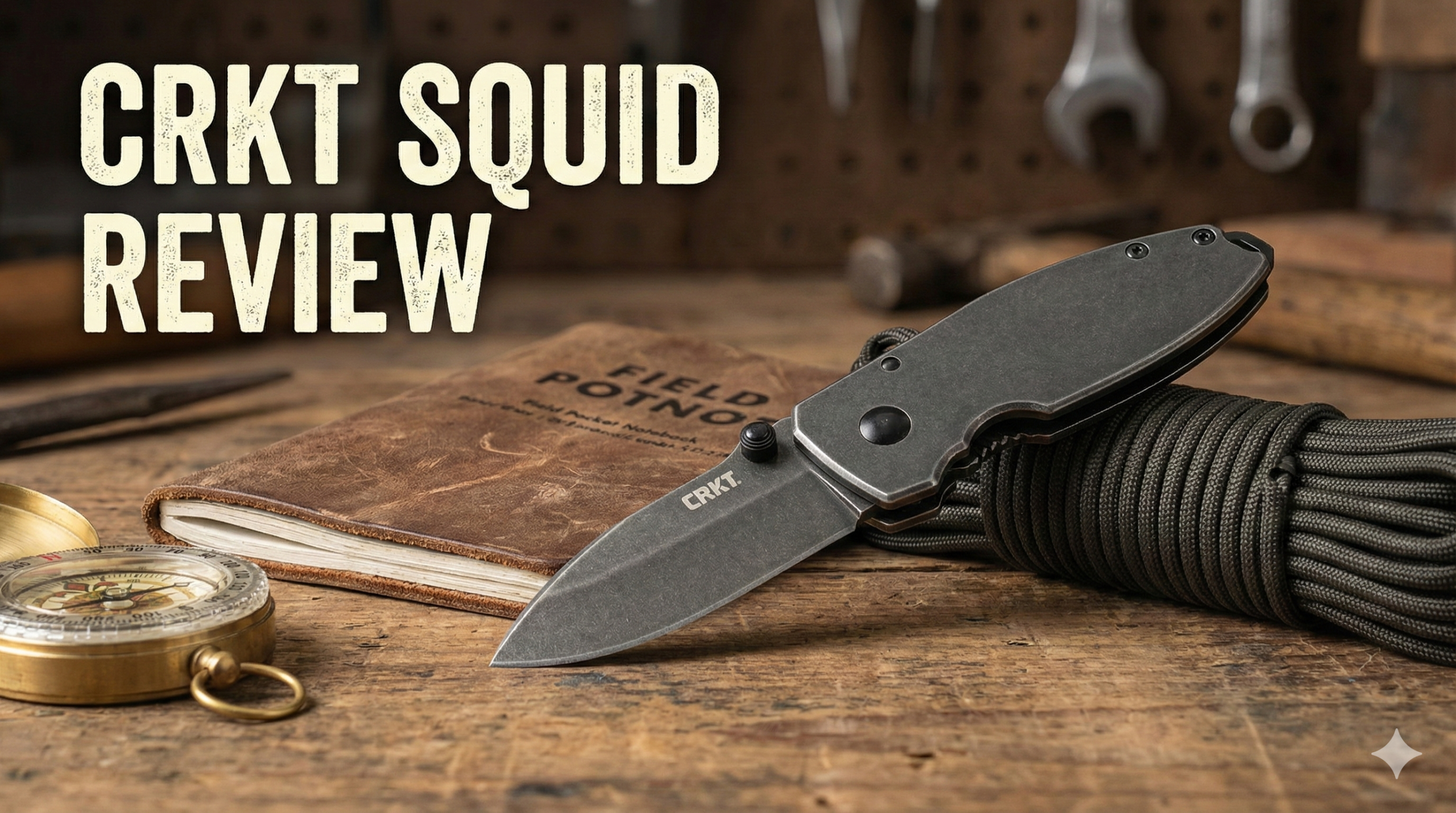
The vast majority of “budget” folding knives on the market unfortunately feel exactly like budget knives. They exhibit lateral blade play, their thin plastic handles rattle when tapped, and overall, they feel entirely disposable. The Columbia River Knife & Tool (CRKT) Squid, masterfully designed by custom knife maker Lucas Burnley, completely destroys this prevailing stereotype. The moment you pick it up, it feels less like a cheap pocket knife and more like a solid, dense ingot of stainless steel that just happens to have a razor-sharp cutting edge attached to it.
Visually modeled after the aerodynamic shape of a rocket (or the hydrodynamic profile of a squid, depending on the designer’s mood), this knife is incredibly compact, undeniably stout, and aggressively simple in its execution. Burnley specifically designed it to bridge the massive gap between a tactical “hard-use” folder and an unobtrusive gentleman’s carry. It’s small enough to drop into the tiny coin pocket of your jeans without a second thought, yet ruggedly tough enough to scrape staples, cut heavy zip-ties, or lightly pry open a paint can in an absolute emergency (though, legally, we don’t officially recommend using any knife as a pry bar).
But is this genuinely the ultimate “beater” knife for the working professional? Does the exceptionally heavy stainless steel construction weigh it down too much for modern EDC (Everyday Carry) standards where ultra-lightweight carbon fiber usually rules? In this highly detailed, comprehensive review, we will break down the metallurgy, the locking mechanics, and the real-world utility to explain exactly why this little tank has remained a massive, undisputed bestseller for CRKT for over a decade.

Compact, incredibly affordable, and legitimately built to last a lifetime. See exactly why the original Squid remains an absolute fan favorite.
Check Price on AmazonTechnical Specifications
The CRKT Squid is a fascinating study in material density. It packs an astonishing amount of steel into a very small, pocket-friendly footprint. While many modern knife manufacturers are engaged in a relentless “arms race” to create the absolute lightest knife possible by skeletonizing liners and using flimsy plastics, the Squid stubbornly and successfully embraces its substantial heft.
| Blade Length | 2.25 inches (57.1 mm) |
|---|---|
| Overall Length | 5.70 inches (144.7 mm) |
| Closed Length | 3.48 inches (88.3 mm) |
| Blade Thickness | 0.11 inches (2.8 mm) |
| Weight | 3.50 ounces (99.2 g) |
| Blade Material | 8Cr13MoV Stainless Steel (Base Model) |
| Handle Material | 2Cr13 Stainless Steel (Base Model) |
| Lock Mechanism | Integral Frame Lock |
| Designer | Lucas Burnley |
Blade Geometry: The Ultimate Drop Point Utility
The blade of the Squid is a wide, stubby, classic drop point design. In the cutlery world, the drop point is universally recognized as the “Jack of all trades” profile. It possesses plenty of sweeping belly for effective slicing tasks (like breaking down cardboard boxes or slicing an apple), while the tip drops down just enough to remain highly reinforced and robust for piercing tasks (like opening blister packaging or clam-shells).
Crucially, CRKT utilizes a hollow grind on the primary bevel of the blade. Because the blade stock is actually quite thick for such a short knife (0.11 inches), a standard flat grind would make it feel like a wedge. The hollow grind curves inward, aggressively thinning the steel directly behind the cutting edge. This specific geometry ensures that despite its thick spine, the Squid is a remarkably capable and aggressive slicer, passing through dense materials with minimal resistance.
Metallurgy: 8Cr13MoV vs. The D2 Upgrades
The classic, base-model CRKT Squid utilizes 8Cr13MoV stainless steel for its blade. As we have extensively discussed in our definitive guide comparing stainless vs. carbon steels, 8Cr13MoV is a decidedly budget-tier, Chinese-produced stainless steel. It is not going to hold a hair-shaving edge forever if you are cutting abrasive materials all day.
However, it has distinct advantages for a “beater” knife: it is incredibly easy to sharpen in the field using just a simple ceramic pocket stone, and it is highly resistant to rust and corrosion, even if you put it away wet. For a knife that routinely costs less than a decent dinner, it performs admirably and exactly as expected.
The Premium Upgrade: If you love the design of the Squid but absolutely demand better edge retention for heavy daily cutting, CRKT has recently released upgraded versions featuring D2 tool steel and occasionally Sandvik 12C27. D2 will hold its edge significantly longer than 8Cr13MoV, but requires slightly more care to prevent rust. Furthermore, custom makers frequently release limited “Sprint Runs” of the Squid in ultra-premium M390 steel.
Built Like a Tank: The Stainless Frame Lock
The absolute defining characteristic of the original Squid—and the primary reason for its immense popularity—is its Stainless Steel Frame Lock construction. Rather than using thin metal liners hidden beneath plastic scales, the entire handle of the knife acts as the structural locking mechanism.
When you deploy the blade via the thumb studs, a massive, thick slab of the stainless steel handle physically bends inward, sliding directly behind the blade tang. This locks the blade open with absolute, bank-vault security. There is zero flex in the handle when you squeeze it tightly. You could likely drive a heavy pickup truck over this knife, and while it might get scratched, the structural integrity would remain intact. This rugged, overbuilt construction makes it ideal for dirty, gritty, demanding jobs where you wouldn’t ever want to risk damaging a delicate, $200 titanium folder.
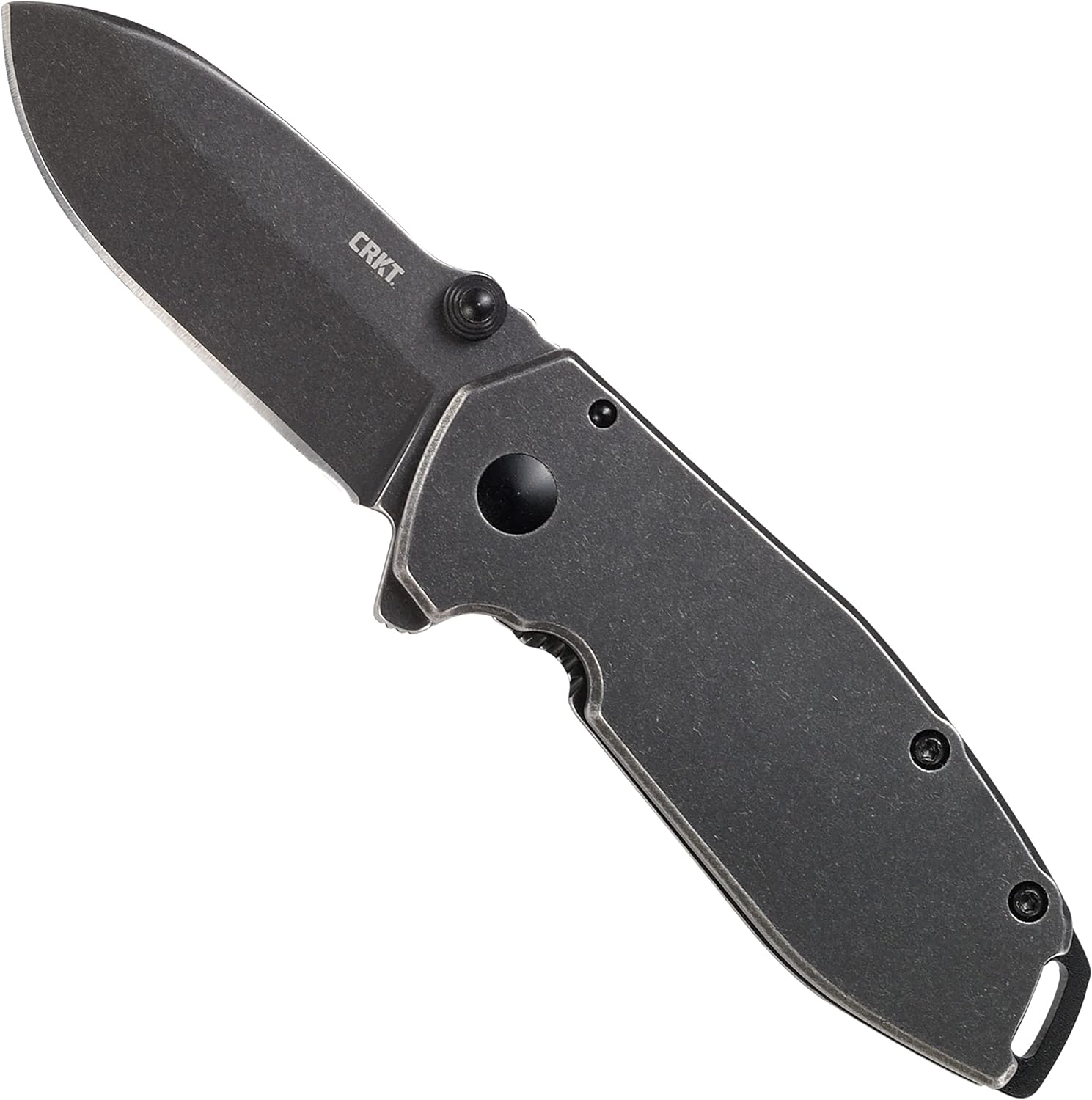
Prefer a more tactical, subdued look? The Black Stonewash finish excels at hiding daily scratches, scuffs, and fingerprints, looking incredible even after years of hard use.
Check Price on AmazonErgonomics & The “Lanyard Trick”
At first glance, the diminutive 3.48-inch handle looks far too small to offer a comfortable or secure grip, especially for users with large or extra-large hands. However, Burnley’s ergonomic design is surprisingly accommodating. The handle features a subtle, sweeping curve that naturally fits the palm of the hand, and there is highly functional, grippy jimping (texture grooves) machined into the spine of the blade where your thumb rests, providing excellent control during push-cuts.
The Lanyard Hole Extender
The Squid features a very prominent, generously sized lanyard hole at the rear of the handle. On a knife of this specific size, a lanyard isn’t just a decorative accessory; it serves a vital mechanical function. By tying a simple paracord fob or a “snake knot” lanyard to the rear, you effectively extend the grip length of the handle. When gripped, the paracord drops into your palm, allowing you to achieve a full, highly secure four-finger grip. This simple trick makes the tiny Squid feel much larger and safer during heavy cutting tasks. If you’re comparing this to typical smaller keychain knives or Swiss Army Knives, the Squid offers significantly more substantial purchase and leverage.
Deployment: Washers, Thumb Studs, and Break-in
The original manual Squid is deployed using dual, stepped thumb studs. They are large, easy to locate by touch, and offer excellent traction for your thumb. The pivot action typically runs on Teflon (PTFE) washers.
It is important to manage expectations here: out of the box, the action is rarely “drop-shut” or meant to be a frictionless fidget toy. The deployment is smooth, deliberate, and secure. Over time, as the metal detent ball wears a natural track into the blade tang and the washers compress, the action becomes significantly smoother. You can easily “flick” the blade open with a flick of your thumb and a slight snap of the wrist. It is highly reliable in dirty environments, as Teflon washers are less likely to seize up from pocket lint or sand compared to ball bearings.
The Deep Carry Pocket Experience
Weighing in at exactly 3.50 ounces, the Squid is undeniably heavy for a knife sporting only a 2.25-inch blade. (For context, a Benchmade Bugout features a 3.24-inch blade but weighs only 1.8 ounces). However, because the Squid’s overall profile is so short, flat, and compact, it carries exceptionally well. It rests flat against the leg and virtually disappears in the pocket until you need it.
The pocket clip is a true deep-carry style clip, meaning the knife sits all the way down in the pocket, showing absolutely nothing but the small steel clip to the outside world. It is highly discreet, making it completely office-friendly and socially acceptable, despite its rugged, heavy-duty build quality.
The Aftermarket: Customizing Your Squid
Because the CRKT Squid is so affordable and so universally loved, it has developed a massive cult following, which in turn has spawned a vibrant aftermarket customization scene. This is rare for a sub-$30 knife.
Companies like Flytanium manufacture precision-milled replacement “show side” scales for the Squid. You can easily remove the factory stainless steel scale and replace it with solid Copper, Brass, lightweight Carbon Fiber, or grippy Micarta. This allows you to personalize the aesthetic of the knife, significantly reduce its overall weight, or add traction, effectively turning a cheap beater knife into a personalized, high-end piece of custom EDC gear.
Squid vs. The Competition: Budget Heavyweights
CRKT Squid vs. CRKT Pilar
This is the most common debate within the CRKT lineup. The CRKT Pilar (designed by Jesper Voxnaes) is another compact, heavy frame lock. However, the Pilar features a prominent forward finger choil (allowing you to choke up on the blade) and a sheepsfoot blade shape. The Squid has a drop point blade and no finger choil, giving you slightly more usable cutting edge. If you want a dedicated utility slicer, get the Pilar. If you want a more traditional, piercing-capable blade shape, get the Squid.
CRKT Squid vs. Ontario RAT Model 2
The legendary Ontario RAT 2 is significantly longer, lighter (due to nylon handles instead of solid steel), and features a full flat grind, making it a vastly superior pure slicer for food prep or fine tasks. However, the RAT 2 is a liner lock. The Squid is shorter, far tougher, and structurally thicker. The Squid is a vastly better heavy-duty box cutter, package opener, and light pry tool.
CRKT Squid vs. Civivi Elementum
If you are willing to spend slightly more, the Civivi Elementum offers premium ceramic ball bearing action, superior D2 steel, and lighter G10 handles. The Elementum is the “finer” tool, while the Squid remains the indestructible blunt instrument.

Want lightning-fast, effortless deployment? Check out the newer Assisted Opening version featuring CRKT’s OutBurst spring assist mechanism.
Check Price on AmazonPros & Cons Summary
The Pros
- Incredibly durable, overbuilt “tank-like” frame lock construction.
- Ultra-compact size makes it highly non-threatening and legal in strict jurisdictions.
- True deep-carry pocket clip ensures discreet, secure carry.
- Lucas Burnley’s design language looks far more premium than the price suggests.
- Extremely affordable price point makes it the ultimate guilt-free “beater” knife.
- Massive aftermarket for custom copper, brass, and carbon fiber scales.
The Cons
- Objectively heavy for its size (3.5 oz for a 2.25″ blade).
- Base model 8Cr13MoV steel requires highly frequent sharpening.
- Teflon washers can feel slightly stiff and deliberate until fully broken in.
- Smooth, all-stainless steel scales can be quite slippery when wet or oily.
- Lacks a forward finger choil for choking up on detailed work.
Expert Frequently Asked Questions (FAQ)
The classic, original model is strictly a manual folder deployed via thumb studs. However, CRKT recognized the demand for faster deployment and now sells a “Squid Assisted” model that utilizes their OutBurst spring mechanism to fire the blade out automatically once you start pushing the thumb stud. Make sure to double-check the product description to know exactly which version you are purchasing.
The “XM” stands for “Extra Medium.” The Squid XM is the scaled-up, larger version of the original design. It features a longer 2.95-inch blade (compared to the original’s 2.25-inch blade) and a lengthened handle, effectively transforming it from a compact coin-pocket knife into a highly capable, full-sized primary EDC knife for those with larger hands.
The handle is manufactured from 2Cr13 stainless steel, which is highly resistant to rust and corrosion. The “Black Stonewash” versions are even more resistant due to the protective oxide coating. However, like any metal tool exposed to acidic sweat or salt water, it should be wiped down periodically to maintain its finish.
No, on the standard base models, the pocket clip is typically fixed in the right-hand, tip-up carry position and cannot be reversed. While the thumb studs are dual-sided (allowing a lefty to open it), carrying and extracting it from the left pocket is not optimal due to the clip placement.
With a cutting edge of only 2.25 inches, the Squid easily falls under the highly restrictive 2.5-inch blade length limit enforced by many strict jurisdictions (such as certain federal buildings or cities like Boston or Chicago). However, because it features a locking mechanism (the frame lock), it may be illegal in international locations like the UK. You must always verify your specific local ordinances before carrying.
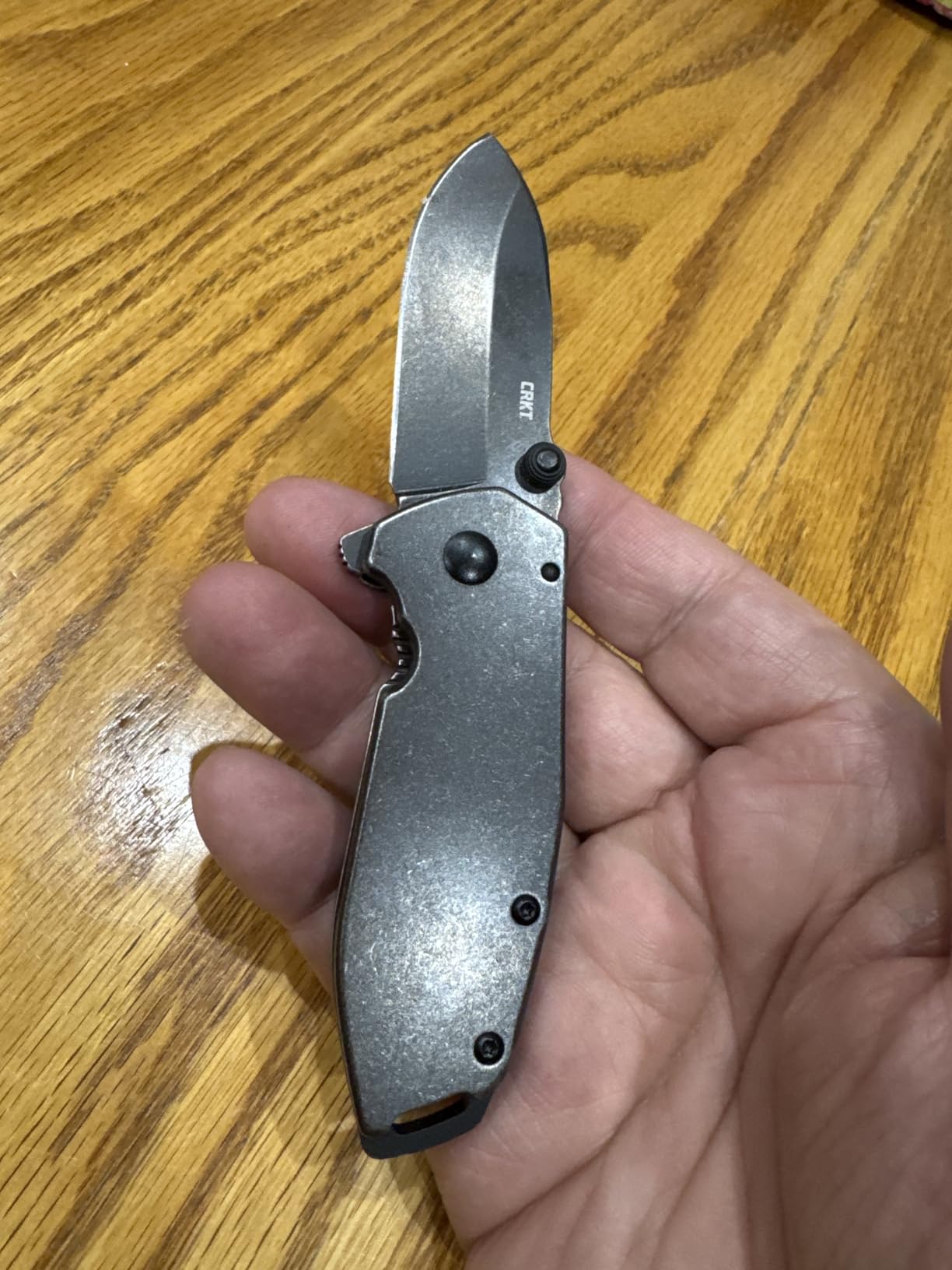
Get the iconic knife that completely redefined the budget EDC category. Rugged, utterly reliable, and ready for absolutely anything.
Check Availability on AmazonFinal Verdict: The Ultimate Guilt-Free Beater
The CRKT Squid is, without exaggeration, a modern classic. It serves as definitive proof that an everyday carry knife absolutely doesn’t have to be expensive, delicate, or forged from space-age materials to be truly excellent. It offers a level of raw, structural durability and industrial trustworthiness that is exceedingly rare in the sub-$30 budget category.
If you are looking for a highly capable knife that you can mercilessly beat on, drop on concrete, lend to a careless coworker, and use for tasks you wouldn’t dare subject a $200 titanium folder to—all without feeling a shred of guilt—the Squid is the definitive answer. It is the absolute perfect entry point into the brilliant world of Lucas Burnley designs, and it remains a mandatory staple for any serious EDC collection.