Ka-Bar Dozier Review: The Undisputed King of Budget Everyday Carry?
An exhaustive analysis of Bob Dozier’s legendary design. We break down the AUS-8A steel, the indestructible Zytel handle, and compare it against the biggest names in the budget knife industry.
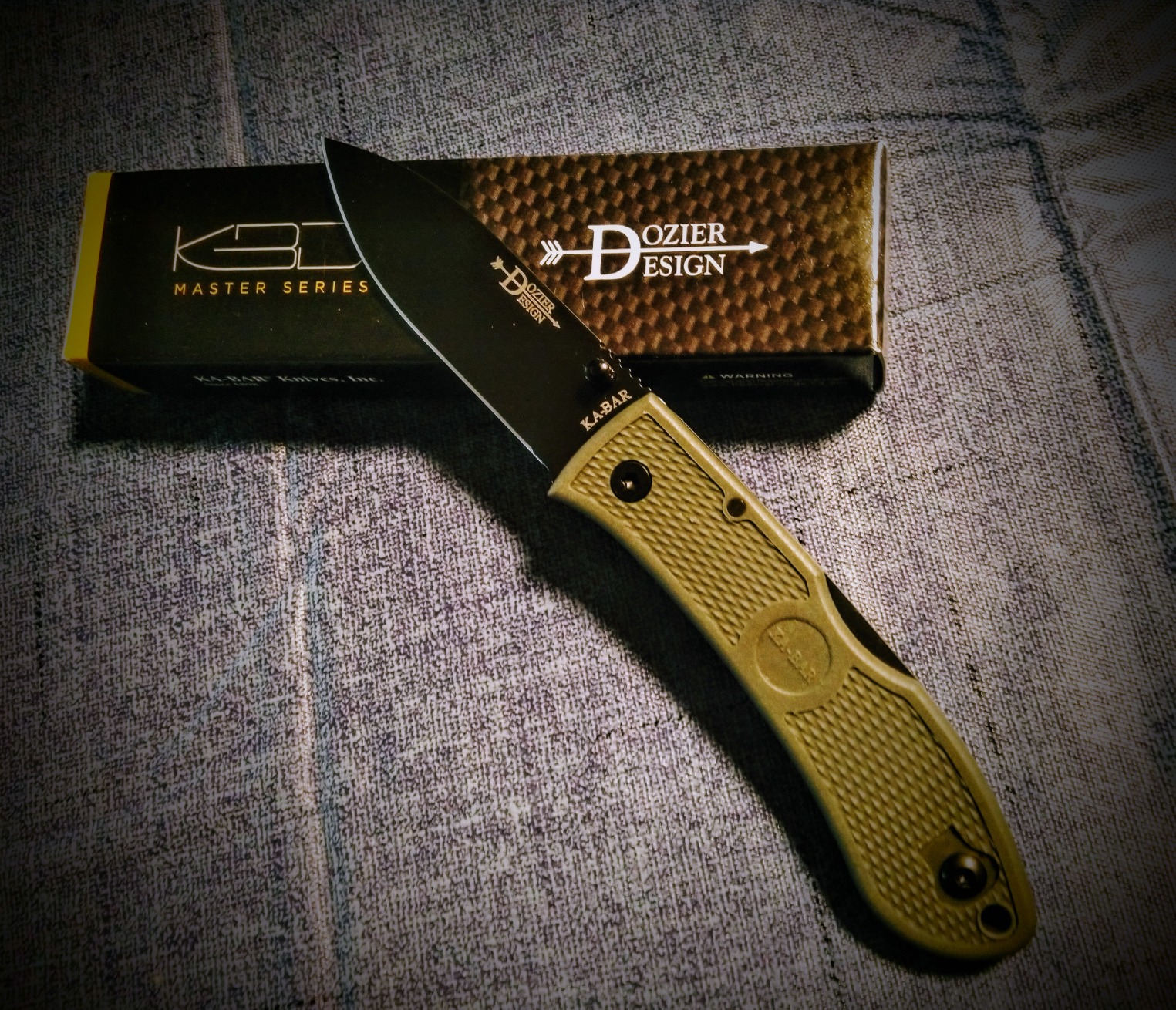
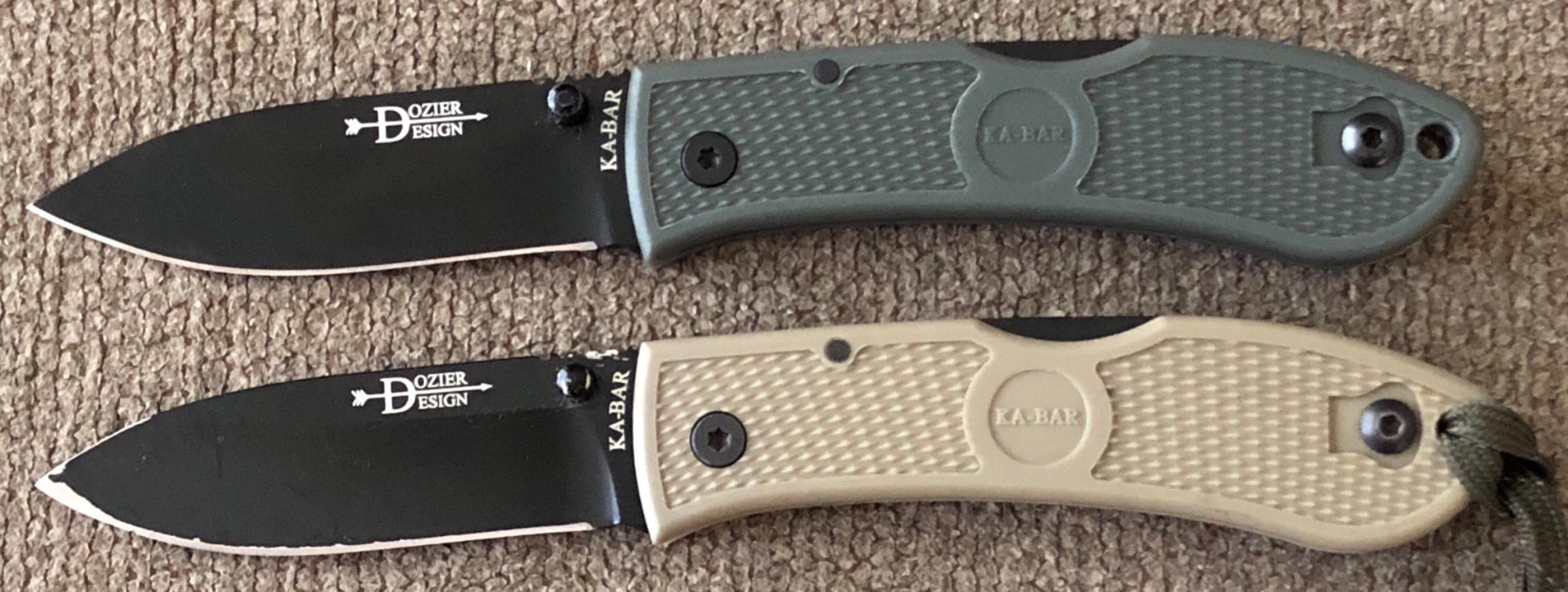
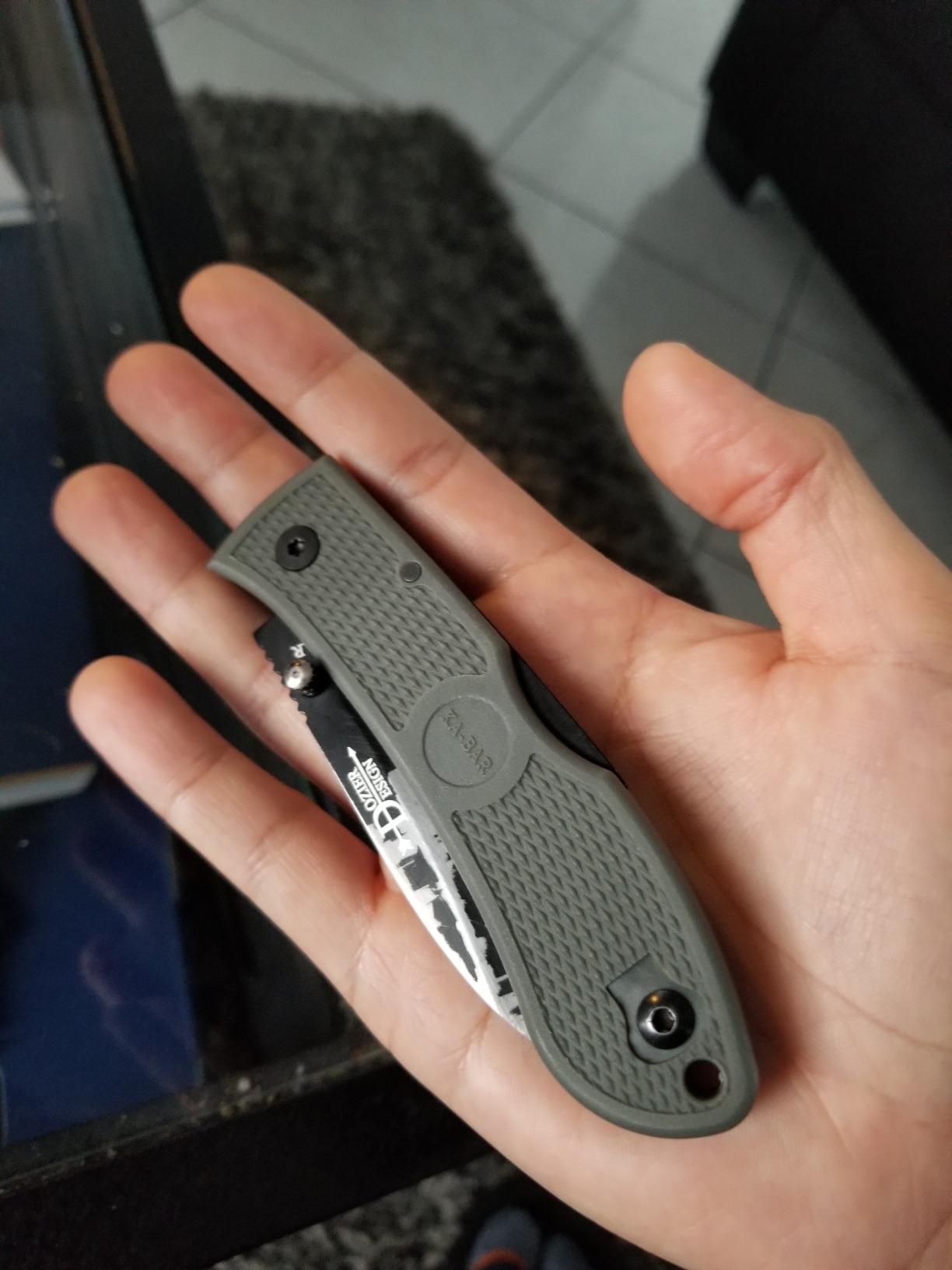
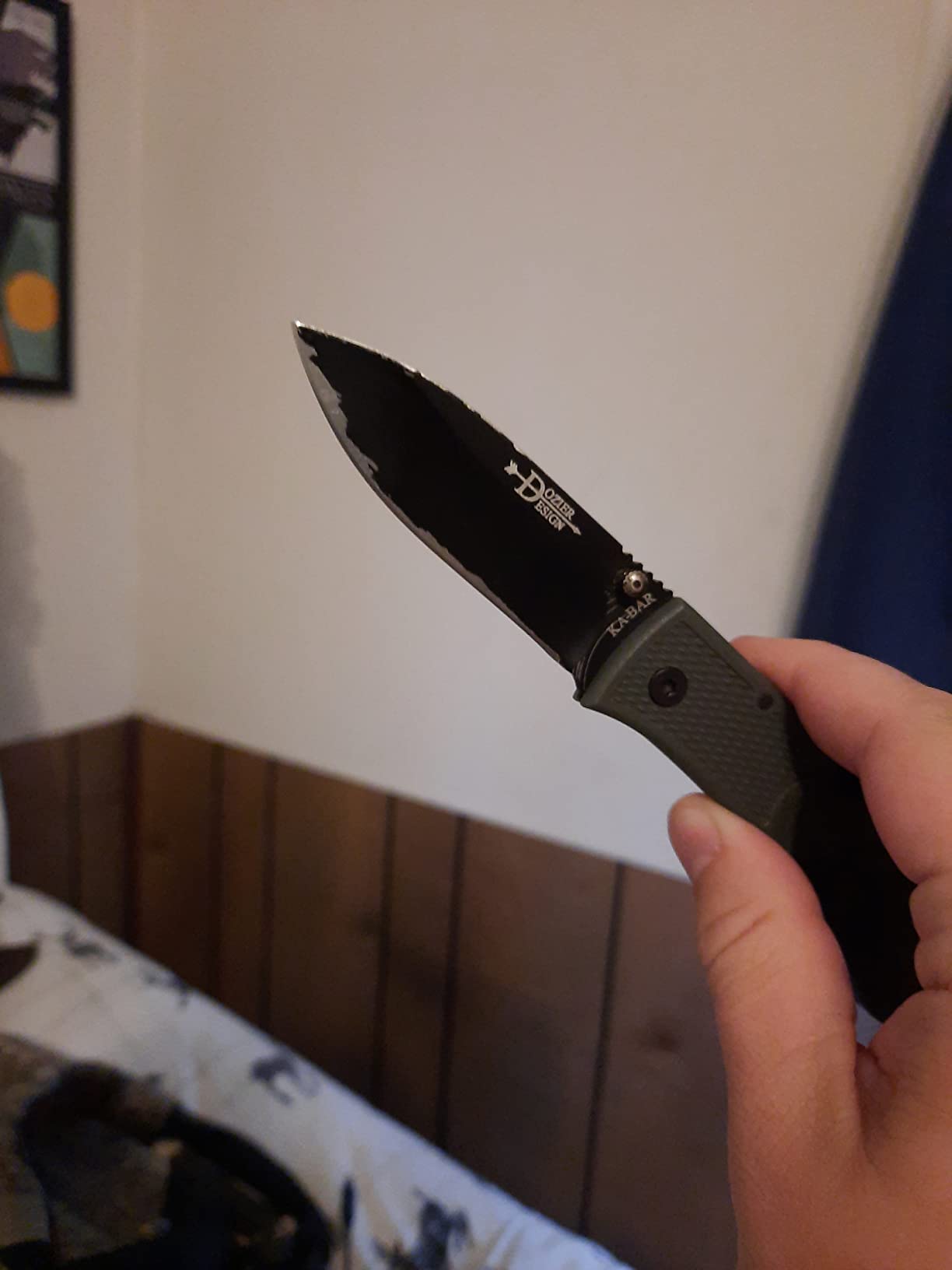
In the vast, rapidly expanding universe of Every Day Carry (EDC) knives, there is a recurring, desperate question that continually pops up in forums, Reddit threads, and YouTube comment sections everywhere: “What is the absolute best pocket knife I can buy for under $30?” For well over a decade, one answer has been shouted louder and more consistently than the rest: The Ka-Bar Dozier Folding Hunter.
In today’s cutlery market, it is remarkably easy to get distracted by shiny new things. We frequently spend our time obsessing over high-end powdered super-steels in articles like our Kershaw Blur S30V review, or marveling at the highly specialized, rust-proof maritime magic found in our Spyderco Caribbean review. However, there is something deeply, undeniably satisfying about a simple, honest, reliable tool that costs less than a tank of gas. Designed by the legendary custom knifemaker Bob Dozier, this folding knife promises extremely high utility with absolutely zero pretension.
But the knife industry has changed dramatically since this model was first released. With Chinese manufacturing offering ball-bearing flippers and D2 steel at rock-bottom prices, is there still a place for an old-school lockback? In this comprehensive, deep-dive Ka-Bar Dozier review, we will completely strip this knife down to its bare basics. We will aggressively test the geometry, the AUS-8A steel, the Zytel handle ergonomics, and pit it head-to-head against modern competitors to definitively see if this “Old School” budget king still rightfully wears the crown.
The Architect: The Bob Dozier Legacy
To fully appreciate the Ka-Bar Dozier Folding Hunter, you must first understand the man whose name is etched into the blade. Bob Dozier is not just a corporate designer; he is a titan of the custom knife-making world. Known globally among collectors as the “Doctor of D2,” Dozier made a name for himself by taking tough, utilitarian tool steels and applying masterful, razor-thin hollow grinds to them.
His custom hunting knives—particularly his famous “Arkansas Toothpick” and professional skinning blades—sell for hundreds of dollars and command waiting lists that stretch for years. When Ka-Bar (a company famous for military combat knives) approached Dozier for a collaboration, the goal was revolutionary: successfully mass-produce Dozier’s legendary, utilitarian custom blade geometry into an affordable, everyday folding package that the average working person could afford. The resulting Model 4062 was a masterpiece of compromise, offering custom-level design philosophy executed with budget-conscious materials.
Technical Specifications
The spec sheet of the Dozier reveals exactly what kind of tool this is: it is a lightweight, strictly utilitarian slasher. It ignores heavy steel liners in favor of maximum portability.
| Attribute | Specification |
|---|---|
| Model Name | Ka-Bar Dozier Folding Hunter (Model 4062) |
| Blade Length | 3.0 inches (7.6 cm) |
| Overall Length | 7.25 inches (18.4 cm) |
| Closed Length | 4.25 inches (10.8 cm) |
| Blade Steel | AUS-8A Stainless Steel (D2 versions available) |
| Blade Grind | High Hollow Grind |
| Handle Material | Zytel® (Glass-Reinforced Nylon) |
| Lock Type | Lockback |
| Weight | 2.4 oz (68g) |
| Country of Origin | Taiwan |
The Blade: Geometry, AUS-8A, and the D2 Upgrade
The High Hollow Grind Mastery
The Ka-Bar Dozier sports a classic 3-inch drop point blade. However, the true secret to this knife’s legendary performance lies not in the shape, but in the grind. Bob Dozier insisted on applying a High Hollow Grind to this blade.
Unlike a flat grind (which creates a V-shape from the spine to the edge), a hollow grind utilizes a concave curve that scoops out material behind the cutting edge. This makes the steel exceptionally thin directly behind the apex. The result? The Dozier is an absolute slicing machine. It glides through thick cardboard, heavy zip-ties, and tough apples with drastically less resistance than much more expensive, thicker tactical knives.
AUS-8A: Why It Still Matters
The standard Dozier utilizes AUS-8A Stainless Steel. In today’s highly saturated market, steel snobs might turn their noses up at AUS-8, preferring the exotic, wear-resistant alloys discussed in our SOG TAC XR review. However, for a sub-$30 working knife, AUS-8A is actually a phenomenal choice.
Here is why: it is incredibly forgiving. It takes a terrifyingly sharp, razor-like edge with very little effort on a sharpening stone. If you are new to freehand sharpening, this is the perfect steel to learn on because it raises a burr quickly. Furthermore, it offers excellent corrosion resistance, meaning if you use it to cut up an apple and forget to wipe it down immediately, it won’t instantly bloom with red rust like a high-carbon blade.
The D2 Steel Upgrade (The Modern Variant)
Ka-Bar listened to modern consumer demands. While the AUS-8A version is the classic, Ka-Bar now offers the Dozier Folding Hunter in D2 Tool Steel for a slight price premium. If you break down a lot of abrasive materials (like thick cardboard) and hate sharpening your knife every week, the D2 variant will hold its working edge significantly longer, though it will be harder to sharpen when it finally does dull. Choose AUS-8A for ease of maintenance and rust resistance; choose D2 for pure edge-retention longevity.
Handle and Ergonomics: The Zytel Advantage
The handle of the Dozier is molded from Zytel®, a proprietary formulation of glass-reinforced nylon (GRN). When you first take it out of the box, it might feel lightweight and somewhat “plasticky” compared to the dense, heavy G10 scales on a Smith & Wesson tactical folder or the premium, grippy Micarta found on the ESEE JG3. But do not let the lack of density fool you.
Zytel is virtually bombproof. It is highly resistant to industrial chemicals, extreme freezing or boiling temperatures, and severe blunt impacts. You can drop this knife on concrete repeatedly without cracking the handle. The molded diamond-pattern checkering is aggressive enough to provide a solid, locked-in grip even when your hands are slick with oil or blood from field-dressing game, yet it isn’t abrasive enough to shred the fabric of your pants pocket.
Crucially, Ka-Bar designed this knife without inner steel liners. The Zytel handles are the frame. By eliminating steel liners, the knife weighs a feathery 2.4 ounces. It perfectly adheres to the strict EDC “ounce-an-inch” rule (weighing less than one ounce per inch of blade). It completely disappears in gym shorts, slacks, or a shirt pocket, making it the ultimate backup blade.
The Lockback Mechanism: Old School Reliability
In an era obsessed with fidgety crossbar locks and buttery-smooth frame locks, the Dozier stubbornly utilizes a traditional Lockback mechanism (similar to the legendary Buck 110).
When the blade opens, a tensioned steel rocker bar snaps into a notch on the blade tang. While it is undeniably not as “fidget-friendly” as modern bearing-flipper knives, the lockback offers distinct advantages:
- Absolute Ambidexterity: The release is perfectly centered on the spine of the knife, making it equally easy for right-handed and left-handed users to operate.
- Structural Strength: The lockback is incredibly strong against negative pressure, preventing the blade from closing on your fingers during heavy push-cuts.
- Safety Bias: The strong backspring bias actively pulls the blade closed when it is near the handle, ensuring the knife will never accidentally open inside your pocket.
Deployment and Pocket Carry
The Dozier features a reversible (right or left-hand) thumb stud. The deployment action rides on simple, smooth Teflon washers. Out of the box, the backspring tension is tight. You will not be “flicking” this knife open instantly. It requires a deliberate, sweeping push of the thumb to engage the blade. However, after a few weeks of use (and a single drop of good knife oil on the pivot), the washers break in, and the action becomes highly satisfying and smooth.
The Pocket Clip: The knife features a black-painted, stainless steel pocket clip. It is set up exclusively for Tip-Up carry and can be reversed from the right side to the left side using a single, robust Torx screw. While the clip is excellent for retention, the black paint is prone to scratching and wear over time. Many owners simply view this eventual wear as “patina” that proves the knife is actually being used.
Video Review: Real-World Field Testing
Reading specs is one thing, but seeing a knife put to work is another. Check out this detailed video review covering the Dozier’s cutting performance, ergonomics, and durability in the field.
Head-to-Head Comparison: Dozier vs. The Budget Legends
How does the Ka-Bar Dozier stack up against the other heavyweight champions of the budget EDC knife world?
VS. Ontario RAT Model 2
The RAT 2 is historically the Dozier’s absolute biggest rival. The RAT 2 uses a liner lock and features full steel liners inside the handle, making it feel slightly more substantial, rigid, and “expensive” in the hand. It also offers a 4-way positionable pocket clip. However, the RAT 2 is heavier, and its flat grind is slightly less aggressive at pure slicing than the Dozier’s hollow grind.
Verdict: If you want a heavier, tactical feel, go RAT 2. If you want a lightweight slicing laser, go Dozier.
VS. Civivi Elementum
The Civivi Elementum is the modern standard for budget knives. It costs slightly more than the Dozier but offers smooth ceramic ball bearings and premium G10 or Micarta handles. The Elementum is a “fidget toy” with a flipper tab. The Dozier is a slower, deliberate, dirt-proof work tool.
Verdict: Elementum for the office and modern aesthetics; Dozier for the muddy campsite and pure utility.
VS. Buck 112 Slim Select
The Buck 112 Slim is another classic lockback updated with nylon handles and a deep-carry clip. It uses Buck’s famous Paul Bos heat-treated 420HC steel. The Buck has a slightly longer blade and a deep-carry clip, but the Dozier’s thumb stud deployment is generally considered much smoother and easier to actuate than the Buck’s thumb stud.
Verdict: A virtual tie. Choose based on brand loyalty or handle shape preference.
VS. Victorinox Cadet (Swiss Army)
As extensively discussed in our Victorinox Cadet Review, the Cadet is the ultimate gentleman’s multi-tool. The Dozier, conversely, is a dedicated, locking, single-blade knife. The Dozier is infinitely better for breaking down thick boxes or performing dirty, hard work safely.
Verdict: The Cadet is for opening letters and wine bottles in social settings; the Dozier is for getting real work done.
Pros and Cons Summary
The Pros
- Incredible Value: Unbeatable cutting performance for a sub-$30 price tag.
- Featherweight: At just 2.4oz, it won’t pull down gym shorts or sweatpants.
- Elite Slicing: Bob Dozier’s hollow grind geometry cuts way above its pay grade.
- Simplicity: No ball bearings to get gunked up; extremely easy to clean, sharpen, and maintain.
- Variety: Available in highly visible Zombie Green, Blaze Orange, Coyote Brown, Pink, and tactical Black.
- Fully Ambidextrous: Reversible thumb stud and pocket clip, combined with a central lockback.
The Cons
- Handle Feel: The unlined Zytel handle can feel somewhat hollow or “cheap” to users used to G10.
- Edge Retention: The base AUS-8A steel requires sharpening more frequently than modern super-steels (though a D2 upgrade is now available).
- Clip Paint: The painted pocket clip scratches easily and will rapidly show silver wear marks.
- Deployment Speed: The lockback tension makes the thumb stud slightly stiff out of the box; it cannot be “flicked” as easily as a liner lock.
Where to Buy & Essential Accessories
The Ka-Bar Dozier is widely available, but grabbing it online usually secures the best price. Here are the most popular color variations, along with the required gear to keep the AUS-8A steel screaming sharp.

Ka-Bar Dozier (Blaze Orange)
The high-visibility handle means you will never lose it in the woods or grass. The absolute best choice for hunters and campers.
Check Price
Ka-Bar Dozier (All Black)
Features a black-coated blade and black Zytel handle. The perfect, discreet, non-reflective option for tactical or uniform carry.
Check Price
The Rival: Ontario RAT II
Want a slightly heavier, liner-lock alternative with a flat grind? The RAT 2 remains the Dozier’s closest and fiercest competitor.
Check Price
Lansky Blade Medic Sharpener
Keep that AUS-8 steel singing. This pocket-sized field sharpener features ceramic and carbide V-notches perfect for the Dozier.
Check PriceExpert Frequently Asked Questions (FAQ)
Is the Ka-Bar Dozier actually made in the USA?
No. While Ka-Bar is an iconic American company famous for their WWII USMC fighting knives manufactured in Olean, New York, the Dozier Folding Hunter is manufactured in Taiwan. This is standard industry practice for budget knives of this quality and helps keep the retail price under $30 while strictly maintaining Ka-Bar’s high quality control standards.
How do you properly sharpen the Ka-Bar Dozier’s AUS-8 blade?
Because of the hollow grind, the edge is quite thin. You should aim for an angle of roughly 15 to 20 degrees per side. AUS-8A is very responsive to ceramic stones and leather strops. If the edge rolls, a few passes on a fine ceramic rod will easily realign it to shaving sharp without needing heavy diamond abrasives.
Can I easily switch or replace the pocket clip?
Yes! The pocket clip is fully reversible for either left-hand or right-hand carry (though it is restricted to tip-up carry only). It uses a single, robust barrel bolt that passes completely through the handle lanyard hole, which is very easy to swap using a standard Torx driver or even a coin in a pinch.
Is this knife adequate or recommended for self-defense?
Generally, no small, lightweight folding knife is ideal for self-defense unless you possess specific martial arts training. The Dozier is designed strictly as a utilitarian cutting tool. While it is vastly superior to slow, two-handed opening knives like those found in budget catalog collections, it lacks a pronounced finger guard to stop your hand from sliding onto the blade during a high-impact thrust. For dedicated tactical use, consider purpose-built tools like the SOG TAC XR mentioned earlier.
Will the black coating on the tactical blade wear off?
If you purchase the model with the black-coated blade, yes, the coating will inevitably show wear, scratches, and scuffs over time as it rubs against dense materials like cardboard or wood. In the knife community, this cosmetic wear is highly respected and referred to as “patina.” However, if you want your knife to look brand new for years, purchase the standard satin-finished steel version.
Final Conclusion: The King Remains Crowned
The Ka-Bar Dozier Folding Hunter is a shining testament to the idea that you absolutely do not need to spend a fortune to acquire a world-class, highly dependable cutting tool. It is reliable, razor-sharp, absurdly lightweight, and cheap enough that if you accidentally lose it in the brush during a hunting trip, you won’t cry—you’ll just log online and happily buy another one.
While it objectively lacks the fancy, premium materials of the ESEE JG3 or the frictionless, ball-bearing technological prowess of modern tactical flippers, it excels effortlessly at its primary job: being a knife. For 99% of people, performing 99% of daily cutting tasks, the Ka-Bar Dozier is legitimately all the pocket knife you will ever need.
Final Verdict: An absolute Must-Have for every glovebox, tackle box, and pocket.