Tojiro vs. Wusthof: The Razor vs. The Tank (Ultimate Showdown)
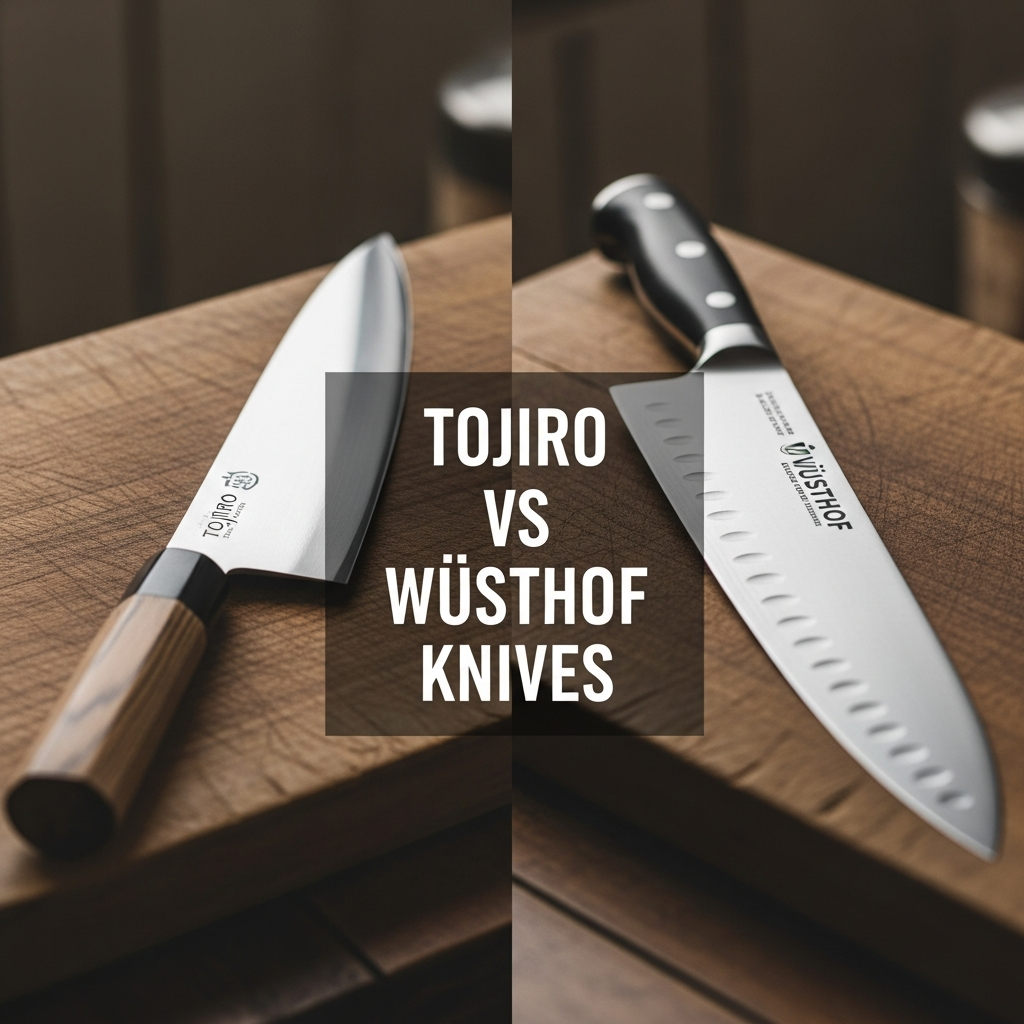
In the expansive, deeply passionate culinary world, the fiercely debated rivalry between Japanese surgical precision and German indestructible durability is eternal. If you are currently actively browsing KnivesReview.com trying to identify the absolute perfect primary blade for your cutting board, you have undoubtedly encountered two very distinct, highly respected champions: Tojiro and Wüsthof.
Wüsthof represents the entrenched, historic establishment. Hot-forged in the legendary “City of Blades” (Solingen, Germany), these heavy-duty knives are literally built like tanks. They are meticulously designed to seamlessly endure decades of heavy abuse, accidental bone strikes, and aggressive rock-chopping techniques. They are the quintessential benchmark for premium German kitchen knives.
Tojiro, conversely, is the gritty, underdog favorite of professional line cooks and culinary students worldwide. Manufactured in the Niigata prefecture of Japan, they offer terrifyingly sharp, high-performance Japanese super-steel at an incredibly aggressive price point. This exceptional value proposition firmly establishes them as one of the best affordable chef knives on the global market. They are ultra-light, unbelievably nimble, and inherently unforgiving to poor technique.
In this exhaustively detailed Tojiro vs. Wusthof comparison, we will entirely strip away the marketing romance and hype to ruthlessly analyze the raw metallurgy, blade geometry, handle ergonomics, and real-world cutting performance to help you definitively decide which specific tool rightfully belongs in your culinary hand.
1. Brand Philosophy: Two Entirely Different Worlds
To truly appreciate how these knives perform, you must first understand the fundamental engineering philosophy that dictates their design.
Wüsthof: Heritage, Heaft, and Resilience
Wüsthof has been family-owned and operated since 1814. Their manufacturing philosophy is remarkably simple and unyielding: Create a holistic, perfectly balanced instrument that works incredibly hard and literally lasts forever. Their flagship knives are hot-forged from a single piece of steel (if you are unfamiliar with the critical difference, see our comprehensive stamped vs forged guide). They invariably feature a heavy full tang, a thick protective metal bolster to guard your fingers, and a thick spine. They are intentionally designed to be highly forgiving tools; if you make a mistake, the blade survives.
Tojiro: Pure Performance and Ruthless Efficiency
Tojiro strictly focuses on the cutting performance of the blade itself above all other considerations. They are globally famous for their iconic “DP” (Decarburization Prevention) series. This line utilizes a premium, ultra-hard VG-10 steel core brilliantly clad (sandwiched) in softer stainless steel for added protection. They heavily prioritize raw cutting geometry and terrifying sharpness over the luxurious, polished fit and finish you might find in significantly more expensive Japanese brands like Shun or Miyabi. Tojiro is not about impressing dinner guests with Damascus patterns; it is entirely about raw, unadulterated function and speed on the prep line.
Community Insight: The Reddit Consensus
The highly critical culinary community on Reddit frequently debates this exact specific matchup. The overwhelming consensus? Buy Wüsthof for absolute durability and heavy-duty tasks; buy Tojiro for pure, effortless cutting joy and slicing speed. Read the fascinating, unvarnished discussion here: Reddit: Tojiro DP or Wusthof Ikon?
2. Head-to-Head: The Technical Specs Breakdown
To make this comparison fair, we are directly comparing their respective, best-selling flagship models: the luxurious Wüsthof Classic Ikon vs. the utilitarian Tojiro DP Gyuto.
| Technical Feature | Wüsthof Classic Ikon (8″) | Tojiro DP Gyuto (8.2″) |
|---|---|---|
| Core Metallurgy | X50CrMoV15 (German Stainless) | VG-10 (Premium Japanese Stainless) |
| Rockwell Hardness (HRC) | 58 (Softer, tougher, shock-absorbent) | 60-61 (Harder, holds edge longer, brittle) |
| Factory Edge Angle | 14° per side (Proprietary PEtec) | 9-12° per side (Scalpel-thin) |
| Blade Profile & Motion | Deeply Curved Belly (For Rock-Chopping) | Flatter Edge Profile (For Push-Cutting) |
| Physical Weight | Heavy (approx. 9.1 oz) – Bolster Heavy | Light (approx. 6.3 oz) – Nimble |
| Price Tier | Premium Luxury ($$$) | High-Performance Value ($$) |
3. The Steel Showdown: Hardness vs. Toughness
The single most important differentiating factor between these two knives is the chemical composition of the metal.
Tojiro (VG-10 Core Steel)
Tojiro famously utilizes VG-10 steel, which is universally considered the gold standard entry-point for premium Japanese kitchen knives. It is extremely hard (registering 60-61 on the HRC scale). This extreme hardness is precisely what allows Tojiro to grind the edge down to an astonishingly acute 9-12 degree angle without it immediately folding over. It will literally fall through ripe tomato skins using only its own weight. However, physics dictates a trade-off: hardness equals brittleness. If you aggressively twist the Tojiro blade while wedged in a butternut squash, or violently strike a chicken bone, the microscopic edge can and will physically chip.
Wüsthof (X50CrMoV15 Steel)
Wüsthof strictly utilizes a proprietary, highly refined German steel alloy. It is intentionally tempered to be softer (58 HRC). This means that if you subject the knife to severe abuse or impact, the microscopic edge will harmlessly “roll” or bend to the side rather than catastrophically chipping. This rolled edge can easily be stood back up in seconds using a honing steel. This makes the Wüsthof incredibly tough, highly forgiving, and definitively the safer, superior choice for heavy-duty butchery or careless users.
4. The Primary Chef’s Knife Battle
The 8-inch Chef’s knife (known as a Gyuto in Japan) is the absolute foundation of any kitchen. It handles 90% of your prep. (If you aren’t exactly sure why you need one, read our guide on what a chef knife is specifically used for).
 Wüsthof Classic Ikon 8″ Chef’s Knife
The quintessential, indestructible German tank. It features a perfectly tuned center balance, a phenomenally comfortable ergonomic handle, and a blade thick enough to safely halve dense winter squash. It is a dominant favorite in our broader Wusthof vs Victorinox budget-vs-premium comparisons.
Check Availability on Amazon Tojiro DP Gyuto 8.2-Inch
The surgical laser. It is vastly thinner, significantly lighter, and exponentially sharper straight out of the box than its German rivals. It offers true, high-end professional performance at a fraction of the expected cost. It is absolutely ideal for highly precise, volume vegetable slicing.
Check Availability on Amazon5. Ergonomics, Balance, and Handle Design
How a knife physically feels in your hand over a two-hour prep session is just as critical as the steel.
Wüsthof Classic Ikon: Luxury Ergonomics
The handle of the Classic Ikon is an absolute masterpiece of modern, contoured ergonomics. Manufactured from highly durable polyoxymethylene (POM), it is smoothly contoured to perfectly fit the natural curves of the human hand. Crucially, it features a unique “double bolster” design—adding a heavy piece of steel at the very rear (the pommel) of the handle. This perfectly counterweights the heavy German blade, placing the balance point exactly where your index finger rests in a pinch grip. It feels immensely premium and substantial.
Tojiro DP: Utilitarian Function
The Tojiro DP handle is strictly functional, somewhat blocky, and unapologetically plain. It utilizes a highly traditional, riveted Western handle shape manufactured from Eco-wood (a durable resin-treated wood composite). It objectively lacks the highly refined, seamless rounding of the Wüsthof. Due to mass production, you may occasionally feel the metal tang sitting slightly raised from the wood scales. It works perfectly fine and is very durable, but you are absolutely not paying for luxury feel here—every single penny of your investment is placed directly into the high-performance VG-10 blade.
6. Specialized Blades: Expanding Your Arsenal
If you are building a complete block, you need to consider how their other specialized shapes perform.
Vegetable Prep Specialists
If your diet consists of 80% vegetables, you must strongly consider a Nakiri vegetable cleaver. The Tojiro DP Nakiri is legendary—because the blade stock is so incredibly thin, it literally falls through dense onions without wedging or cracking them. Wüsthof’s vegetable knives are significantly thicker and heavier, which can cause fatigue.
For those preferring the pointed Santoku knife, Wüsthof heavily features a hollow Granton edge (dimples) to prevent wet potatoes from sticking, whereas Tojiro relies entirely on its pure, frictionless thin geometry.
The Crucial Bread Knife
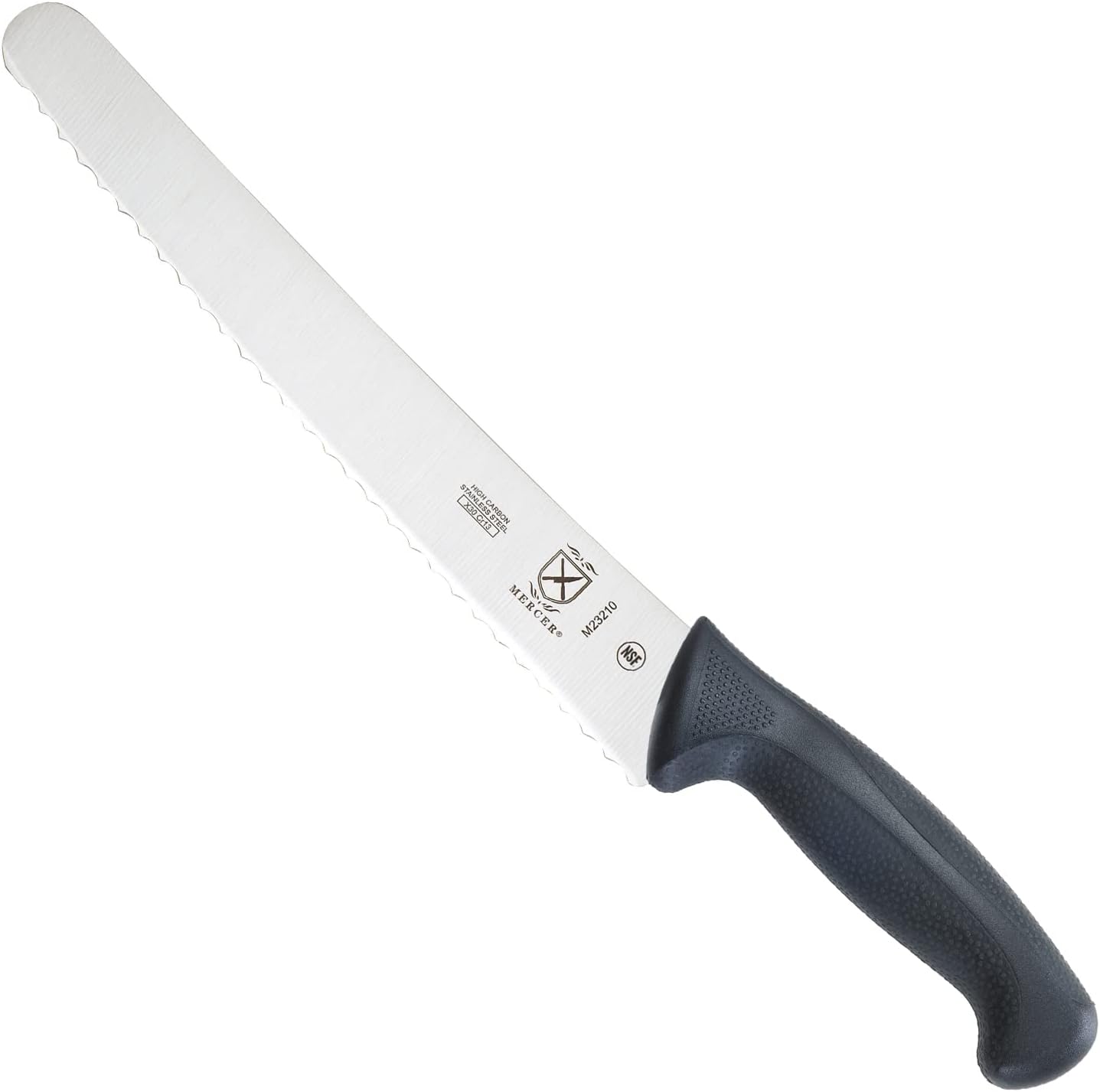
Wüsthof’s “Double Serrated” bread knife is an absolute beast for conquering rock-hard artisan sourdough crusts without slipping. However, the Tojiro F-737 Bread Slicer is a massive, viral internet icon. Why? Because it is dirt cheap, highly flexible, and terrifyingly sharp, making it unparalleled for delicately slicing soft sponge cakes and crusty bread alike. Read our extensive guide to the best bread knife to deeply understand why Tojiro is a top budget pick globally.
Paring Knives for Detail Work
For fine, intricate, off-board detail work (see what a paring knife is used for), Tojiro offers very simple, highly effective, lightweight tools. Wüsthof’s forged paring knives are notably heavier and stiffer, which many professional cooks actively prefer for maximum control when peeling tough apples or turning root vegetables.
7. The Broader Market: Comparisons to Other Brands
If you are still actively shopping around and neither brand feels quite right, consider how they stack up against the rest of the industry:
- Vs. Shun Classic: Shun is essentially the heavily marketed, “pretty” luxury version of Tojiro. Shun offers vastly superior fit, finish, and stunning Damascus visual patterns, but utilizes very similar VG-MAX steel and costs significantly more. (See our detailed Tojiro vs Shun matchup).
- Vs. Zwilling J.A. Henckels: Zwilling is Wüsthof’s primary, fierce German rival. They use identical steel but feature totally different handle ergonomics. If you hate the Wüsthof grip, look to Zwilling. (See Zwilling vs Henkel).
- Vs. Victorinox Fibrox: If the Tojiro feels too brittle for your habits, and the Wüsthof is far too expensive for your budget, the Victorinox is the ultimate stamped, commercial alternative. (See Victorinox reviews).
- Vs. Mac Professional: Mac Knives offer a brilliant hybrid: they are Japanese-made but use a softer, tougher steel than Tojiro, providing laser sharpness with German-like durability. (See Mac vs Wusthof).
8. Maintenance Protocols: The Critical Differentiating Factor
Owning a high-performance Tojiro absolutely requires significantly more respect, knowledge, and discipline than owning a Wüsthof.
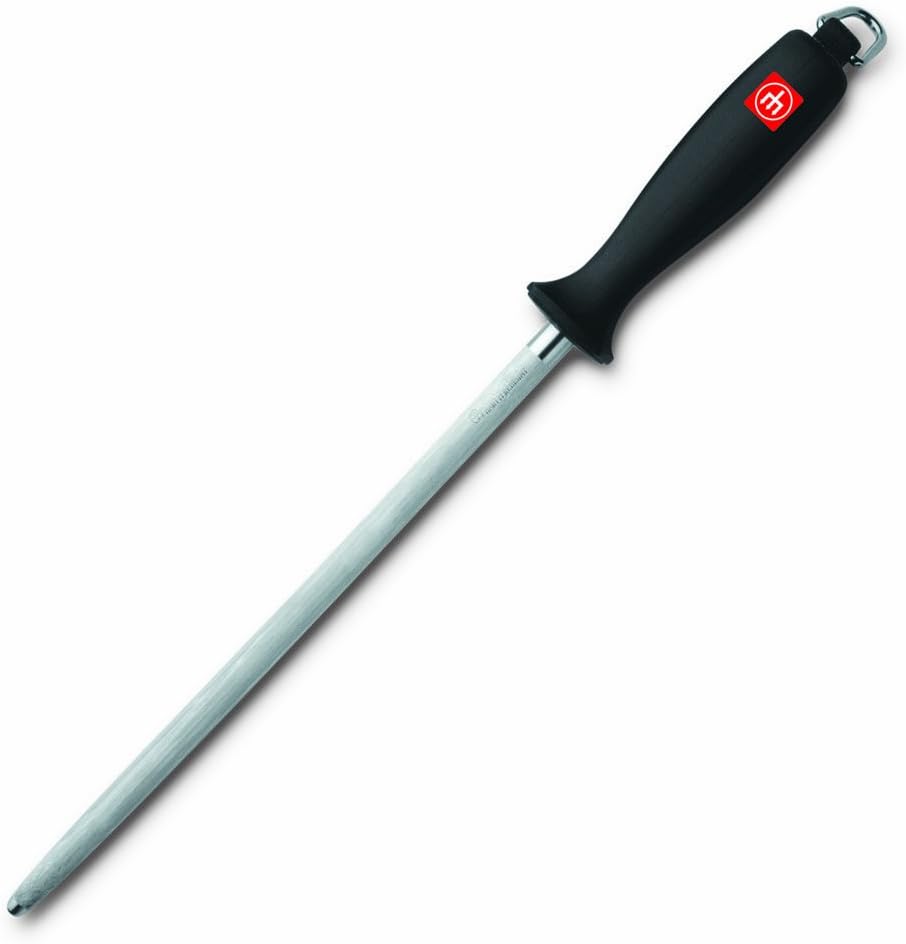
- Sharpening Mechanics: A softer Wüsthof can be easily maintained daily with a standard grooved honing steel. Tojiro’s ultra-hard VG-10 steel strictly requires fine water whetstones or smooth ceramic rods. You cannot drag a Tojiro through a cheap carbide pull-through sharpener; the harsh abrasives will instantly rip and chip the delicate edge. Thoroughly check our best knives sharpener guide to learn proper techniques.
- Rust and Corrosion: While VG-10 is technically stainless, its high carbon content makes it noticeably less corrosion-resistant than German steel. You must wash and bone-dry your Tojiro immediately after use, especially after cutting acidic citrus. If you lazily leave it wet and see brown spots, you must instantly learn how to remove rust before pitting occurs.
- Safe Storage: Never, ever throw a Tojiro loosely into a chaotic utensil drawer. The brittle edge will chip instantly against metal spoons. You must utilize a wooden drawer organizer or a wall-mounted magnetic strip.
- The Dishwasher Rule: NEVER. Under any circumstances. For either brand. Read our dishwasher safe guide to understand exactly why the extreme heat and caustic detergent destroys expensive knife handles and ruins steel temper.
9. The Final Verdict: Which One Belongs in Your Hand?
The legendary battle of Tojiro vs. Wusthof ultimately boils down to a distinct choice between raw, thrilling performance-per-dollar versus indestructible, lifetime reliability and luxury feel.
You Should Absolutely Choose Wüsthof If: You want a genuine “forever knife.” You are admittedly rough on your kitchen tools, you frequently share your kitchen with family members or roommates who might misuse or neglect knives, you routinely break down whole chickens, or you highly prefer the authoritative weight and fluid rocking motion of a heavy Western blade. It is the incredibly safe, luxurious, worry-free premium choice.
You Should Absolutely Choose Tojiro If: You demand the absolute sharpest, finest edge possible for your money. You treat your culinary tools with deep respect and care, you specifically want to master delicate Japanese push-cutting knife skills, and you completely prioritize raw blade performance over a highly polished, luxurious handle. It is the true culinary enthusiast’s choice.
If you are a caterer or a traveling culinary student, both highly respected brands are deeply supported by excellent aftermarket storage options. Check out our best knife bag reviews to ensure your new investment stays safe, sharp, and protected on the road.
Expert Frequently Asked Questions (FAQ)
Absolutely not. The VG-10 steel core is exceptionally hard (60+ HRC) and ground to a very thin angle. Attempting to chop through hard bones, frozen meats, or even thick winter squash will cause the brittle edge to catastrophically chip or snap. Use a heavy Wüsthof or a dedicated meat cleaver for those high-impact tasks.
The Wüsthof Classic line is fully precision hot-forged from a single, solid piece of high-carbon stainless steel. This includes the blade, the thick finger-protecting bolster, and the full tang that extends through the handle, giving it immense structural strength and weight.
Yes, but with a slight learning curve regarding maintenance. The Tojiro DP is an incredible value, but beginners must quickly learn not to use it on bones, not to put it in the dishwasher, and how to properly use a whetstone or ceramic rod for sharpening, as cheap pull-through sharpeners will ruin the edge.