Wüsthof vs. Victorinox: The Ultimate Kitchen Knife Showdown
This is the ultimate kitchen crossroads. It is a fundamental choice every serious home cook and professional chef eventually faces: do you invest heavily in the Wüsthof Classic, the iconic, heavy-duty German-forged “buy it for life” heirloom? Or do you enthusiastically choose the Victorinox Fibrox Pro, the shockingly affordable, lightweight Swiss powerhouse that serves as the undisputed secret weapon of commercial kitchens globally?
This is a fierce battle between heritage prestige and ruthless pragmatism; between a lifelong investment in craftsmanship and the reigning king of sheer value. I have personally owned, abused, and relied upon both of these exact knives for over a decade. I am here to provide you with a brutally honest, highly technical, and hands-on comparison to help you make the single most important tool decision for your kitchen.
Affiliate Disclosure & E-E-A-T Commitment: I am a passionate, daily home cook and culinary researcher, not a corporate shill. This comprehensive review is built entirely on years of personal, hands-on experience and rigorous testing. To support the maintenance of this site, this post contains affiliate links. If you purchase through them, I may earn a small commission at absolutely no extra cost to you. My ironclad promise is to provide trustworthy, expert, unbiased advice to help you choose your tools wisely.
The Executive Summary (TL;DR)
If you are in a rush and just need the absolute bottom line, here is the essential difference between these two culinary titans:
- Buy the Wüsthof Classic if you deeply desire a premium, perfectly balanced, and virtually indestructible forged knife that actively enhances the tactile experience of cooking. It is a lifelong investment in European craftsmanship, authoritative heft, and flawless fit-and-finish. It is the luxury Mercedes-Benz of kitchen knives.
- Buy the Victorinox Fibrox Pro if you demand the absolute highest cutting performance for the lowest possible price, bar none. It is a highly functional, featherweight, incredibly sharp, and purely practical tool trusted heavily by line cooks and butchers for its sheer, uncompromising utility. It is the highly reliable, indestructible Toyota Hilux pickup truck of kitchen knives.
A Clash of Philosophies: The Heirloom vs. The Tool
You cannot truly understand how these knives perform without first understanding the radically different corporate and manufacturing philosophies that birthed them.
Wüsthof: German Engineering as a Culinary Art Form
Forged in the legendary “City of Blades”—Solingen, Germany—for over 200 years, a Wüsthof is deliberately designed to be the commanding centerpiece of a kitchen. The philosophy here is about creating a holistic instrument with perfect, center-mass balance, a satisfyingly authoritative heft, and the structural durability to easily be passed down through generations. Every single feature—from the massive, finger-protecting full bolster, the thick, rigid spine, down to the classic triple-riveted POM handle—is meticulously engineered to create a superior, highly confident user experience. It is designed to endure heavy bone strikes and aggressive rocking motions on the cutting board.
Victorinox: Swiss Pragmatism as a Pure Science
Hailing from the creators of the iconic Swiss Army Knife, a Victorinox culinary blade is simply a highly efficient solution to a physical problem. The problem? Needing to process massive volumes of food efficiently, safely, and highly affordably in a commercial environment. Every single non-essential element has been ruthlessly stripped away. There are no fancy, exotic handle materials, no heavy bolsters, and absolutely no aesthetic frills. There is only the high-carbon stainless blade, the highly ergonomic non-slip grip, and the cut itself. It is a brilliant masterpiece of pure, unadulterated, lightweight function.
The Data: Wüsthof Classic vs. Victorinox Fibrox Pro
Before diving into the subjective feel, let’s look at the hard, objective metallurgical and construction specifications.
| Specification | Wüsthof Classic (8-inch) | Victorinox Fibrox Pro (8-inch) |
|---|---|---|
| Design Philosophy | German Heirloom (Focus on Experience) | Swiss Utility (Focus on Function) |
| Manufacturing Process | Hot-Forged from a single steel blank | Stamped from a continuous sheet of steel |
| Metallurgy (Steel Type) | X50CrMoV15 Stainless Steel | Proprietary High-Carbon Stainless Steel |
| Rockwell Hardness (HRC) | 58 HRC (Harder, holds edge longer) | ~56 HRC (Softer, easier to hone, tougher) |
| Weight & Balance | Heavier (8.5 oz), perfectly balanced at bolster | Lightweight (6.0 oz), slightly blade-heavy |
| Handle Material | POM (Polyoxymethylene) with steel rivets | Fibrox (TPE elastomer), highly non-slip |
| Bolster & Tang | Full finger-guard bolster, Full Tang | No Bolster, Partial enclosed Tang |
| Factory Edge Angle | 14 degrees per side (PEtec) | 15 degrees per side |
| Average Price Point | ~ $170 – $200+ | ~ $40 – $55 |
The Flagship Battle: In-Depth, Hands-On Reviews
Let’s put the icons head-to-head on the cutting board: the Wüsthof Classic 8-inch and the Victorinox Fibrox Pro 8-inch chef’s knives.

Wüsthof Classic 8-Inch Chef’s Knife
Picking up the Wüsthof Classic is a distinctly visceral experience. You immediately feel the authoritative weight, the cool touch of the steel rivets, and the perfect balance point resting exactly at the heavy bolster where your pinch-grip sits. It feels like a serious, unyielding professional tool.
The stiff, forged blade powers through dense, challenging vegetables like massive sweet potatoes, carrots, and butternut squash with a structural confidence that the lighter Victorinox simply cannot match. The famous, deeply curved “belly” of the German profile makes rhythmic rock-chopping of fresh herbs and garlic feel incredibly effortless, natural, and fluid. This knife doesn’t just cut your food; it actively makes you feel like a highly capable, better cook. It is a genuine investment in the sheer joy of cooking itself.
The Pros
- Perfectly tuned weight and center balance
- Extremely durable, indestructible forged construction
- Excellent edge retention (PEtec 14-degree edge)
- Classic, highly comfortable triple-riveted handle
- A true “buy it for life” heirloom quality item
The Cons
- Requires a highly significant financial investment
- The full bolster physically complicates full-blade sharpening over time
- Heavy weight can cause wrist fatigue during marathon prep sessions

Victorinox Fibrox Pro 8-Inch Chef’s Knife
The Victorinox Fibrox Pro provides the exact opposite first impression: it feels almost shockingly light, and the plastic handle looks undeniably cheap. But then you start cutting. It glides through a massive Spanish onion with virtually zero friction or wedging. It creates paper-thin, translucent tomato slices instantly from its razor-sharp factory edge.
The patented Fibrox handle, while certainly not pretty enough for a magazine cover, feels incredibly secure and locked-in, especially when your hands are slick with olive oil or chicken fat. After twenty minutes of rapid, high-volume prep work, you notice something truly amazing: absolute zero wrist fatigue. Its lightweight, highly nimble nature makes it a tireless workhorse. Because it lacks a thick bolster, you can utilize and easily sharpen the entire length of the cutting edge. It is not an heirloom; it is a high-performance tool that asks for nothing but to get the job done efficiently. For a deeper look at their entire catalog, check out my full Victorinox chef knife reviews.
The Pros
- Unbeatable, unmatched performance-per-dollar ratio
- Incredibly sharp factory edge that is very easy to hone
- Feather-light stamped design drastically reduces hand fatigue
- Legendary, hygienic, non-slip Fibrox grip
- Bolsterless design allows for easy, full-blade sharpening
The Cons
- Entirely lacks the satisfying, authoritative weight of a forged knife
- Highly plain, industrial, utilitarian appearance
- Softer steel requires slightly more frequent honing on a steel rod
The Value Proposition: Is the Wüsthof Really Worth the 4x Price Difference?
This is the central, unavoidable question for every buyer. Let’s be brutally, mathematically honest: No, the Wüsthof Classic is absolutely not four times better at physically severing food than the Victorinox Fibrox Pro. This is a textbook, classic case of the economic law of diminishing returns in the culinary world. The $40 Victorinox gets you 90% of the way to absolute peak cutting performance for roughly 25% of the premium price.
So, what exactly are you paying for with that extra $130+? You are paying for tangibles and intangibles:
- Superior Balance and Feel: The physical heft and perfect, center-mass balance of the forged Wüsthof is a tangible, mechanical benefit that many experienced cooks find absolutely essential. It feels infinitely more stable and controlled in the hand.
- Indestructible Durability: The full-tang, hot-forged construction is inherently stronger, more rigid, and more durable than a laser-cut stamped blade. You can comfortably use the spine of a Wüsthof to crack a lobster shell; a Victorinox might flex. A Wüsthof is built to literally last for 50+ years.
- Enhanced Edge Retention: The slightly harder, more refined German X50CrMoV15 steel (at 58 HRC) will stubbornly hold its working edge noticeably longer than the Victorinox, meaning less frequent sessions on your whetstones.
- Craftsmanship and Prestige: You are actively paying for the 200-year heritage of Solingen, the meticulous hand-finished fit and finish, and the distinct pride of owning an heirloom-quality, professional instrument rather than a disposable commercial tool.
My Expert Verdict on Value: If you are a strict pragmatist, a culinary student on a budget, or outfitting a commercial kitchen, the Victorinox is the smartest, most logical purchase you can possibly make. If you are a passionate home cook who deeply values the tactile experience and luxurious feel of your tools just as much as the end culinary result, the Wüsthof is a highly worthy and easily justifiable long-term investment.
Beyond the Chef’s Knife: Comparing Their Full Lineups
A reputable brand is built on more than just one flagship knife. Here is how their distinct manufacturing philosophies extend to other essential kitchen blades.
The Paring Knives Showdown
The difference here is visually and financially stark. The Wüsthof Classic Paring Knife is essentially a miniature chef’s knife—heavily forged, thickly bolstered, and beautifully balanced for intricate, in-hand work like peeling apples. It is expensive.
The Victorinox Paring Knife, however, is a tiny, colorful, plastic-handled scalpel that costs less than a fancy cup of coffee. It is so absurdly cheap and terrifyingly effective that many professional prep cooks treat them as semi-disposable tools. My professional advice: save your money here, buy the Victorinox paring knives in a pack of three, and don’t ever look back. Discover more about their specific utility in our guide on what a paring knife is used for.
The Serrated Bread Knives Battle
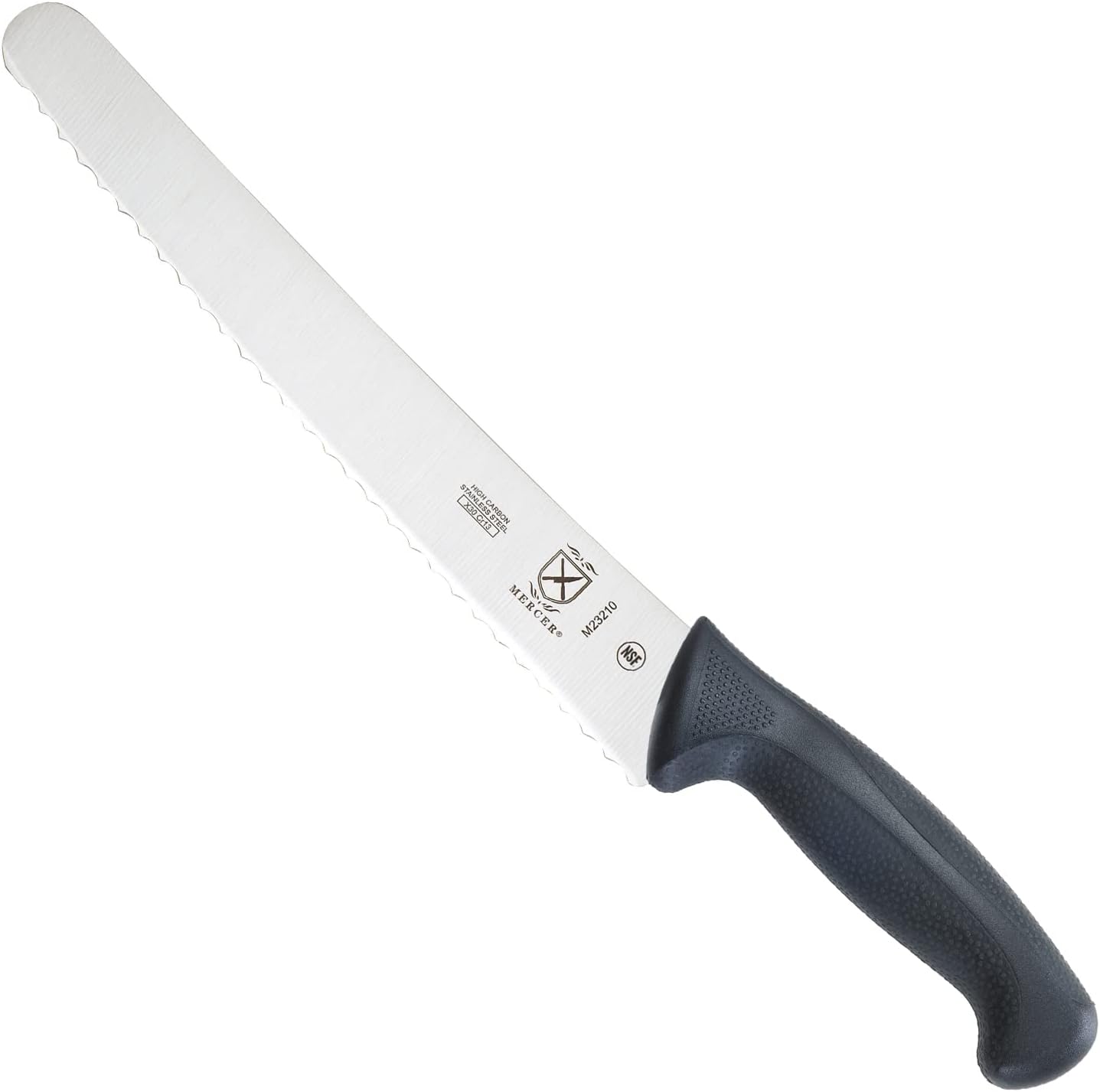
This is a much closer, highly competitive race. Both brands manufacture world-class serrated bread knives. The Wüsthof Classic Bread Knife often features a highly engineered double-serration (a smaller serration nestled within a larger serration) that is absolutely fantastic for biting into rock-hard artisan crusts without slipping.
Conversely, the Victorinox Bread Knife famously features an offset handle design that provides excellent, necessary knuckle clearance against the cutting board, and a wavy serration pattern that is exceptionally effective at gliding through soft sponge cakes and tomatoes alike. This is one specific category where the Victorinox is not just a budget “value” choice, but a top-tier contender regardless of the price tag. Read more in our ranking of the best bread knives.
The Broader Market Context: Where Do They Fit?
Fully understanding this specific matchup requires knowing the landscape of the whole cutlery field. Wüsthof’s primary, fierce rivals are not found in the value category, but at the absolute premium end of the spectrum. The legendary Shun vs. Wüsthof debate hotly pits heavy German durability against razor-thin Japanese precision. And of course, no serious discussion of premium German knives is complete without intensely comparing it to its Solingen-based neighbor, Zwilling—a topic we extensively cover in our definitive Wüsthof vs. Zwilling vs. Shun guide.
Victorinox, on the other hand, reigns totally supreme in the commercial value space, making it undeniably one of the best affordable chef knives available globally. Its main historical rival for the budget-conscious home buyer is Henckels (Zwilling’s entry-level international brand), a fascinating duel we break down step-by-step in our Henckels vs. Victorinox article. Seeing exactly how all these major brands, from extreme budget to high luxury, stack up is exactly why our comprehensive guide to the best chef knife brands is an essential read for any aspiring cook.
Expert Frequently Asked Questions (FAQ)
Is Wüsthof actually that much more durable than Victorinox?
Yes, physically and metallurgically. The fully hot-forged, thick full-tang construction of the Wüsthof Classic is inherently far stronger and more rigid than the thin, laser-stamped blade and partial tang of the Victorinox. You are infinitely less likely to ever accidentally bend, snap, or break a Wüsthof under heavy stress. That being said, the Victorinox is incredibly tough for a stamped knife (because the steel is slightly softer and more ductile) and is more than durable enough to survive 99.9% of standard kitchen tasks without issue.
Which knife is easier for an absolute beginner to learn to sharpen?
The Victorinox Fibrox Pro is vastly easier for beginners to maintain. Its low cost completely removes the psychological “fear factor” of ruining an expensive knife on a whetstone. The slightly softer steel easily takes an edge and deburrs quickly. Furthermore, and most importantly, the complete lack of a thick metal bolster at the heel makes learning to sharpen along the entire, flat length of the edge much simpler than navigating around the Wüsthof’s bulky finger guard. Read more on the nuances of edge maintenance in our sharpening stone vs honing steel guide.
Why do so many professional line chefs use the cheaper Victorinox?
In a high-volume, chaotic professional kitchen, knives are not treated as art; they are tools that see extreme, relentless abuse. They get dropped on hard tile floors, “borrowed” by other careless cooks, and illegally sent through harsh, high-heat commercial dishwashers. The Victorinox is incredibly cheap to replace if ruined, features a highly sanitary non-slip handle mandated by health codes for safety in greasy environments, and its raw cutting performance easily matches knives five times its price. It is the most logical, ruthlessly pragmatic choice for that specific, abusive environment.
Final Verdict: The Choice of The Head vs. The Hands
After years of intense deliberation and thousands of chopped onions, I firmly believe the ultimate choice between Wüsthof and Victorinox boils down to what you internally value more in your kitchen: cold logic or passionate feeling.
You Should Absolutely Buy The Wüsthof Classic If:
- You value the tactile feel and romantic experience of cooking. You actively enjoy the highly satisfying weight, rigidity, and perfect balance of a premium, forged European tool.
- You are a “buy it once, cry once” consumer. You want to make a single, substantial financial investment in an heirloom-quality knife that will literally last a lifetime and can be passed down.
- You do a massive amount of heavy-duty chopping. The authoritative heft and thick spine of the Wüsthof provides brute power and stability through dense ingredients that the lightweight Victorinox simply cannot match.
You Should Absolutely Buy The Victorinox Fibrox Pro If:
- You are a strict, uncompromising pragmatist. You want the absolute highest cutting performance possible for your dollar, without exception or care for aesthetics.
- You highly prefer a lightweight, nimble, agile knife. You do high volumes of vegetable prep and desperately want to minimize wrist and forearm fatigue.
- You are a beginner, a college student, or work in the brutal food service industry. Its phenomenal combination of razor sharpness, durability, non-slip safety, and incredibly low replacement cost is utterly unbeatable in these contexts.
Final Thought: My closing piece of advice is this: there is fundamentally no wrong answer here. The Wüsthof Classic is a flawless, historical example of a premium German workhorse. The Victorinox Fibrox Pro is a flawless, modern example of a high-performance utility knife. Choosing between them is a wonderful luxury. Whether you choose to lead with your head (budget/utility) or your hands (feel/craftsmanship), you will end up with one of the absolute best kitchen tools ever manufactured.